Listen, if you’re importing goods from China right now, you already know the pain of watching your shipments crawl across the Pacific while your customers keep asking “where’s my order?”. Every day of delay costs money, tests patience, and sometimes costs you the deal altogether.
The good news? Transit times aren’t set in stone, and there are practical ways to shave days even weeks off your shipping schedule. Let’s talk about what actually works in 2024 and 2025.
Reduce Shipping Time China to US: The Complete Guide
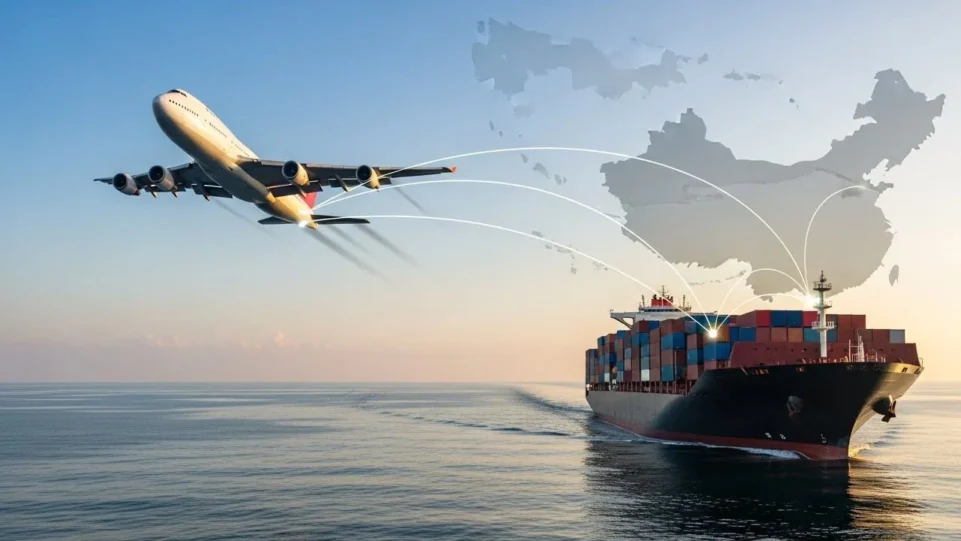
When you’re moving products across the Pacific, every day counts. Your competitors have already figured out how to reduce shipping time from China to US, and they’re using that speed as a competitive advantage. Companies now use hybrid models shipping bulk inventory by sea and relying on air freight for restocking during peak demand. That’s not just smart logistics; it’s survival.
Think about it. While you’re waiting 30-40 days for sea freight, someone else already restocked and captured that sale. Or worse, you miss an entire seasonal window because your shipment got stuck somewhere between Shanghai and Long Beach.
Why Speed is the New Competitive Edge (And Why Transit Times Matter)
Here’s what changed: Your competitors figured out how to get products to market faster. Companies now use hybrid models, shipping bulk inventory by sea and relying on air freight for restocking during peak demand. That’s not just smart logistics; it’s survival.
Think about it. While you’re waiting 30-40 days for sea freight, someone else already restocked and captured that sale. Or worse, you miss an entire seasonal window because your shipment got stuck somewhere between Shanghai and Long Beach.
Your Shipping Options: Balancing Speed, Cost, and Profit
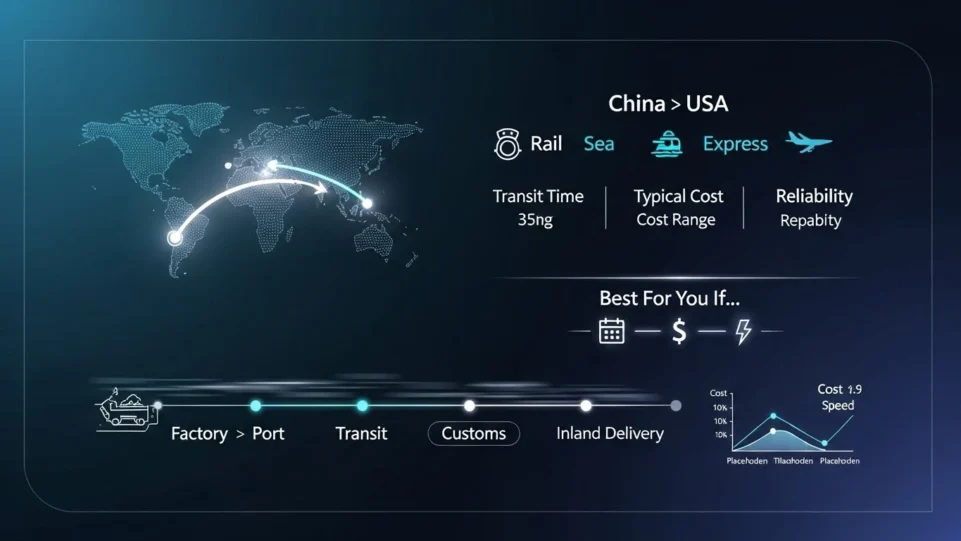
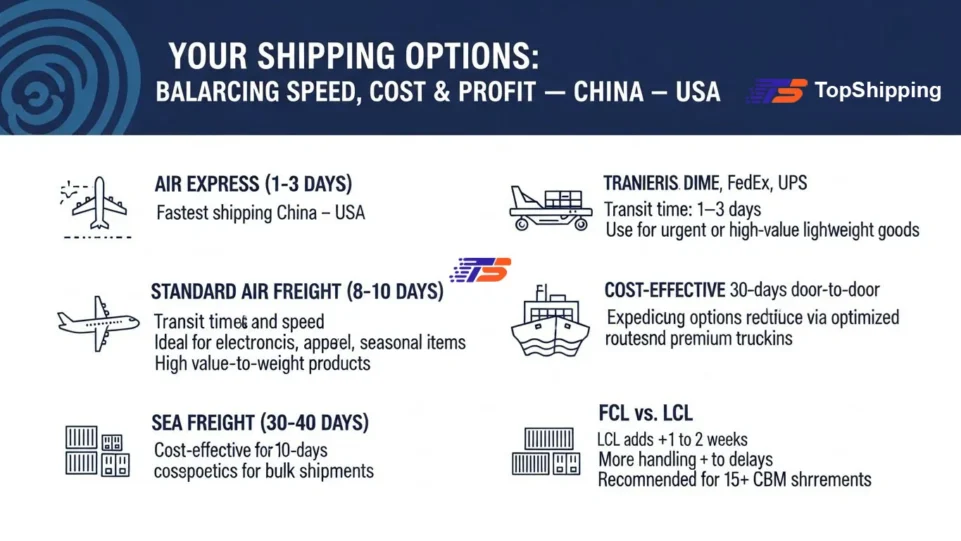
Let me break down what you’re actually looking at for transit times:
Air Express: The Fastest Shipping China to US (1-3 Days)
Companies like DHL, FedEx, and UPS deliver within 1-3 days. Yes, you read that right your cargo can literally fly from a factory in Shenzhen to your warehouse in Chicago in 48 hours. But here’s the catch: you’ll pay premium prices. Express air freight from China costs around $8–$15 per kilogram.
When to Use Express Shipping
Use this for emergency restocks, high-value low-weight items, or when you’ve got a customer breathing down your neck. It’s expensive, but sometimes losing the sale costs more.
Standard Air Freight: The Balanced 8-10 Day Solution
Standard air freight from China to the US generally takes around 8-10 days. It’s not quite as fast as express, but it won’t destroy your margins either. This is where most businesses find their sweet spot when speed matters but budgets are tight.
Best Products for Air Freight
Electronics, fashion items, seasonal products, or anything with high value-to-weight ratios work best here. You’re paying by the kilogram, so make it count.
Sea Freight: The Cost-Effective 30-40 Day Marathon
At around 30-40 days for a door to door shipment from China to the USA, sea freight has the longest lead time. But wait—there’s a twist. Sea freight can offer a faster premium service through expedited options, which reduce transit times by optimizing shipping processes, using faster sea routes, and integrating premium trucking services.
China to USA FCL vs. LCL: Why Full Containers Reduce Transit Time by Weeks
FCL takes less time to deliver than an LCL shipment. For China-US, LCL typically takes an extra one or two weeks.
Why? Because LCL shipments need to be consolidated with other cargo at the origin port and then deconsolidated at the destination. That’s extra handling, extra time in terminals, and more chances for delays.
If you’re shipping around 15 cubic meters or more, seriously consider upgrading to a full container. The time savings alone might justify the cost, not to mention there is less chance of damage, misplacement, and loss with FCL.
8 Proven Strategies to Reduce Shipping Time China to US
Now that you understand your shipping options, let’s get into the practical strategies. These aren’t theoretical, they’re what successful importers are doing right now to move goods faster. Some will save you a day or two, others can cut weeks off your timeline. The key is knowing which ones apply to your situation and how to combine them for maximum impact.

Strategy 1: Choosing Your Port Wisely: Shanghai vs. Yantian
Not all Chinese ports are created equal. Shanghai offers sea freight of 15-20 days to West Coast US ports, with longer transit times to East and Gulf Coast Ports. Meanwhile, Guangzhou provides sea freight of 15-21 days to West Coast ports.
Location, Location, Location
Your supplier’s location matters. Working with a manufacturer near Shenzhen or Guangzhou can cut several days off your timeline compared to inland factories that need to truck goods to the port first.
Monitoring Port Congestion in Real Time
Ports in China, including major transshipment hubs like Shanghai and Ningbo, are experiencing significant congestion, while ports such as Shekou and Yantian are currently operating more smoothly.
Your freight forwarder should be actively watching these patterns and routing around bottlenecks. If they’re not, find one who does.
Strategy 2: West Coast vs. East Coast: The Ocean Freight Time Decision
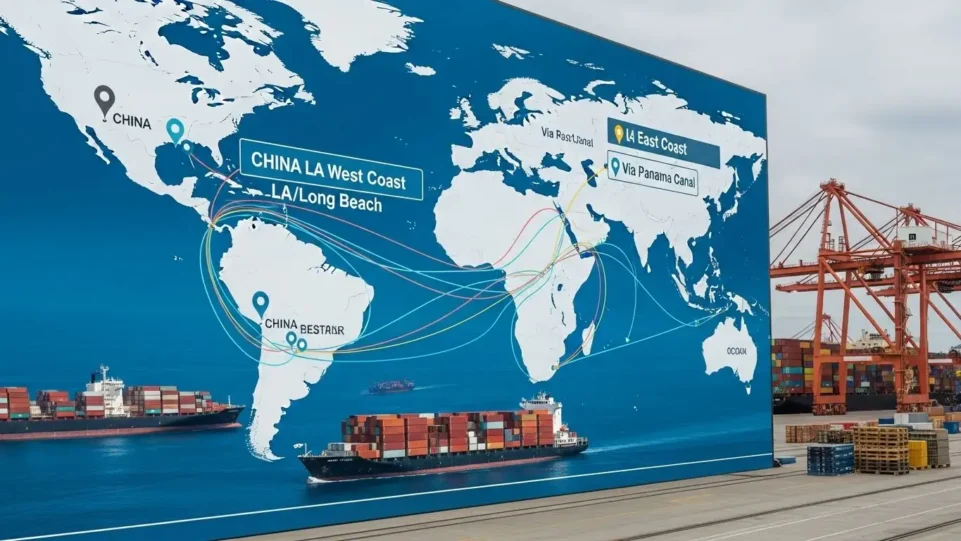
West Coast ports like LA and Long Beach provide the fastest sea route from China, taking around 18 to 24 days because ships can go straight across the Pacific without detours. Compare that to East Coast locations that need to pass through the Panama Canal, shipping takes much longer at about 30 to 35 days.
The Suez Canal Factor
But here’s where it gets interesting. Due to the Suez Canal closure, all vessels that typically sail to the U.S. East Coast via the Suez Canal are diverted to the Cape of Good Hope, which takes longer than normal routing. That means if you’re on the East Coast, you might want to consider shipping to the West Coast and using domestic freight to move goods inland. Yes, it adds a step, but it can still be faster overall.
Understanding Port Congestion Patterns
Import volumes at USWC ports increased by 20-30% in Q4 2024 and continued in January 2025 due to an early CNY and potential new cargo tariffs, further contributing to congestion.
What does this mean for you? Have backup plans. If everyone’s shipping through LA/Long Beach and those ports are jammed, consider Seattle/Tacoma or Oakland. Your freight forwarder should be actively monitoring this and suggesting alternatives.
Strategy 3: Nail the Paperwork: Avoid the HS Code Trap and Customs Delays
I know, paperwork is boring. But a lack of proper documentation delays the whole process. And we’re not talking about a few hours, customs delays can add days or even weeks.
Understanding Customs Clearance Timelines
For express services like DHL or FedEx, China- US customs clearance may take only a few hours to a day, as these companies often have dedicated customs teams to expedite processing. For standard shipping? Clearance may take 2 to 5 business days, especially if additional documentation is required or if the package is selected for further inspection.

Here’s what you need to nail down:
- Commercial invoices with accurate values (don’t get cute with customs valuation)
- Correct HS codes (this is huge, wrong codes trigger inspections)
- Certificates of origin
- Packing lists that actually match what’s in the container
The HS Code Trap
Using correct HS codes and true declared values ensures compliance and avoids unnecessary customs scrutiny. One wrong digit can flag your shipment for inspection, turning your 2-day customs clearance into a 2-week nightmare.
Strategy 4: Is DDP Shipping Worth the Cost to Eliminate Delays?
shipping means your freight forwarder handles everything, export, import, customs clearance, duty payment, and last-mile delivery.
Contrast this with DDU (Delivered Duty Unpaid), where you take responsibility for duties and customs fees upon arrival. While DDU can be cheaper upfront, it can introduce significant delays if you don’t have a reliable customs broker ready to handle those fees the moment the cargo lands.
Is DDP Worth the Extra Cost?
Yes, it costs more upfront. But think about what you’re buying: peace of mind, predictability, and someone else dealing with customs headaches. For many importers, especially those new to the game, DDP eliminates the single biggest source of delays.
Strategy 5: Calendar Chaos: How to Avoid Chinese New Year and Peak Season Delays
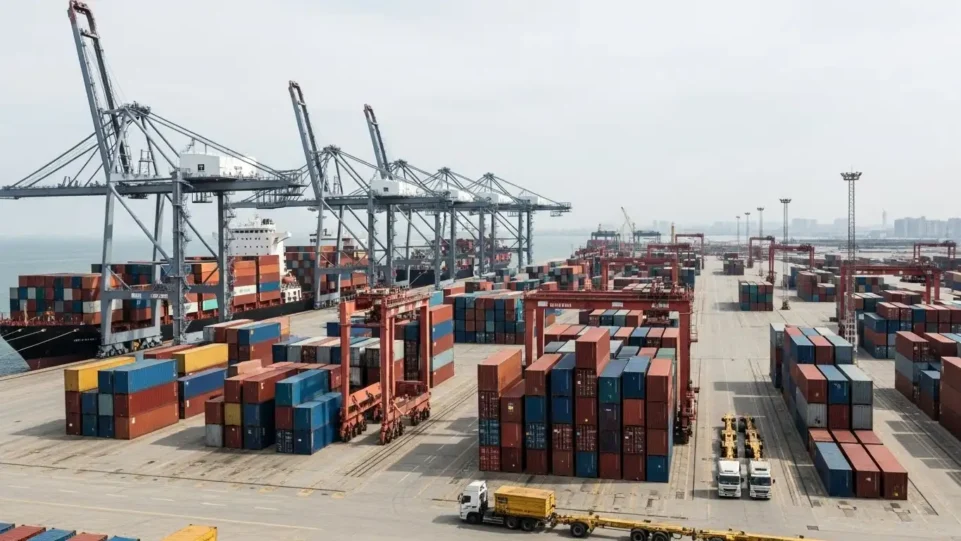
Timing is everything. From mid-December 2024 to late February 2025, factories and ports operate at reduced capacity or shut down entirely for Chinese New Year. Even after the holiday, backlogs can delay shipments by weeks.
Chinese New Year Impact
Golden Week (early October) creates similar chaos. If you can avoid shipping during these periods, do it. If you can’t, build in extra buffer time and book your space early like, weeks early.
Finding the Sweet Spot for Booking
Typically, after Chinese New Year and during the off-peak season (later winter to early spring), rates can be lower. That’s your window for faster, cheaper shipping.
Strategy 6: Transshipment Hubs: The Hong Kong Advantage for Speed1
Using a transshipment hub serves as a strategic location where goods are transferred from one mode of transport to another, significantly reducing transit times and costs.
Why Hong Kong Still Matters
Hong Kong is particularly interesting here. Hong Kong’s strategic location and efficient logistics infrastructure make it a prime choice for optimizing your China-US shipping routes. Sometimes routing through a hub actually speeds things up because you can catch faster vessel services or optimize for different carriers’ strengths.
Strategy 7: The Power of Pre-Clearance: Clearing Customs While Your Cargo is at Sea
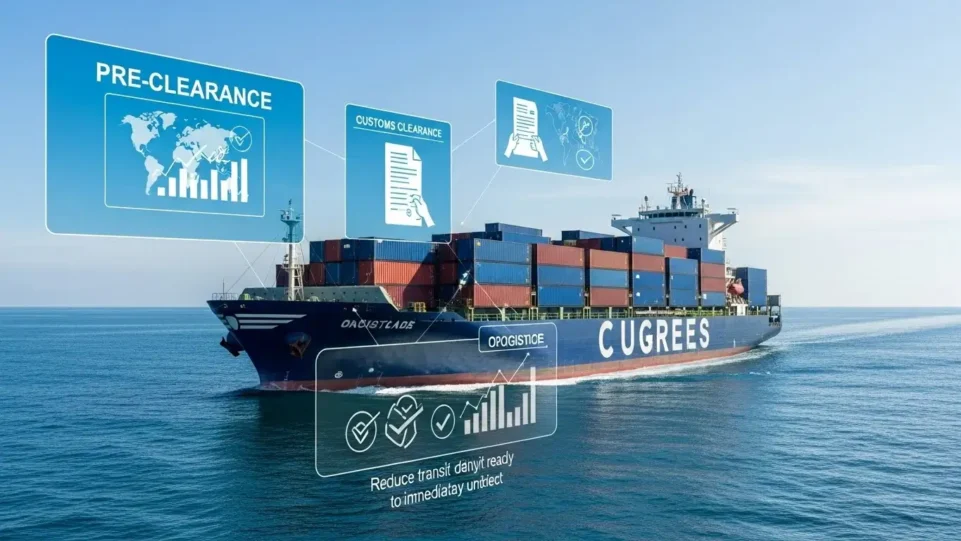
Pre-clearance services enable your goods to clear customs before they reach the port of entry. This can be a game-changer, especially for repeat shipments of the same products.
How Pre-Clearance Works
Your shipment essentially gets processed while it’s still at sea, so when it hits the port, it’s ready to roll out immediately. This can lessen the possibility of delays and cut down on the amount of time your products are in route.
Strategy 8: The Key to Speed: Partnering with a Great China to USA Freight Forwarder
This might be the most important point. A good freight forwarder isn’t just moving boxes they’re actively problem-solving.
What a Great Freight Forwarder Actually Does
By forecasting potential bottlenecks, freight forwarders pre-book shipping slots and plan routes well in advance. They know which ports are congested, which carriers are reliable, and how to route around problems you don’t even know exist yet.
The Power of Relationships
They also have relationships. Carrier capabilities, including their relationships with customs officials, can affect how quickly packages clear. That means your freight forwarder’s connections can literally get your shipment processed faster than the next guy’s.
The Hybrid Strategy That Actually Works (Air, Sea, and Express)
Here’s what smart importers are doing: they’re not choosing one method and sticking with it religiously. Instead, they’re strategic.
Building a Flexible Shipping Strategy
For your core inventory and regular orders? Sea freight, booked well in advance during off-peak seasons.
For restocks, trend items, or anything time-sensitive? Air freight or expedited sea freight.
For that critical component that’s holding up production? Express shipping, and yes, bite the bullet on the cost.
Real-World Example: Electronics Importer
Let’s say you’re importing consumer electronics. You know your Q4 demand, so you ship your bulk inventory in August via sea freight from Shanghai to Los Angeles, 15-20 days transit, arriving by early September.
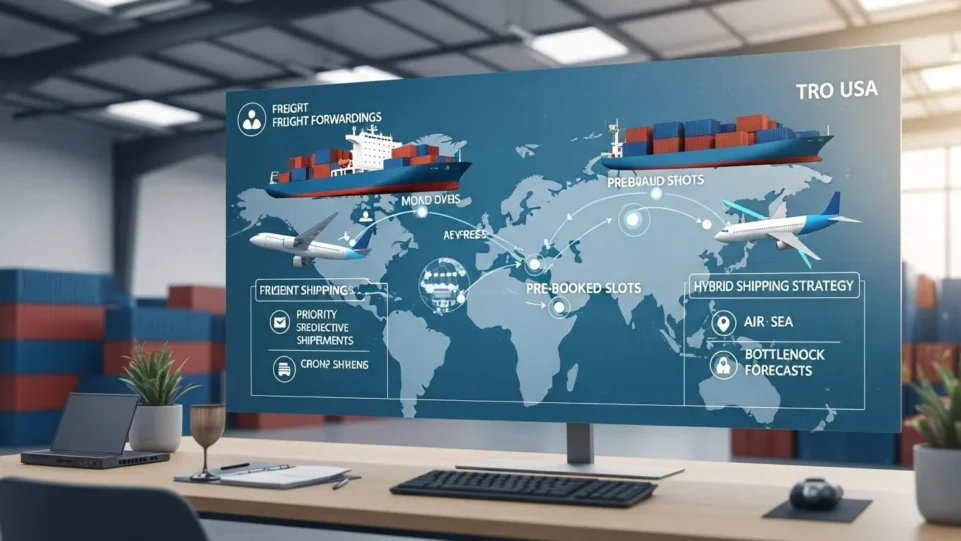
But then a product goes viral on TikTok in October, and you’re suddenly looking at stockouts. That’s when you use air freight to rush in additional units. Sure, your margins are slimmer on those air-shipped units, but you’re capturing sales that would’ve been lost entirely. And you’re not blowing your entire budget on air freight because your base inventory came by sea.
Current Challenges and Your 2025 Roadmap to a Resilient Supply Chain
Spot rates are the pulse of the shipping industry, reflecting real-time supply and demand dynamics. Right now, we’re seeing geopolitical tensions, particularly around US-China relations, creating uncertainty in shipping schedules and costs.
Tariffs and Their Impact on Transit Decisions
The U.S. has maintained and even expanded tariffs on a range of Chinese goods, particularly those related to advanced technology and renewable energy. This doesn’t just affect costs, it affects routing decisions, port choices, and even whether it makes sense to ship certain items at all.
Building Resilience Into Your Supply Chain
The smart move? Build flexibility into your supply chain. Have multiple suppliers across different regions if possible. Maintain relationships with several freight forwarders. Keep more buffer stock than you think you need.
Your Roadmap to Faster, Smarter Shipping
Reducing transit time isn’t about finding one magic trick. It’s about understanding all the factors that affect shipping speed and optimizing each one where it makes sense for your business.
Start with the basics: get your documentation perfect, choose your ports strategically, and time your shipments around holidays and peak seasons. Then layer on the more advanced strategies like using transshipment hubs, considering expedited sea freight, or implementing a hybrid approach.
Most importantly, work with a freight forwarder who actually knows what they’re doing. Someone who’s actively monitoring port congestion, proactively booking space during tight periods, and has the relationships to smooth out customs issues before they become delays.
Because at the end of the day, every day your product sits in transit is a day you’re not making sales. And in today’s market, speed isn’t just nice to have, it’s competitive advantage.
What’s your biggest shipping challenge right now? Are you dealing with customs delays, port congestion, or just trying to figure out if you should switch from sea to air? Let’s talk about it.
FAQ: How to Reduce China to USA Shipping Transit Time
How long does shipping from China to USA actually take?
It depends on your shipping method. Express shipping takes 1-3 days, standard air freight takes 8-10 days, and sea freight takes 30-40 days for door-to-door delivery. But here’s the thing, these are just the transit times. You need to factor in customs clearance, port handling, and potential delays.
For sea freight specifically, West Coast ports like LA and Long Beach see transit times of 15-20 days from Shanghai, while East Coast ports take 30-35 days or longer. Air freight usually delivers to major US cities within 24-36 hours on direct flights, or 3-5 days on indirect routes.
What’s the fastest way to ship from China to USA?
Express shipping via DHL, FedEx, or UPS is your fastest option, we’re talking 1-3 days door-to-door. But expect to pay premium rates, typically $8-15 per kilogram. For most businesses, standard air freight (8-10 days) offers the best balance between speed and cost.
If you’re shipping by sea and need it faster, ask your freight forwarder about expedited ocean freight services. These can sometimes compete with air freight lead times by using faster vessel services and premium trucking.
How much does it cost to ship from China to USA?
There’s no single answer, costs vary wildly based on weight, volume, shipping mode, and season. As of July 2025, air freight rates stabilized around $4.00/kg for LA and $6.00/kg for NYC airports for shipments over 1,000 kg. For sea freight, a 20-foot container costs approximately $2,800 to LA/Long Beach and $4,200 to East Coast ports, while 40-foot containers range from $3,400 to $5,100.
Express shipping is the most expensive option at $8-15 per kg, but it includes door-to-door service and fast customs clearance. The key is matching your shipping method to your actual needs, not every shipment requires express service.
How long does customs clearance take from China to USA?
This varies significantly by shipping method. For air freight, customs clearance typically takes 1-2 days if the shipment isn’t flagged for special inspection. Ocean freight takes 3-7 days, while express courier packages are often processed the same day or within 1-2 days.
The biggest factor? Documentation. Incomplete or incorrect paperwork is the number one cause of customs delays. Make sure you have your commercial invoice, packing list, bill of lading, and certificate of origin ready, and that everything is accurate.
What documents do I need for shipping from China to USA?
You’ll need several key documents for customs clearance:
- Commercial Invoice: Details about your goods, including value, quantity, and description
- Packing List: Complete contents of your shipment
- Bill of Lading (for sea) or Air Waybill (for air): Your shipping contract and receipt
- Certificate of Origin: Proves where goods were manufactured
- Importer Security Filing (ISF): Required for ocean shipments at least 24 hours before loading
Get the HS codes right on your commercial invoice, incorrect classification triggers inspections. And never undervalue goods to save on duties; customs officials know the market values and will flag suspicious declarations.
Should I use FCL or LCL shipping?
If you’re shipping around 15 cubic meters or more, go with FCL (Full Container Load). It’s faster, safer, and often more cost-effective per unit. LCL typically takes an extra one to two weeks compared to FCL because goods need to be consolidated at origin and deconsolidated at destination.
The break-even point is usually around 15 cubic meters, but this varies by route and season. Ask your freight forwarder to quote both options, sometimes FCL makes sense even for smaller volumes during peak seasons when LCL space is tight.
What’s the cheapest way to ship from China to USA?
For large, heavy shipments, sea freight via LCL is generally the most affordable option. But “cheapest” isn’t always the best value. Consider the total cost including inventory holding costs, potential stockouts, and customer satisfaction.
For small parcels under 2kg, China Post offers economical options like ePacket with tracking, though delivery takes 20-60 days. For anything urgent or valuable, the extra cost of faster shipping often pays for itself in captured sales and satisfied customers.
How can I avoid shipping delays from China?
Start with perfect documentation, this alone eliminates the biggest source of delays. Book your shipments well in advance, especially during peak seasons (pre-Chinese New Year, Golden Week, Q4). Work with an experienced freight forwarder who actively monitors port congestion and can reroute if needed.
Consider pre-clearance services that allow your shipment to clear customs before arriving at the port, significantly speeding up the process. And if you’re shipping regularly, build buffer inventory so one delayed shipment doesn’t shut down your operation.
When is peak season for shipping from China to USA?
There are several periods to watch out for. Chinese New Year (late January to mid-February) is the biggest disruption, factories and ports operate at reduced capacity or shut down entirely. Golden Week in early October creates similar chaos.
Q4 (September through November) sees massive volume increases as everyone ships inventory for the holiday season. This leads to port congestion, higher rates, and longer transit times. If you need to ship during these periods, book space at least 3-4 weeks in advance.
What’s DDP shipping and should I use it?
DDP (Delivered Duty Paid) means your freight forwarder handles everything, export, import, customs clearance, duty payment, and last-mile delivery to your door. You pay one all-inclusive price with no surprises.
It costs more upfront, but you’re buying certainty and convenience. For Amazon FBA sellers, first-time importers, or anyone who doesn’t want to deal with customs brokers and paperwork, DDP is often worth the premium. You know exactly what you’ll pay, and someone else handles all the headaches.
How do I choose the best freight forwarder?
Look beyond just the cheapest rate. A good freight forwarder actively solves problems, not just moves boxes. They should monitor port congestion, suggest alternative routes during disruptions, have strong carrier relationships, and provide accurate documentation support.
Ask about their experience with your specific products and routes. Check if they have offices or partners in both China and the US. And make sure they’re proactive communicators, you shouldn’t have to chase them for updates on your shipment.
Can I track my shipment from China to USA?
Yes, all reputable shipping methods provide tracking. Express couriers like DHL and FedEx offer real-time tracking with detailed updates. For sea freight, you can track your container using the bill of lading number on the carrier’s website.
Most freight forwarders also provide their own tracking systems that consolidate information from multiple carriers. Just remember that sea freight tracking is less granular, you might only get updates when the vessel reaches each port, not continuous location data like with air shipments.