
Introduction
Shipping artwork can be nerve wracking. The thought of your carefully crafted pieces getting damaged, lost, or mishandled during transit is enough to make any artist or collector anxious. Whether it’s a delicate oil painting, a stretched canvas, or a fine art print, ensuring that your work arrives in pristine condition is crucial especially when shipping internationally, such as shipping from China to the US . Understanding the best shipping routes and logistics is key to keeping your art safe and on schedule.
Every type of artwork requires a tailored approach to packing and shipping. From rolled canvases to framed pieces, knowing the right materials, methods, and couriers can mean the difference between a masterpiece arriving safely or ending up damaged. In this guide, we’ll cover everything you need to know to ship artwork securely, explore the world of fine art shipping, and show how to handle fragile items with the care they deserve plus, how to choose the right art courier and plan efficient international shipping routes for your valuable pieces.
Essential Art Shipping Supplies You Need
When it comes to shipping artwork, having the right supplies is just as important as the packing technique. Using professional materials ensures your art stays safe from scratches, dents, and other damage during transit.
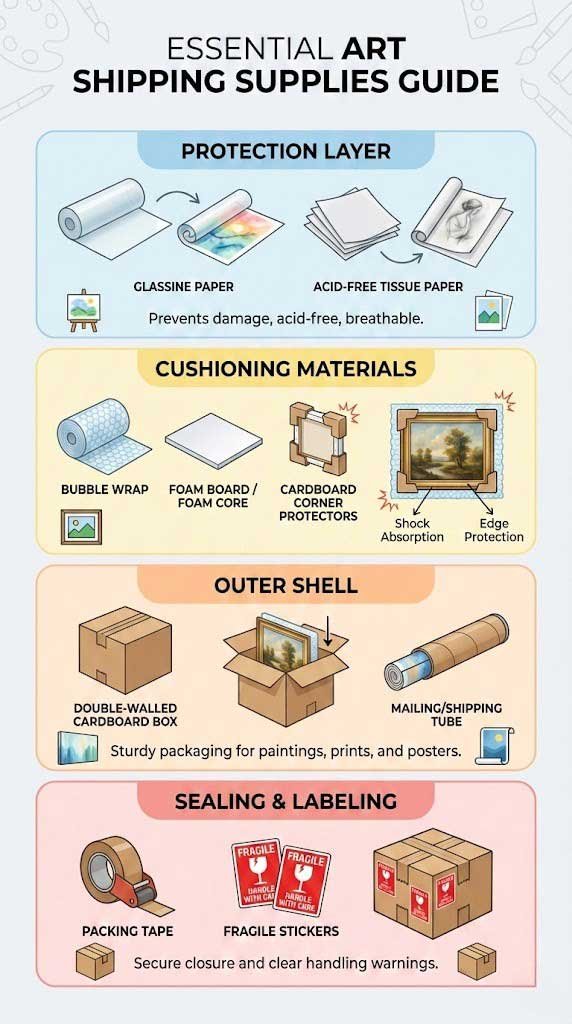
Here’s a breakdown of the essential items you’ll need:
Protection Layer
- Glassine Paper: A must have for protecting delicate surfaces. It’s acid free and grease resistant, which prevents smudges or chemical reactions that could damage your artwork. Perfect for paintings, prints, and sketches.
- Acid-Free Tissue Paper: Adds an extra layer of protection against dust and light abrasions. Ideal for wrapping smaller pieces or layering between fragile items.
Cushioning Materials
- Bubble Wrap: Provides shock absorption. Use small bubbles for lighter or detailed artwork and large bubbles for heavier or more fragile pieces like framed paintings.
- Foam Board / Foam Core: Adds structure and prevents bending. Use as a backing for paintings or inserts inside boxes.
- Cardboard Corner Protectors: Protect edges of frames and stretched canvases from crushing or impact during handling.
Outer Shell
- Double-Walled Cardboard Box: A heavy duty, durable box offers the strongest protection for most artworks. Choose a size that allows room for cushioning materials around your art.
- Mailing Tube / Shipping Tube: Essential for rolled canvases, prints, or posters. Ensure the tube is sturdy and long enough to avoid bending.
Sealing & Labeling
- Pressure-Sensitive Packing Tape (Brown Tape): Secures boxes or tubes effectively and prevents accidental openings.
- Fragile Stickers: Clearly indicate that your package contains delicate items to alert handlers and reduce the risk of rough handling.
Using the right combination of protection, cushioning, and a strong outer shell is the first step toward successful fine art shipping and ensures your fragile items are fully prepared for transport with an art courier.
How to Pack Artwork for Shipping (By Type)
Different types of artwork require different packing methods to ensure they arrive safely. Whether you’re shipping rolled prints, framed canvases, or high value sculptures, following the correct method is essential for fine art shipping and handling fragile items with care.
Method 1: Shipping Rolled Canvas or Prints (The Tube Method)
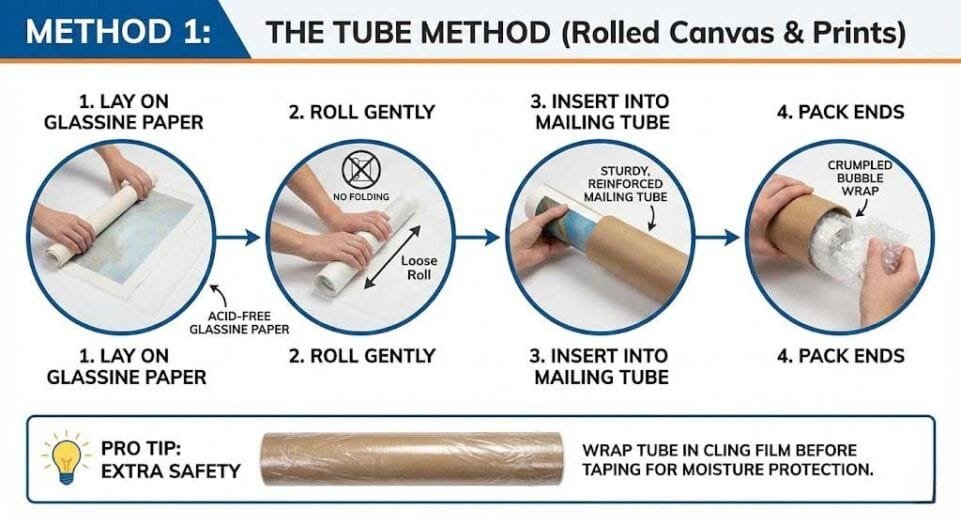
Best for: Unstretched canvas, posters, and fine art prints.
- Lay the Art on Glassine Paper – Use acid free, archival quality glassine paper to protect the surface from smudges or scratches.
- Roll Gently – Carefully roll the artwork without folding. Rolling reduces stress on the fibers and prevents creases.
- Insert into a Heavy Duty Mailing Tube Choose a sturdy, reinforced shipping tube to withstand impact during transit.
- Pack the Ends with Bubble Wrap – Fill the tube ends with extra bubble wrap to prevent sliding and reduce shock.
Tip: For added protection, wrap the tube in cling film or additional padding before sealing with packing tape.
Method 2: Shipping Framed Art & Stretched Canvas (The Box Method)
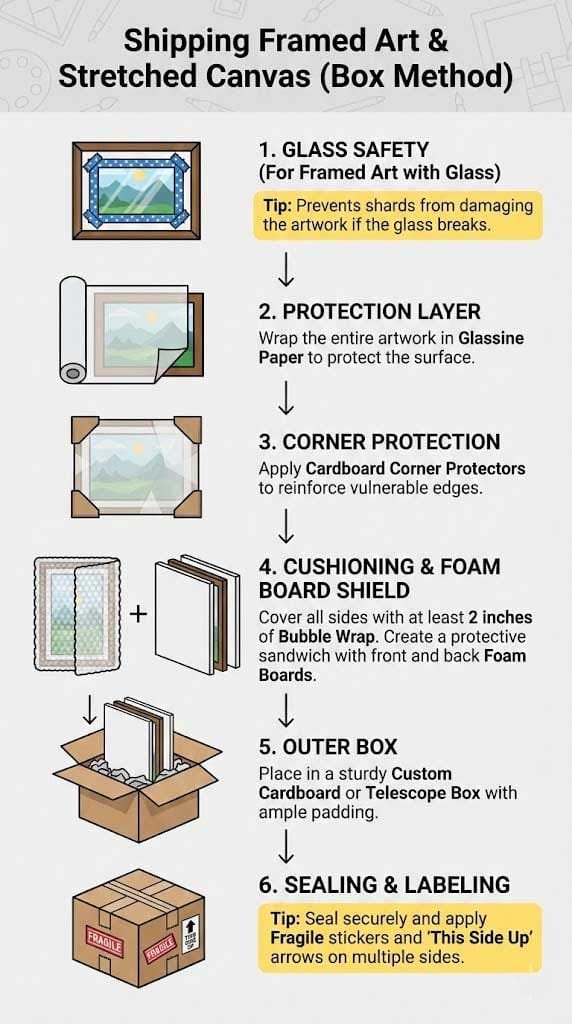
Glass Safety: If your artwork has glass, use the “Star Tape”.
method: apply painter’s tape in a star pattern across the glass. If it breaks, shards stay in place.
Step by Step Packing:
- Wrap the Artwork in Glassine Paper – Protects the surface from scratches and maintains archival quality.
- Add Cardboard Corner Protectors – Cushion all four corners of the frame or stretched canvas.
- Wrap in Bubble Wrap (2 Inches Thick) – Provides shock absorption on all sides.
- Sandwich Between Foam Boards – Place foam board sheets on the front and back to create a puncture proof shield.
- Place in a Custom Cardboard or Telescope Box – The box should leave space for extra padding and allow the package to be sealed securely.
Tip: Clearly label the box with Fragile stickers and indicate which side should face up.
Method 3: Shipping High Value or 3D Art (Crating)
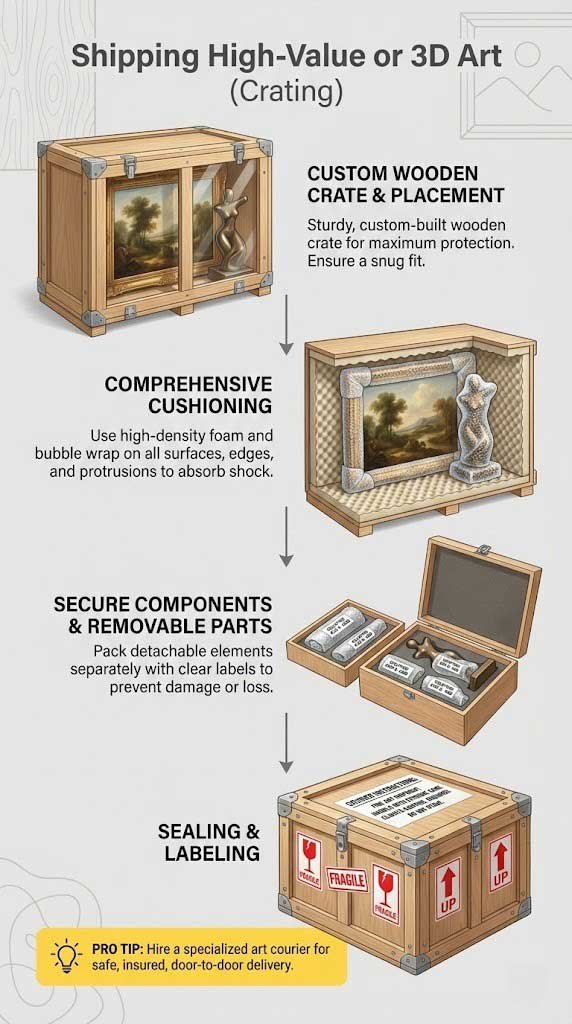
When to Use: Expensive oil paintings, large framed artworks, or heavy sculptures.
- Use a Custom Wooden Crate – Crating offers maximum protection and structural integrity for heavy or priceless items.
- Cushion Inside with Foam or Bubble Wrap – Ensure every edge and protruding part is padded to absorb shock.
- Secure All Parts – For sculptures with removable components, pack each piece separately and label carefully.
- Seal and Label – Include fragile stickers, orientation labels, and instructions for the courier.
Tip: Hire a specialized art courier for crated shipments to ensure safe, insured, and door to door delivery.
Choosing the Right Carrier & Calculating Costs
Selecting the right shipping carrier is just as important as proper packing. The choice affects delivery safety, cost, and insurance options, especially when shipping fragile items or high value artwork.
Comparing Shipping Services
- Standard Couriers: FedEx, UPS, and DHL are widely available and reliable for domestic and international shipments. They provide tracking, standard insurance, and predictable delivery times.
- Specialized Art Shippers: Companies like Arta focus exclusively on fine art shipping, offering extra care, climate controlled transport, white glove handling, and expertise in crating and fragile shipments.
Tip: For high value pieces, a specialized art courier can reduce the risk of damage and simplify international customs procedures.
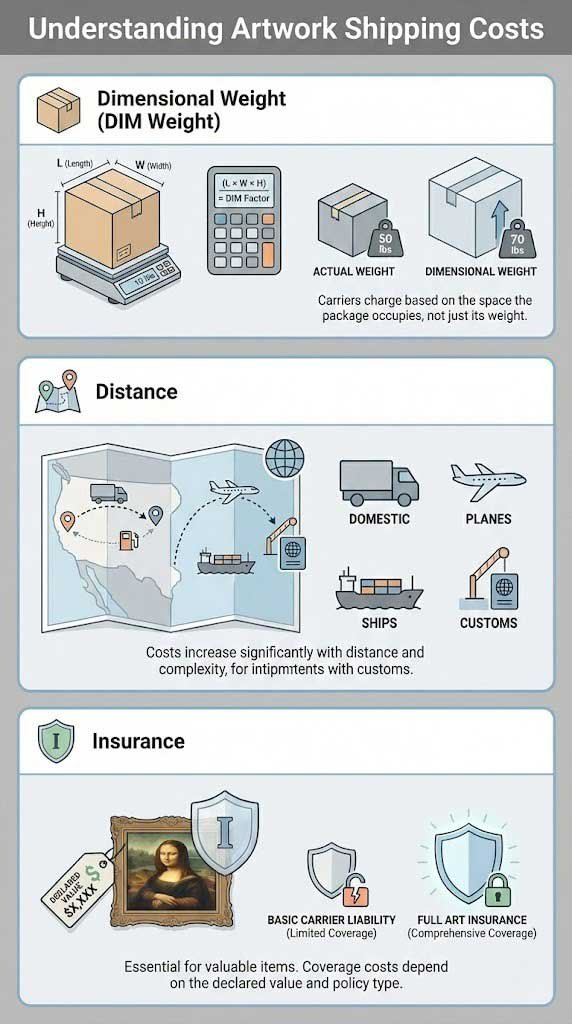
Understanding Costs
Several factors influence how much it will cost to ship your artwork:
Dimensional Weight (DIM Weight)
- Shipping costs aren’t just based on actual weight. Large but lightweight packages can incur higher fees based on DIM weight calculations.
- Measure your box dimensions accurately and compare DIM weight to actual weight to choose the most cost effective service.
Distance
- Domestic shipments are generally cheaper and faster than international shipments, which may involve customs, taxes, and longer transit times.
Insurance
- Shipping insurance is essential for protecting valuable art against loss or damage.
- Standard carrier insurance often covers only a limited amount. Consider third party art insurance for high value pieces to ensure full coverage.
- Declare the artwork’s true value when shipping to avoid underinsurance.
Tip: Always get a tracking number and keep documentation, including photos and a Certificate of Authenticity (COA), for insurance claims if needed.
International Art Shipping: What You Need to Know
Shipping artwork across borders introduces additional steps and requirements. Understanding customs, documentation, and potential fees is crucial for fine art shipping and ensuring your fragile items arrive safely and legally.
Customs Forms
When shipping internationally, you’ll need to complete a Commercial Invoice. This form details:
- The contents of your package (e.g., framed oil painting, rolled canvas print).
- The declared value of the artwork for customs purposes.
- The origin and destination of the shipment.
Accurate completion of customs forms helps prevent delays or fines and ensures smooth clearance.
Documentation
For valuable artwork, include the following:
- Certificate of Authenticity (COA): Confirms the origin and value of the art.
- Bill of Lading (BOL): The shipping contract between you and the carrier, necessary for transport and insurance claims.
Tip: Keep copies of all documents, including photos of the artwork, for both shipping and insurance purposes.
Duties and Taxes
- International shipments may be subject to duties and taxes imposed by the destination country.
- Determine in advance who is responsible for payment: the sender or the receiver.
- Including this information on shipping documents and invoices avoids surprises and ensures faster customs clearance.
Tip: For high value or collectible pieces, consult a specialized art courier familiar with international regulations to minimize risk and ensure compliance.
Common Mistakes to Avoid When Shipping Art
Even small errors in packing or labeling can result in damage or delays. Avoid these common mistakes to ensure your artwork reaches its destination safely:
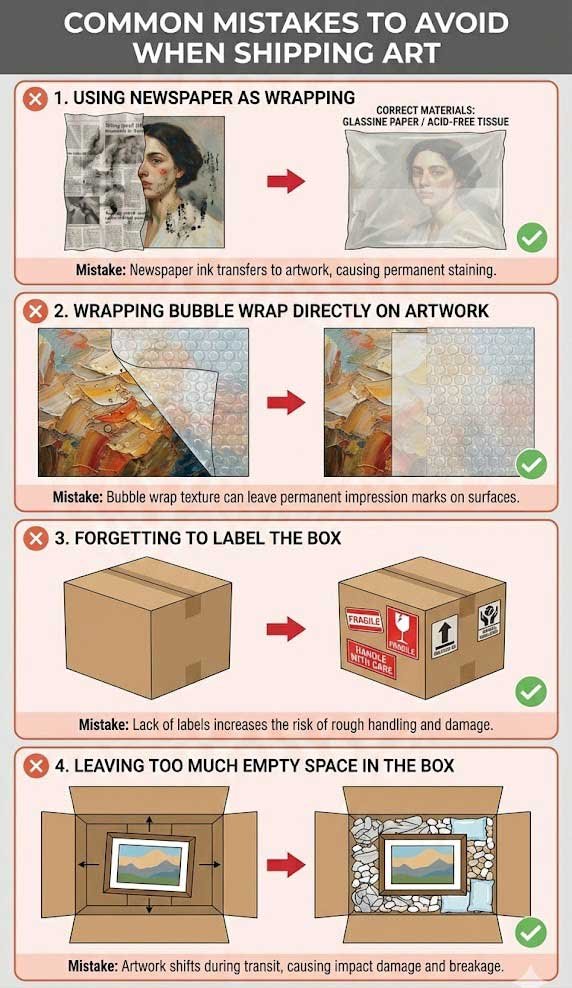
Using Newspaper as Wrapping
Newspaper ink can transfer onto your artwork, especially on delicate surfaces like prints or paintings. Always use acid free tissue paper or glassine paper instead.
Wrapping Bubble Wrap Directly on the Artwork
Placing bubble wrap directly on paint or textured surfaces can leave impressions or marks. Always insert a protective layer, such as glassine or archival tissue, between the artwork and bubble wrap.
Forgetting to Label the Box
Clearly mark boxes with “Fragile” and “This Side Up” labels. This alerts carriers and handlers to treat your package with care.
Leaving Too Much Empty Space in the Box
Extra empty space allows the artwork to shift during transit, increasing the risk of damage. Fill gaps with foam inserts, bubble wrap, or packing peanuts to immobilize the artwork inside the box.
Tip: Double-check all layers of packaging, labeling, and cushioning before sealing the box to minimize the risk of damage.
Final Thoughts
Proper packing is the key to successful fine art shipping. Taking the time to choose the right art shipping supplies, use professional packing methods, and select a reliable art courier ensures that you ship artwork safely and securely. This not only protects your valuable pieces but also saves money and preserves your reputation as an artist or collector. Avoiding common mistakes like using newspaper, skipping protective layers, or leaving empty space ensures your artwork arrives intact, ready to impress, and fully protected throughout the shipping process.
Ready to ship? Check out our recommended packaging kits for paintings, prints, and sculptures, or contact us for a custom shipping quote to get expert guidance on your next shipment.
Frequently Asked Questions (FAQ)
1. How much does it cost to ship a painting?
The cost of shipping a painting depends on several factors: size, weight, packaging materials, shipping method, and destination. Dimensional weight (DIM weight) may affect the price for large but lightweight packages. Using a reliable art courier with insurance will ensure safe delivery but may increase costs. For international shipments, such as shipping from China to the US, customs and duties may also impact the final price.
2. What is the best way to ship a large canvas?
For a large canvas, use the Box Method: wrap it in glassine or acid-free paper, add cardboard corner protectors, cover with bubble wrap, and sandwich between foam boards before placing it in a sturdy custom cardboard or telescope box. For very high-value or oversized pieces, consider crating and hiring a professional art courier to minimize risk.
3. Can I ship oil paintings that are still drying?
Shipping wet or drying oil paintings is risky. Ideally, allow the paint to dry completely before shipping to prevent smudging or sticking. If you must ship a wet painting, wrap it in archival glassine paper to protect the surface, avoid direct contact with bubble wrap, and use a sturdy tube or box with extra cushioning. A specialized art courier experienced in handling fragile items can provide additional guidance for safe transport.