
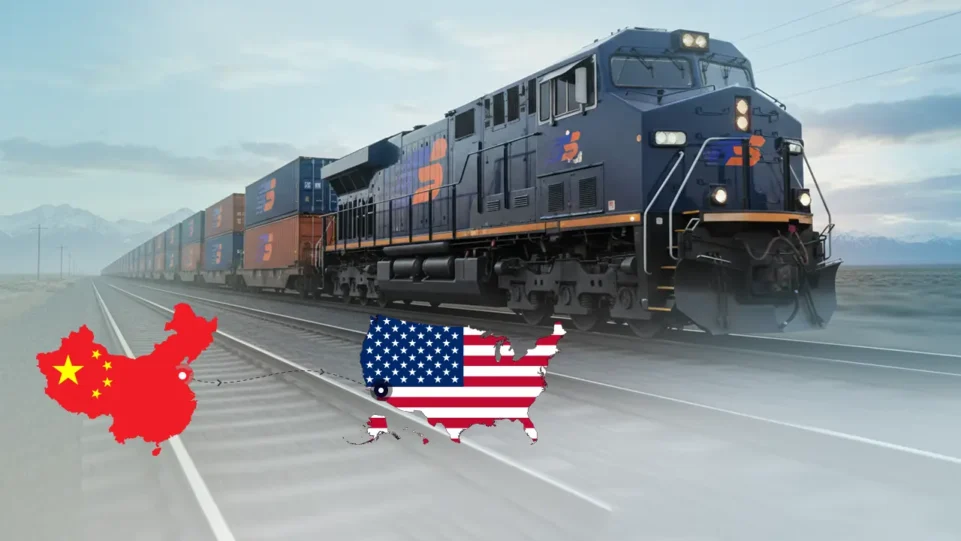
Let’s be clear from the start: there is no direct rail connection from China to the United States. The Pacific Ocean makes that geographically impossible. When we talk about “rail freight from China to US,” we’re really discussing intermodal freight – a two-stage process where shipping from China to the US first brings your goods to a West Coast port, which then continue inland by rail to their final destination.
This sea-plus-rail combination is often called domestic intermodal rail in the US, and it’s become the backbone of trans-Pacific supply chains. For shipments heading to the US Midwest, East Coast, or South, intermodal rail offers a compelling middle ground: significantly cheaper than trucking the entire distance and far more cost-effective than air freight, while adding only a few days to the delivery time compared to direct truck transport.
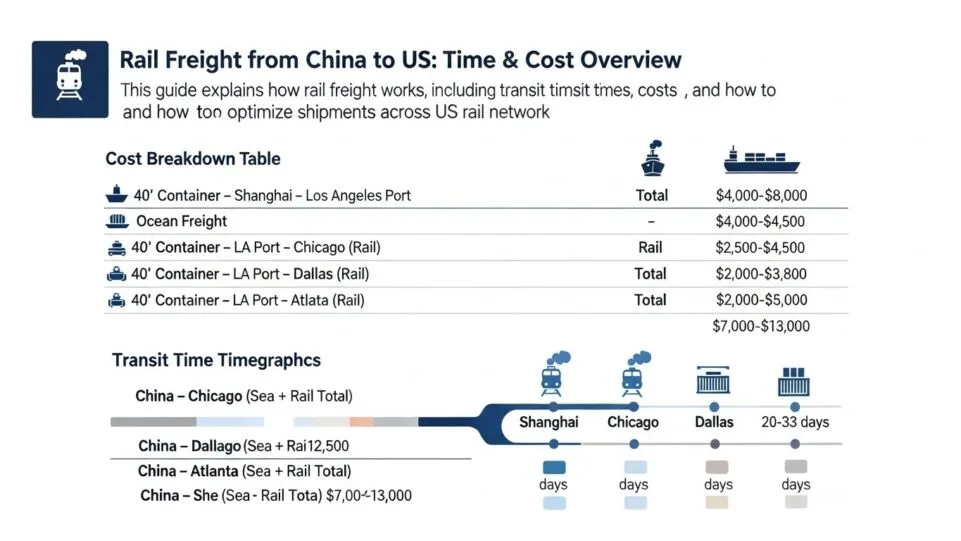
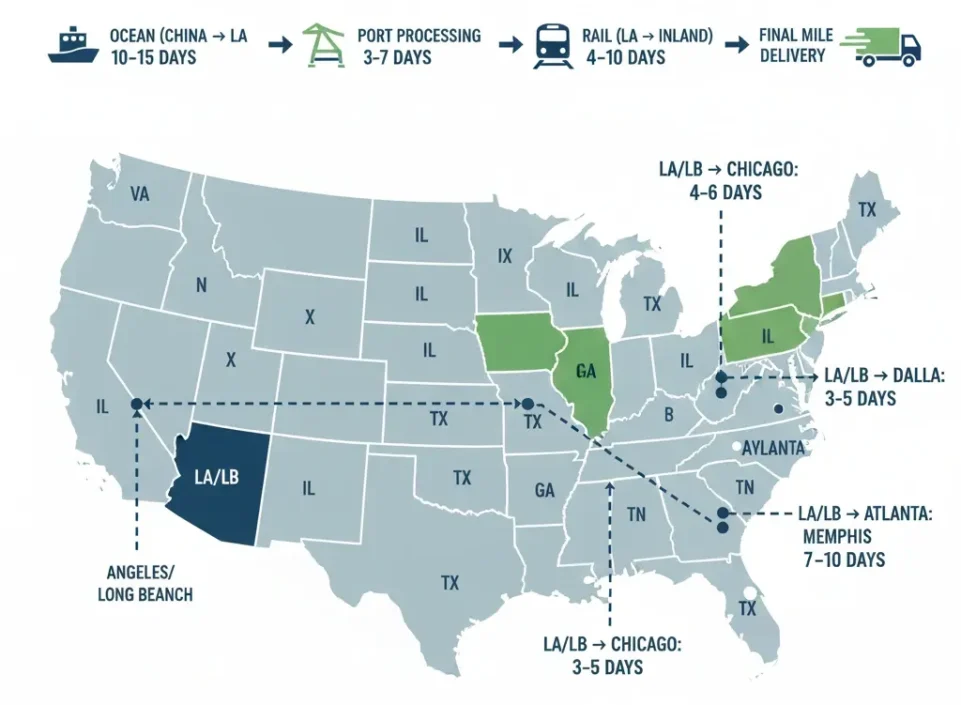
Rail Freight from China to US: Time & Cost Overview
This guide breaks down everything that matters about utilizing rail freight: how the system works, transit times, fluctuating costs, common delays, and how to leverage rail for maximum cost savings.
Cost:
| Shipment Type | Origin → Destination | Ocean Freight (China → West Coast) | Rail Freight (West Coast → Inland) | Total Estimated Cost |
| 40′ Container | Shanghai → Los Angeles Port | $4,000–$8,000 | — | $4,000–$8,000 |
| 40′ Container | LA Port → Chicago (Rail) | — | $2,500–$4,500 | $2,500–$4,500 |
| 40′ Container | LA Port → Dallas (Rail) | — | $2,000–$3,800 | $2,000–$3,800 |
| 40′ Container | LA Port → Atlanta (Rail) | — | $3,000–$5,000 | $3,000–$5,000 |
| 40′ Container | China → Chicago (Sea+Rail Total) | Combined | Combined | $6,500–$12,500 |
| 40′ Container | China → Dallas (Sea+Rail Total) | Combined | Combined | $6,000–$11,800 |
| 40′ Container | China → Atlanta (Sea+Rail Total) | Combined | Combined | $7,000–$13,000 |
Delivery Time:
| Origin | Ocean Transit (China → LA/Long Beach) | Drayage & Port Processing | Rail Transit (Port → Inland) | Final Mile Delivery | Total Door-to-Door Time |
| Shanghai → Chicago | 14–20 days | 2–5 days | 3–5 days | 1–3 days | 20–33 days |
| Shanghai → Dallas | 14–20 days | 2–5 days | 4–6 days | 1–3 days | 21–34 days |
| Shanghai → Atlanta | 14–20 days | 2–5 days | 5–7 days | 1–3 days | 22–35 days |
| Shanghai → New York (All Rail) | 14–20 days | 2–5 days | 6–8 days | 1–3 days | 23–36 days |
Intermodal Rail Freight from China to US: How It Really Works
Before we dive deeper, let’s clarify what intermodal rail freight actually means and why it’s the secret weapon of savvy importers bringing goods from China to inland US destinations.
The Two-Stage Journey: Ocean + Rail
Your container’s journey from a factory in Shenzhen to a warehouse in Chicago involves two distinct transportation modes:
- Stage 1 – Ocean Freight from (China to US West Coast): Your container travels by vessel from a Chinese port (Shanghai, Ningbo, Shenzhen, Yantian) to a major US West Coast port (Los Angeles, Long Beach, Oakland, Seattle, Tacoma). This typically takes 14-20 days.
- Stage 2 – Rail Freight (US West Coast to Inland Destination): Once the container clears customs and is unloaded at the port, it’s transferred to a rail terminal, loaded onto a train, and shipped to an inland intermodal terminal near your final destination. This can add 3-8 days depending on distance.
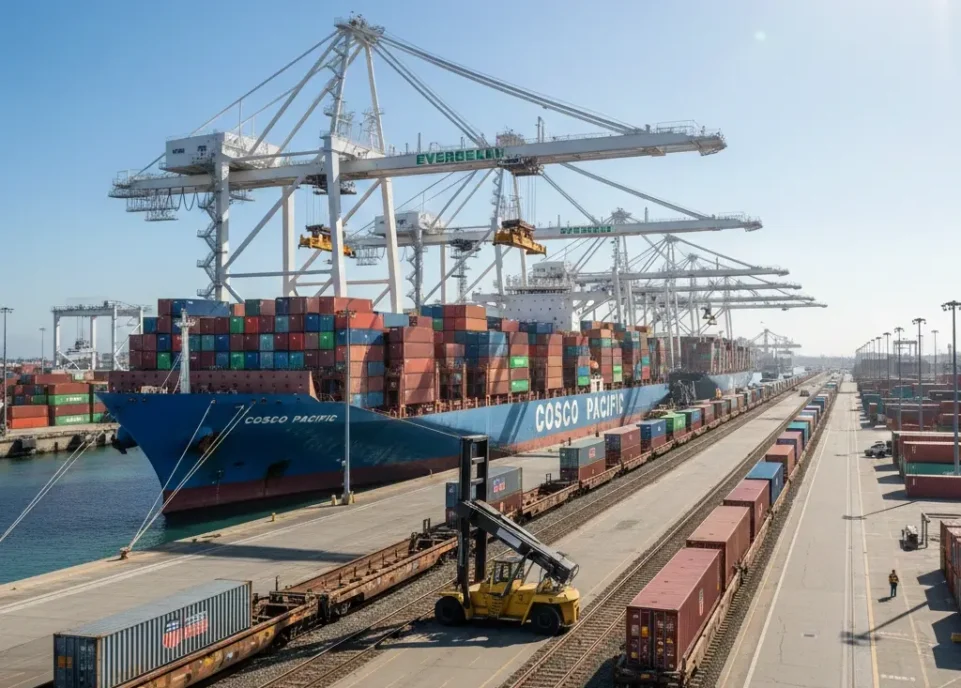
The Intermodal Rail Freight Step by Step Process
Here’s what actually happens when you choose rail:
- Port Arrival: Your container arrives at LA/Long Beach port from China
- Customs Clearance: US Customs clears your shipment (1-3 days typically)
- Port Drayage: A truck picks up your container from the port and delivers it to a nearby rail terminal (same day or next day)
- Rail Loading: Your container is loaded onto a rail car at the intermodal terminal
- Rail Transit: The train moves your container across the country (3-8 days depending on destination)
- Destination Unloading: Container arrives at the destination intermodal terminal (e.g., Chicago, Dallas, Atlanta)
- Final Mile Delivery: A local truck picks up your container and delivers it to your warehouse or distribution center
Why Use Rail Instead of All-Truck?
After your container arrives at a West Coast port, you have two options to move it inland:
Option 1: All-Truck (Drayage + Long-Haul Trucking)
- Faster (typically 2-4 days LA to Chicago)
- Much more expensive ($4,000-$7,000 for a 40′ container)
- Vulnerable to driver shortages and highway congestion
- Higher carbon footprint
Option 2: Intermodal Rail (Drayage + Rail + Final Mile Truck)
- Slightly slower (typically 5-8 days LA to Chicago)
- Significantly cheaper ($2,500-$4,500 for a 40′ container)
- More predictable schedules and capacity
- Up to 75% lower carbon emissions
- The sweet spot for shipments over 750 miles
Container Types for China-US Intermodal Rail
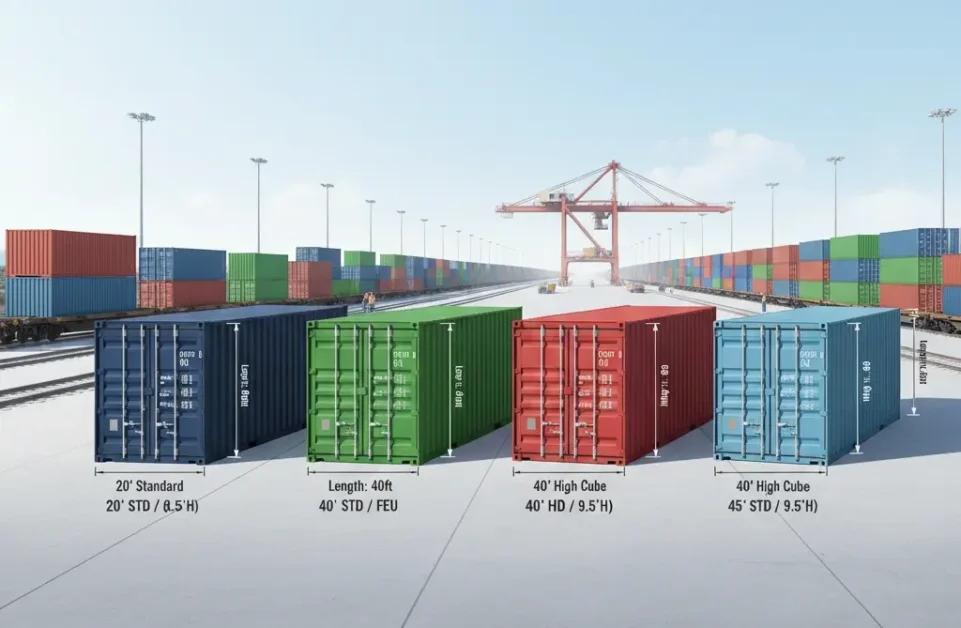
Once you decide on the sea-plus-rail route, you need to understand your container options. The equipment is standardized, which is what makes the intermodal system so efficient. Standard Container Sizes:
| Container Type | Dimensions (L×W×H) | Internal Capacity | Typical Load | Best For |
| 20′ Standard (TEU) | 19’10” × 8′ × 8’6″ | 1,169 cu ft (33 m³) | Up to 28,000 kg | Smaller shipments, dense/heavy products |
| 40′ Standard (FEU) | 40′ × 8′ × 8’6″ | 2,390 cu ft (67 m³) | Up to 26,500 kg | Most common choice for general cargo |
| 40′ High Cube | 40′ × 8′ × 9’6″ | 2,694 cu ft (76 m³) | Up to 26,500 kg | Bulky, lightweight goods; extra vertical space |
| 45′ High Cube | 45′ × 8′ × 9’6″ | 3,040 cu ft (86 m³) | Up to 27,500 kg | Maximum capacity shipments |
Important Rail Note: While all these containers can travel by sea from China, not all US rail routes accept 45′ containers. The vast majority of intermodal rail uses 40′ and 40′ high cube containers. Always confirm container size compatibility with your rail provider.
FCL for Intermodal Rail Freight: The Only Real Option
Unlike ocean freight, where you can choose between FCL or LCL, intermodal rail freight from China is almost exclusively FCL. Here’s why:
- Rail terminals are designed for efficient container handling, not LCL consolidation
- The cost savings of rail only make sense when you have enough volume to fill or nearly fill a container
- LCL shipments are typically trucked directly from the port to avoid the extra handling
Decision Rule: If your cargo is less than 15 CBM, truck it directly from the port. If you have 20+ CBM and your destination is more than 750 miles from the West Coast port, rail becomes the cost-effective choice.
China to USA Intermodal Transit Time
Understanding realistic transit times is crucial for inventory planning. Let’s break down each leg of the journey and what can affect timing.
| Route | Ocean (China → LA) | Port Processing | Rail (LA → Destination) | Final Mile | Total Transit | Key Variables |
| China → Chicago | 14–20 days | 2–5 days | 3–5 days | 1–2 days | 20–32 days | Port congestion, rail schedule |
| China → Dallas | 14–20 days | 2–5 days | 4–6 days | 1–2 days | 21–33 days | Southern route reliability |
| China → Atlanta | 14–20 days | 2–5 days | 5–7 days | 1–2 days | 22–34 days | Longer rail distance |
| China → NYC/NJ (via Rail) | 14–20 days | 2–5 days | 6–8 days | 1–3 days | 23–36 days | Cross-country rail time |
| China → Memphis | 14–20 days | 2–5 days | 4–6 days | 1–2 days | 21–33 days | Central location advantage |
Factors Affecting Intermodal Transit Time from China to US
The total transit time is determined by several critical variables across both the ocean and rail segments:
Ocean Segment Variables:
- Vessel Schedule Reliability: Some shipping lines are more punctual than others. Premium services typically have better on-time performance.
- Port Congestion: LA/Long Beach can experience severe delays during peak season (August-October). In recent years, port congestion has added 7-21 days to some shipments.
- Customs Clearance Speed: Proper documentation and ISF filing 24 hours before vessel departure prevents costly customs holds.
Rail Segment Variables:
- Rail Ramp Availability: Not all containers can be loaded immediately. Peak volumes may cause 1-2 day wait times at origin rail terminals.
- Service Type: Premium “Z-trains” offer faster 3-day LA-Chicago service, while standard trains take 5-7 days on the same route.
- Weather Events: Severe weather along rail corridors (winter storms, flooding, extreme heat) can cause delays.
- Rail Network Capacity: During peak retail season, rail capacity tightens, potentially causing schedule delays.
- Destination Terminal Processing: Busy inland terminals may take 1-2 days to unload and stage your container for pickup.
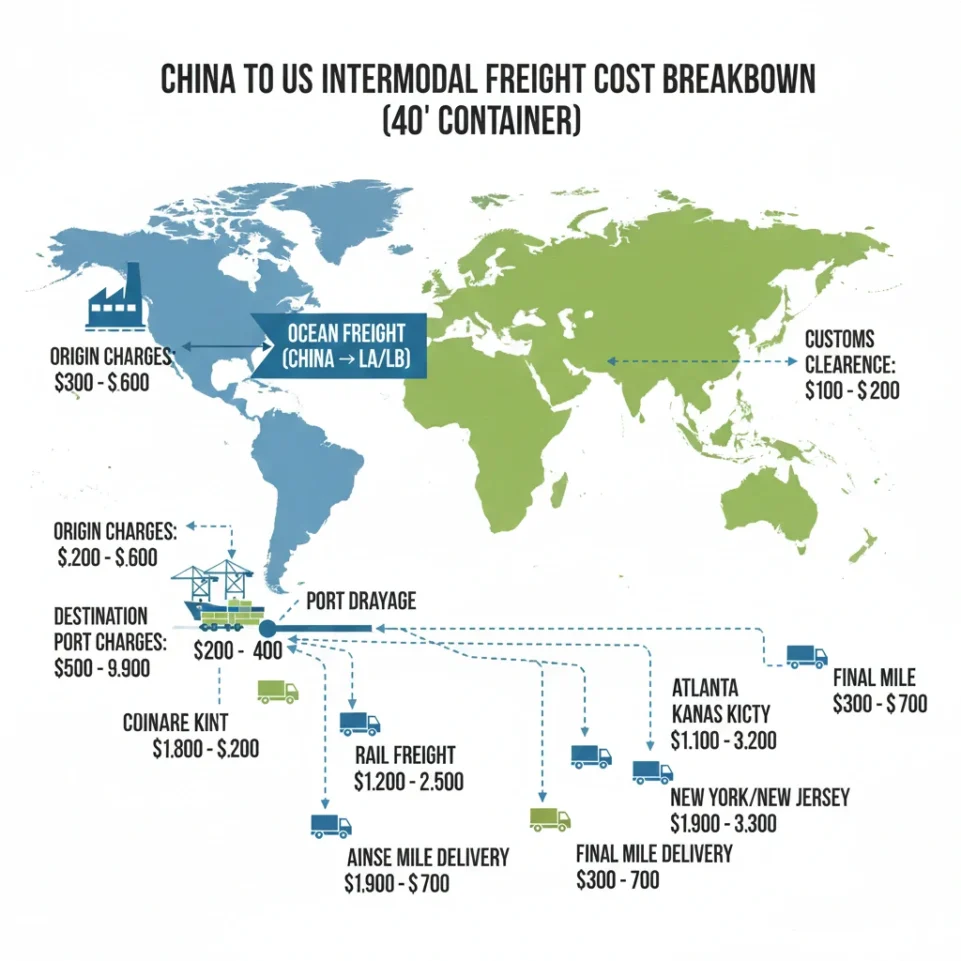
Intermodal Freight Cost Breakdown China-US (Door-to-Door)
Understanding the true total cost requires looking at both the ocean and rail components, plus all the fees that connect them. This table provides estimated total costs for a complete door-to-door service using sea freight from China plus intermodal rail to major US inland destinations.
| Cost Component | 40′ Container | Notes |
| Ocean Freight (China → LA/LB) | $4,000–$8,000 | Highly variable by season and market conditions |
| Origin Charges (China) | $200–$400 | Terminal handling, documentation fees |
| Destination Port Charges (LA) | $800–$1,400 | Unloading, terminal handling, pier fees |
| Customs Clearance & Brokerage | $250–$500 | ISF filing, customs broker fees, bond |
| Port Drayage (Port → Rail Terminal) | $300–$600 | Short truck move to intermodal facility |
| Rail Freight (LA → Chicago) | $2,500–$4,500 | Line haul, fuel surcharge, terminal fees |
| Final Mile Delivery (Chicago area) | $400–$800 | Dray from rail terminal to warehouse |
| Import Duties & Taxes | Variable | 0–25% of product value (depends on HS code) |
| TOTAL (Excluding Duties) | $8,450–$16,200 | China factory to Chicago warehouse |
Rail Freight Rates: Major Inland Destinations
| Route (All from LA/Long Beach Port) | Standard Rail Service (40′ Container) | Premium Rail Service (40′ Container) | Typical Transit Time |
| LA/LB → Chicago | $2,500–$4,000 | $3,500–$5,000 | 5–7 days (standard) / 3 days (premium) |
| LA/LB → Dallas | $2,000–$3,500 | $2,800–$4,200 | 4–6 days |
| LA/LB → Kansas City | $1,800–$3,200 | $2,500–$3,800 | 3–5 days |
| LA/LB → Atlanta | $3,000–$4,800 | $3,800–$5,500 | 5–7 days |
| LA/LB → Memphis | $2,200–$3,800 | $3,000–$4,500 | 4–6 days |
| LA/LB → Charlotte | $3,200–$5,000 | $4,000–$5,800 | 6–8 days |
| LA/LB → New York/New Jersey | $3,500–$5,500 | $4,500–$6,500 | 6–8 days |
What Drives Intermodal Rail Costs?
Understanding cost drivers helps you budget accurately and identify savings opportunities:
Distance & Lane Balance:
- Longer distances = higher costs (but better savings vs. trucking)
- Imbalanced lanes cost more (e.g., more freight moves eastbound than westbound, so westbound rates are often lower to incentivize backhaul)
Fuel Prices:
- Rail carriers charge a Fuel Surcharge (FSC) tied to national diesel prices
- This typically adds 15-25% to the base rate
- Rail is still far more fuel-efficient than trucking (moving one ton of freight 470 miles on one gallon of fuel)
Seasonal Demand:
- Peak Season (August–October): Rates can increase 20-40% as retail imports surge
- Off-Season (January–March): Best time for negotiated rates and capacity availability
Service Level:
- Premium “Z-train” services cost 15-30% more than standard rail
- Expedited terminal handling adds additional fees
Port Congestion:
- When ports back up, drayage rates from port to rail terminal can spike 50-100%
- Rail capacity also tightens, causing rate increases
Rail Carrier & Route:
- Union Pacific and BNSF have different rate structures
- Some routes have better infrastructure and faster transit
Volume Commitment:
- Shippers moving multiple containers per month can negotiate contract rates 10-25% below spot prices
Main Intermodal Rail Routes from US West Coast
The US rail network is dominated by two major Class I railroads in the West: Union Pacific (UP) and BNSF Railway. Understanding the key routes helps you choose the best path for your China-origin freight.
Primary Intermodal Rail Corridors
| Corridor | Route | Key Terminals | Transit | Best For |
| Trans-Pacific | LA/LB → Chicago | LA, City of Industry, Chicago | 3–7 days | Midwest |
| Southern Transcon | LA/LB → Texas | LA, El Paso, Dallas, Houston | 4–6 days | Texas & Southeast |
| Northern Corridor | Seattle/Tacoma → Chicago | Seattle, Spokane, Minneapolis, Chicago | 5–7 days | Pacific NW origins |
| Central Corridor | LA/LB → Kansas City | LA, Kansas City | 3–5 days | Central US |
| Sunset Route | LA → Atlanta | LA, El Paso, New Orleans, Atlanta | 5–8 days | Southeast |
Rail Access by Major West Coast Ports
| Port | Rail Strength | Key Terminals | Notes |
| Los Angeles / Long Beach | Best rail access | ICTF, Commerce, City of Industry | Peak-season congestion |
| Oakland | Strong, less congested | UP & BNSF direct service | Good alternative to LA/LB |
| Seattle / Tacoma | High-capacity, modern | Seattle, Tacoma | Longer ocean transit (16–22 days) |
Incoterms for China-US Intermodal Shipping
Your Incoterm agreement with your Chinese supplier determines who pays for what and when risk transfers. For intermodal shipments, understanding this is crucial because you’re coordinating across multiple service providers.
| Incoterm | Who Pays Ocean Freight? | Who Pays US Rail Freight? | Risk Transfer Point | Best Use Case |
| EXW (Ex Works) | Buyer | Buyer | Supplier’s factory gate | Maximum buyer control, but maximum responsibility |
| FOB (Free On Board) | Buyer | Buyer | Vessel at China port | Most common; buyer controls ocean & rail |
| CIF (Cost, Insurance, Freight) | Seller (to US port) | Buyer | Vessel at China port | Seller quotes landed port cost; buyer handles inland |
| DAP (Delivered At Place) | Seller | Seller | Buyer’s warehouse | Seller delivers to door; buyer handles duties |
| DDP (Delivered Duty Paid) | Seller | Seller | Buyer’s warehouse | Seller handles everything including duties; highest buyer convenience |
For Maximum Simplicity: Some importers choose DAP or DDP where the Chinese supplier or their forwarder quotes a complete door-to-door price. This can work well if you have a trusted supplier with US logistics experience, but you sacrifice control over carrier selection and scheduling.
Door-to-Door Intermodal Freight from China to US
The ultimate convenience is a complete door-to-door service where one provider manages the entire journey: China factory pickup → ocean freight → customs clearance → rail transport → final delivery to your US warehouse.
| Service Level | Container Size | Route Example | Estimated Total Cost | What’s Included |
| DAP (Delivered At Place) | 40′ | Shenzhen → Chicago warehouse | $9,000–$15,000 | Everything except duties/taxes |
| DDP (Delivered Duty Paid) | 40′ | Shenzhen → Chicago warehouse | $11,000–$20,000 | Everything including estimated duties (varies by HS code) |
| DAP | 40′ | Shanghai → Dallas warehouse | $8,500–$14,000 | Everything except duties/taxes |
| DDP | 40′ | Shanghai → Dallas warehouse | $10,500–$18,500 | Everything including estimated duties |
Important Note: DDP pricing includes an estimated duty amount based on your product’s HS code and declared value. The actual duty may vary, and differences are typically reconciled after customs clearance.
Required Documentation for China to US Intermodal Freight
Getting your paperwork right is non-negotiable. For intermodal shipments, you need documents for three distinct stages: China export, US customs import, and domestic rail transport.
| Stage | Required Documents | Purpose |
| China Export |
| Value declaration, cargo details, proof of ownership |
| US Customs Import |
| Legal compliance, duty calculation, product approvals |
| Rail Transport |
| Rail movement authorization & container release |
The ISF Requirement: Don’t Skip This
The Importer Security Filing (ISF) is a US Customs requirement that catches many first-time importers off guard:
| Requirement | Details |
| What it is | Electronic filing with 10 shipment data elements |
| When to file | At least 24 hours before loading in China |
| Who files it | Forwarder/broker (but importer is responsible) |
| Penalty | $5,000 per violation + potential port hold |
| Impact on rail | Late/incorrect ISF → container held → missed rail schedule → 3–7 day delay + port storage fees ($75–150/day) |

Mastering Customs Clearance for China-US Intermodal Freight
For importers, US Customs clearance is often the biggest source of anxiety. While most commercial shipments clear in 1-3 days, documentation errors or random inspections can turn your shipment into an expensive nightmare of delays, storage fees, and missed rail schedules.
| Customs Requirement | What You Must Know |
| Customs Bond |
|
| ISF Filing (10+2) |
|
| HS Code Classification |
|
| Commercial Invoice Requirements |
|
| Types of Customs Holds |
|
| Impact on Rail Schedule |
|
How to Avoid Delays
- Work with an experienced customs broker to catch issues before filing
- Verify HS codes with your broker; get a binding ruling for complex products
- Use clear, detailed product descriptions (never vague terms)
- File ISF early (2–3 days before departure) to allow corrections
- Consider DDP service if you want the forwarder to fully handle customs clearance
Tracking Your Intermodal Shipment from China to US
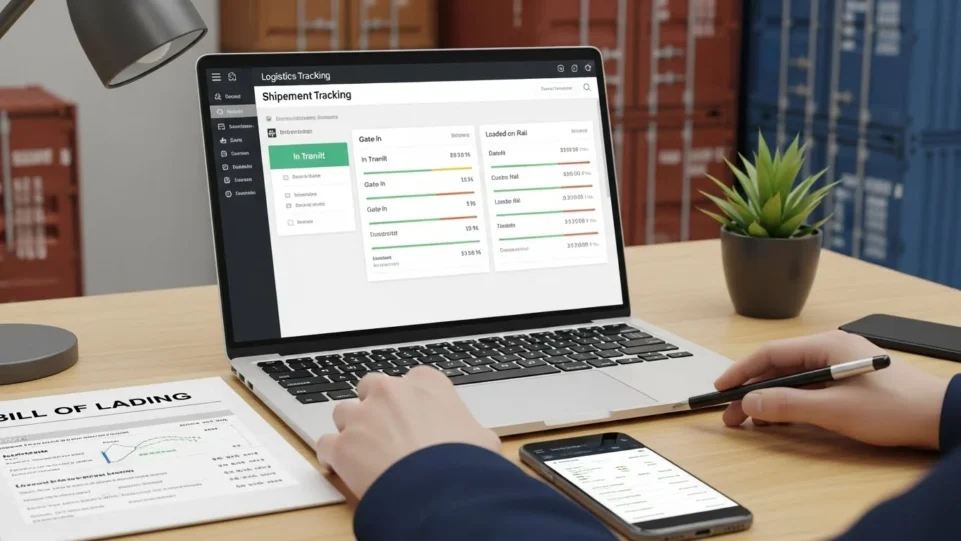
Modern intermodal logistics provides excellent visibility across the entire journey, but you need to understand what the status updates actually mean and when to take action.
| Phase | What to Track |
| Ocean Leg | Track via Bill of Lading (B/L): gate-in in China, departure, “in-transit,” and vessel arrival at the U.S. port. |
| Port Processing | Monitor status like “Container Discharged” and “Available for Pickup” or “Customs Hold”. |
| Rail Movement | Use the Container Number on rail carrier websites (BNSF / UP) to follow the container from the ramp. Key statuses: “Gate-In (Rail),” “Loaded on Rail,” “In-Transit,” “Arrived at Destination Terminal.” |
| Final Delivery | Once the container leaves the destination rail ramp, track it via the trucking company: “Available for Pickup,” “Out for Delivery,” then “Delivered.” |
Critical Tracking Identifiers
- B/L Number – primary for the ocean leg
- Container Number – used throughout ocean + rail legs
- Rail B/L – separate rail document
- Pro Number – rail carrier’s internal reference
- Customs Entry Number & ISF Number – for customs status
Tools & Methods for Effective Tracking
- Intermodal Tracking Platforms – track containers seamlessly across ocean and rail in one view.
- Real-Time Rail Visibility – live updates, ETA, and delay alerts across rail carriers and intermodal legs.
- Shipping Schedules – check vessel schedules and estimate arrival times.
Intermodal Rail vs. All-Truck: Making the Right Decision
After your container arrives at a US West Coast port from China, you face a critical routing decision: should you use intermodal rail or direct trucking to reach your inland destination?
| Factor | Intermodal Rail (Port → Rail → Destination) | All-Truck (Direct Port → Destination) |
| Cost (40′ Container LA→Chicago) | $2,500–$4,500 | $4,500–$7,000 |
| Transit Time | 5–8 days | 2–4 days |
| Cost Savings vs. Truck | 35–50% cheaper | Baseline |
| Speed Advantage | — | 2–5 days faster |
| Carbon Footprint | 75% lower emissions | Baseline (higher) |
| Capacity Reliability | More predictable in peak season | Subject to driver shortages |
| Schedule Flexibility | Fixed departure schedules | More flexible, can dispatch anytime |
| Handling Frequency | More touches (port→rail terminal→destination) | Fewer touches (direct) |
| Best Distance | 750+ miles from port | Under 750 miles from port |
| Peak Season Reliability | Less affected by capacity constraints | Vulnerable to driver shortages |
When to Use Rail, Truck, or Hybrid
| Strategy | When to Use | Key Considerations |
| Intermodal Rail | Destination ≥750 miles from West Coast port | 1–2 weeks inventory buffer, cost savings > 2–4 days faster transit, peak trucking season, reduce carbon footprint, multiple containers with volume discounts |
| All-Truck (Direct) | Destination <750 miles from port | Time-sensitive shipments, low inventory, maximum delivery flexibility, destination not rail-accessible, single container, rail volume discounts not applicable |
| Hybrid Strategy | Combine rail & truck strategically | Rail for regular inventory replenishment (cost savings), Truck for urgent shipments (low stock), Seasonal adjustment (rail during peak trucking season) |
Choosing the Right Freight Forwarder for China-US Intermodal
The right freight forwarder doesn’t just move your cargo they become a strategic partner in your supply chain. For intermodal shipments, you need a forwarder with specific capabilities. Here is What you should Look For in an Intermodal Freight Forwarder:
1. Integrated Ocean + Rail Network
- Direct relationships with ocean carriers and rail providers
- Volume commitments that guarantee space during peak season
- Ability to book both segments together for efficiency
2. Strong US West Coast Presence
- On-the-ground teams at major ports (LA/LB, Oakland, Seattle)
- Direct control over drayage to rail terminals
- Fast response when port issues arise

3. Transparent, All-Inclusive Pricing
- Clear breakdown of ocean + rail + fees
- No hidden charges from China to US that appear later
- Door-to-door quotes that you can actually budget against
4. Experienced Customs Brokerage
- Licensed customs brokers on staff or trusted partners
- Proactive ISF filing and documentation review
- Fast intervention capability for customs holds
5. Technology & Visibility
- Real-time tracking across ocean and rail segments
- Automated status updates (not just when you ask)
- User-friendly platform for quotes, bookings, and tracking
- API integration if you need it for your systems
6. Rail Network Expertise
- Relationships with both Union Pacific and BNSF
- Knowledge of optimal routing for your specific destinations
- Ability to switch between carriers when capacity or delays occur
7. Responsive Communication
- Fast response times (within 24 hours, ideally same-day)
- Proactive updates about delays or issues
- Real humans available when you need help
- Clear explanation of complex logistics without jargon
Working with TopShipping for Your China-US Intermodal Freight
We have helped hundreds of US importers navigate the complexities of Intermodal Rail Freight from China, from first-time importers to established businesses moving multiple containers every month.
What makes us different? We focus on simplifying the most challenging part of the Intermodal route: the transfer and customs process at the US West Coast port.
- Integrated Management: We seamlessly manage the three critical legs: Ocean Transit, US Customs Clearance (at the port of entry), and the Inland Rail Move.
- Risk Mitigation: We secure guaranteed rail slots and manage the high-risk drayage (truck move) between the port and the rail ramp, ensuring your container gets on the next available train without costly delays or port storage fees.
- Proactive Visibility: We consolidate tracking from the ocean carrier, US Customs, and the rail line (BNSF/UP) into a single, clear platform, giving you one source of truth for your ETA.
- Budget Certainty: Our Door-to-Door (DDP) service locks in the volatile costs of ocean freight, drayage, and the rail rate upfront, providing superior budget control.
Whether you are targeting the Midwest hubs like Chicago or need a faster route to the East Coast than the All-Water service, we manage the entire end-to-end journey for your FCL cargo.
The key to successful Intermodal shipping is having a partner who manages the transfer points, communicates clearly, and has the necessary relationships with both the port terminals and the major US rail carriers. We handle the logistics so you can focus on sales.
Final Takeaway
Rail freight from China to the US or more precisely, intermodal freight combining ocean shipping and US domestic rail doesn’t have to be complicated or stressful. While it involves more moving parts than ocean-only shipping and presents coordination challenges between sea and rail, with proper planning, the right freight forwarder, and careful attention to documentation and timing, intermodal rail becomes a reliable, cost-effective solution for reaching inland US destinations. For shipments over 750 miles from West Coast ports, intermodal rail offers 35–50% cost savings compared to trucking, is only 2–5 days slower than direct trucking, provides more reliable capacity during peak season, lowers your carbon footprint, and ensures predictable, scheduled service.
Success depends on choosing the right service level, working with an experienced forwarder managing both ocean and rail, preparing accurate customs documentation, planning realistic transit times with inventory buffers, and booking early to mitigate peak-season challenges. The winning strategy is to partner with a freight provider who treats your business like it matters, communicates clearly and proactively, and has the experience and network to handle inevitable logistics hiccups seamlessly coordinating your container from a factory in China, across the Pacific, through US customs, onto the rail network, and finally to your warehouse in Chicago, Dallas, Atlanta, or elsewhere. When done right, the rail component of your China-to-US supply chain is not just a transit method but a strategic advantage, enabling cost-effective access to the 70% of US consumers who live far from coastal ports.
FAQ: Rail Freight from China to US
Is there direct rail freight from China to the USA?
No. There is no direct rail connection from China to the United States due to the Pacific Ocean. “Rail freight from China to US” refers to intermodal freight: ocean shipping from China to a US West Coast port, then domestic rail transport to inland destinations.
How long does intermodal freight take from China to inland US destinations?
Total transit times:
- China → Chicago: 20–33 days (14-20 days ocean + 2-5 days port processing + 3-5 days rail + 1-2 days final delivery)
- China → Dallas: 21–34 days
- China → Atlanta: 22–35 days
- China → New York (via rail): 23–36 days
Add 5-15 days buffer during peak season (August-October).
How much does intermodal rail cost from West Coast ports to inland US?
Rail-only costs (from LA/Long Beach port):
- To Chicago: $2,500–$4,500 per 40′ container
- To Dallas: $2,000–$3,800 per 40′ container
- To Atlanta: $3,000–$5,000 per 40′ container
- To New York/New Jersey: $3,500–$5,500 per 40′ container
Complete door-to-door (China to inland US): $8,500–$16,000+ per 40′ container depending on destination and season.
Which US ports are best for intermodal rail service?
- Los Angeles/Long Beach: Largest volume, best rail infrastructure, but prone to congestion during peak season.
- Oakland: Excellent rail access, less congested alternative to LA/LB.
- Seattle/Tacoma: Strong rail connections to Midwest and East Coast, slightly longer ocean transit from China.
All three ports have on-dock or near-dock rail terminals served by Union Pacific and BNSF Railway.
What are the major rail carriers for intermodal from West Coast?
Union Pacific (UP) and BNSF Railway are the two dominant Class I railroads serving the West Coast to inland US routes. Both offer:
- Standard intermodal service (5-7 days LA to Chicago)
- Premium expedited service (3-4 days LA to Chicago)
- Extensive terminal networks across the US
Do I need special documentation for intermodal rail?
You need the same import documentation as any China-US shipment:
- ISF filing (24 hours before vessel departure from China)
- Commercial invoice and packing list
- Bill of Lading
- Customs bond
- Product-specific certifications (FDA, FCC, etc.)
The rail portion requires a Rail Bill of Lading which your freight forwarder handles.
Can intermodal rail deliver to Amazon FBA warehouses?
Yes, absolutely. Intermodal rail is commonly used for Amazon FBA shipments to inland fulfillment centers. Many Amazon FBA warehouses are located near major rail hubs (Chicago, Dallas, Atlanta, etc.), making rail an ideal cost-effective solution. Use DDP (Delivered Duty Paid) service for the smoothest FBA delivery experience.
What causes delays in intermodal rail freight?
Most common delays:
- Port congestion at LA/Long Beach (5-21 days during peak)
- Customs documentation issues (3-10 days)
- Missed rail departure due to slow port processing (2-7 days)
- Rail network congestion (1-5 days)
- Weather-related rail delays (1-4 days)
- Incorrect ISF filing ($5,000 penalty + 3-7 day delay)
Prevention: Work with experienced forwarders, file documentation early, build inventory buffers, and book space in advance during peak season.
Is intermodal rail more environmentally friendly than trucking?
Yes, significantly. Rail freight produces approximately 75% fewer carbon emissions than truck freight for the same distance and cargo weight. Trains can move one ton of freight approximately 470 miles on a single gallon of fuel—roughly 4 times more fuel-efficient than trucks.
For companies with sustainability goals, choosing intermodal rail for inland distribution substantially reduces your supply chain’s carbon footprint.
