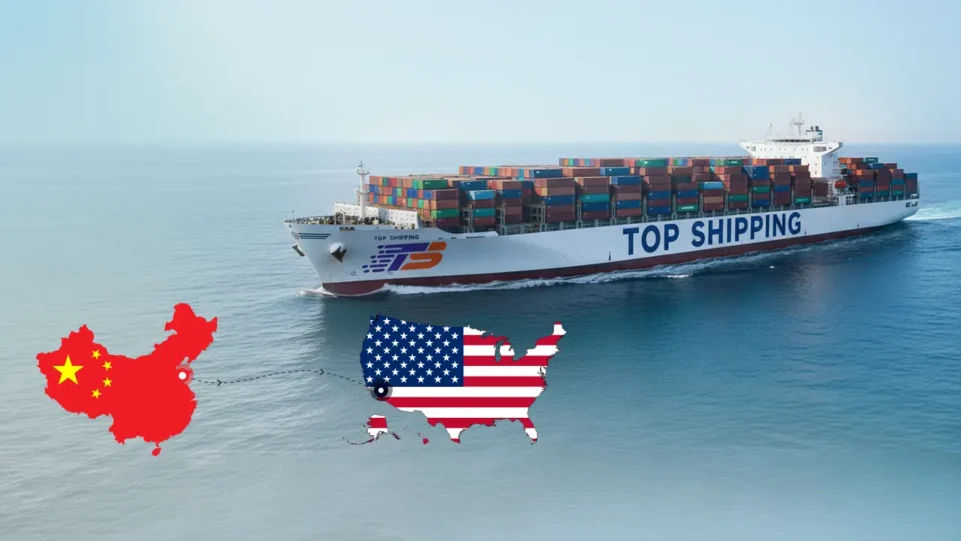
Every year, millions of containers cross the Pacific. Inside them are products that power Amazon FBA businesses, fill hardware store shelves across North America, stock boutique shops, and keep factories running. But the truth is the process still feels confusing. Transit times shift. Rates go up or down without warning. Ports get congested. And every forwarder seems to explain things differently. If you’re new to shipping from China to the US, it’s normal to feel overwhelmed.
This guide walks you through everything that matters about Sea Freight from China to US: transit times, costs, routes, FCL/LCL, booking tips, common delays, and how sea freight really works behind the scenes. It’s essentially a complete China to US shipping guide
written by someone who has shipped thousands of containers so you can avoid the usual headaches.
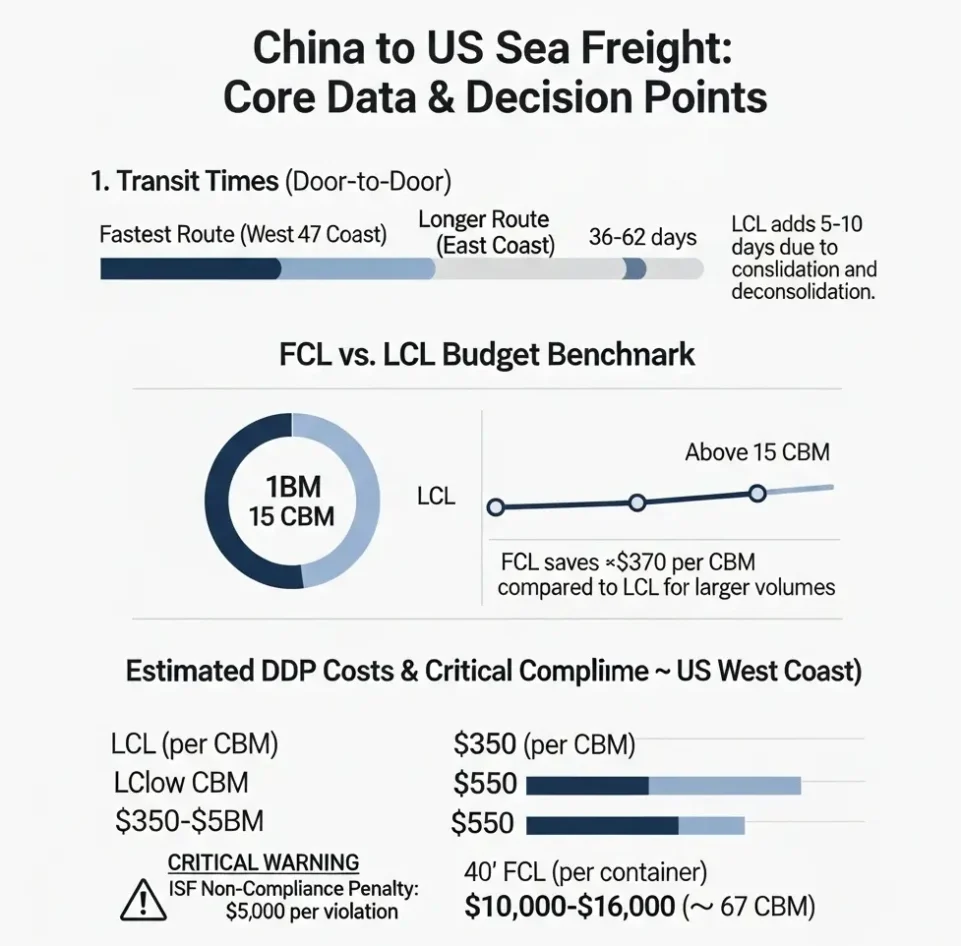
Sea Freight from China to US: Time & Cost Overview
Even with faster options like air freight and hybrid solutions, ocean freight from China to the USA remains the most cost-efficient and scalable way to move products.
Cost:
| Shipment Type | Volume | China → US West Coast (LAX/LGB) | China → US East Coast (NY/NJ) |
| LCL (Less than Container Load) | Per Cubic Meter (CBM) | 80–250 per CBM | 120–350 per CBM |
| 20′ FCL (Full Container Load) | ≈33 CBM | 2,500–5,000 per container | 3,500–6,500 per container |
| 40′ FCL (Full Container Load) | ≈67 CBM | 4,000–8,000 per container | 6,000–12,000 per container |
Delivery Time:
| Origin Port (China) | Destination Port (USA) | Origin Logistics | Destination Logistics | Average Ocean Transit (Port-to-Port) | Total Estimated Door-to-Door |
| Shanghai / Ningbo / Qingdao | Long Beach / Los Angeles (LAX) | 3–7 days | 5–15 days | 14–25 days | 22–47 days |
| Shenzhen / Guangzhou | New York / New Jersey (NY) | 3–7 days | 5–15 days | 28–40 days | 36–62 days |
| Xiamen / Tianjin | Savannah / Charleston (GA/SC) | 3–7 days | 5–15 days | 30–45 days | 38–67 days |
FCL vs. LCL Options for China to US Sea Freight
Once you decide on sea, you need to pick the right service level. The key decision in ocean freight from China to USA is whether your goods need their own container or can share space with others.
LCL: Less than Container Load (Sharing the Ride)
LCL is the solution for smaller importers whose goods don’t fill a full container. Your boxes are loaded into a container alongside cargo from other importers (a process called consolidation).
| Decision Metric | LCL: Less than Container Load | Why It’s the Right Choice | Average Total Logistics Cost (Excluding Duties) |
| Ideal Volume | 1–15 CBM | Perfect for small inventory tests, new product launches, or small boutique imports. | ≈550 per CBM |
| Average Cost Benefit | Higher total cost | You pay consolidation/deconsolidation fees, making the per-unit cost significantly higher than FCL. | — |
| Speed & Transit Time | Slower and less predictable | The process adds 5–10 days for handling at China and US ports. | — |
| Security & Handling | Higher risk | Cargo is handled multiple times at LCL facilities, requiring very durable packaging. | — |
| Best For | E-commerce startups, initial test orders, and shipments that do not justify the cost of a full container. | — | — |
The Catch: LCL usually takes a bit longer. Why? Because the process involves extra steps: cargo must be consolidated in the origin port and deconsolidated in the destination port (like Los Angeles or New York), adding anywhere from 5 to 10 days to the total sea freight from China to USA time.
FCL: Full Container Load (Your Container, Your Rules)
FCL means your goods occupy an entire shipping container, either a 20-foot (TEU) or 40-foot (FEU) unit. Even if you don’t fill every inch, you get the exclusive use of the box.
| Decision Metric | FCL: Full Container Load | Why It’s the Best Choice | Average Total Logistics Cost (Excluding Duties) |
| Ideal Volume | 15 CBM or more. Typically suited for 30 CBM (20ft) or 60 CBM (40ft). | You maximize space and minimize per-unit cost. | ≈180 per CBM (based on a 40′ container) |
| Average Cost Benefit | Significantly cheaper per unit. | Cost is fixed per container, providing superior budget control. | — |
| Speed & Transit Time | Faster and more predictable. | No time is wasted on LCL consolidation or deconsolidation. | — |
| Security & Handling | Maximum security. | The container is sealed at the factory and only opened at the final US destination. | — |
| Best For | High-volume Amazon FBA, wholesalers, and large-scale manufacturing imports. | — | — |
Summary: The LCL vs. FCL Budget Benchmark
For rough budgeting, remember this simple metric in mind for comparing LCL vs. FCL from China to USA :
- If your cargo is close to 15 CBM or more, the cost savings and speed advantages of FCL almost always outweigh LCL (saving you around 370 per CBM in logistics).
- If your cargo is below 15 CBM, LCL is the logical choice to avoid paying for unused container space.
China to USA Sea Freight Transit Time
This is one of the most common questions importers ask. And the truthful answer is: It depends on the route, season, and service type. But here’s a realistic range based on thousands of real shipments:
| Service Level | Scope of Service | Route: China → US West Coast (LAX/LGB) | Route: China → US East Coast (NY/NJ) | Key Influencing Factors |
| FCL Port-to-Port | Carrier Transit Only | 14–25 days | 28–40 days | Ocean route, vessel speed, weather |
| LCL Port-to-Port | Carrier Transit Only | 19–35 days | 33–50 days | Ocean route, LCL consolidation/deconsolidation time |
| FCL Door-to-Door (DDP) | Total Supply Chain | 25–45 days | 38–60 days | Port congestion, US Customs holds, final mile trucking distance |
| LCL Door-to-Door (DDP) | Total Supply Chain | 30–55 days | 45–67 days | Seasonal peaks, LCL handling time, final mile trucking distance |
Factors Affecting Sea Freight Time from China to US
The total sea freight shipping time from China to the US is determined by several critical variables beyond the sailing speed. Importers must account for these factors in their inventory planning:
- Service Type (FCL vs. LCL): LCL (Less than Container Load) requires mandatory consolidation and deconsolidation handling, adding an unavoidable 5–10 day delay compared to dedicated FCL (Full Container Load) shipments.
- Geographical Route: The choice between the short Trans-Pacific West Coast route (14–25 days to LAX) and the longer All-Water East Coast route (28–40 days to NY) dictates the base sea freight time.
- Port Congestion & Seasonality: High volumes, especially during Peak Season (Aug–Oct), cause ships to queue at major US ports such as Los Angeles. This is the biggest source of unpredictable delay and can add 3–15 days.
- Customs & Documentation: Any missing or incorrect paperwork (such as an incomplete ISF) can trigger a US Customs Hold and lead to delays. Using a reliable DDP service ensures compliance and reduces this risk.
- Ocean Shipping Routes: Severe weather events (like Pacific typhoons) can force vessels to reroute, impacting the final Estimated Time of Arrival (ETA).
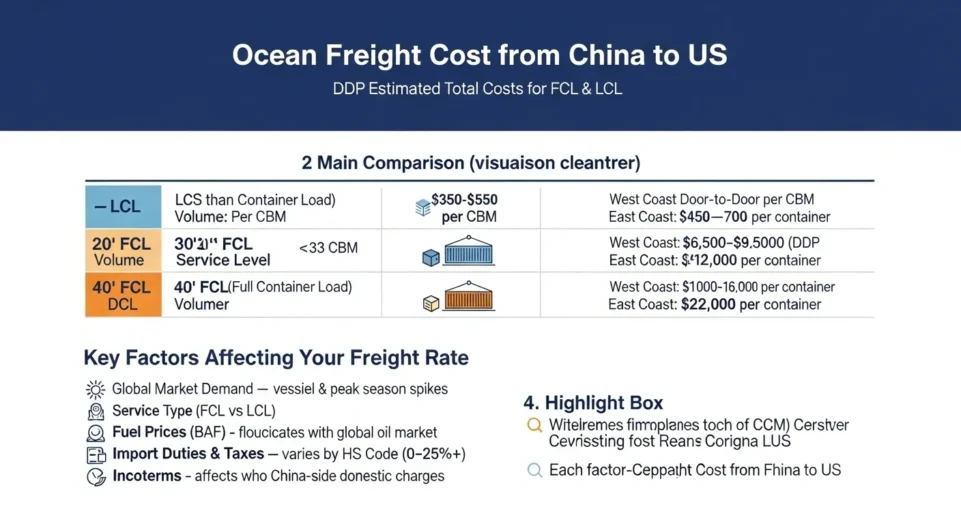
Ocean Freight Cost from China to US
This table provides the estimated total cost ranges for our comprehensive door to door (FCL) and door to door (LCL) services. These estimates cover the entire journey, including the volatile Ocean Freight component, all major port fees, USA customs clearance, duties (estimated based on average tariffs), and final inland trucking to a major US business hub.
| Shipment Type | Volume | Service Level | Route: China → US West Coast (DDP Estimated Total) | Route: China → US East Coast (DDP Estimated Total) |
| LCL (Less than Container Load) | Per Cubic Meter (CBM) | Door-to-Door (DDP) | $350 – $550 per CBM | $450 – $700 per CBM |
| 20′ FCL (Full Container Load) | ≈ 33 CBM | Door-to-Door (DDP) | $6,500 – $9,500 per container | $8,500 – $12,000 per container |
| 40′ FCL (Full Container Load) | ≈ 67 CBM | Door-to-Door (DDP) | $10,000 – $16,000 per container | $13,000 – $22,000 per container |
Market and Carrier Fluctuations: Affecting Your Sea Freight Rates
- Global Market Demand: The single biggest factor. High demand (especially during Peak Season, Aug-Oct) leads to a rapid spike in the base Ocean Freight rate due to limited vessel capacity.
- Service Type (FCL vs. LCL): FCL (Full Container Load) is always cheaper per unit volume than LCL (Less than Container Load), which includes extra, fixed consolidation fees.
- Fuel Prices (BAF): The mandatory Bunker Adjustment Factor (BAF) surcharge fluctuates directly with global oil prices.
- Import Duties & Taxes: This is the largest regulatory cost. It is highly variable, based on your product’s HS Code and value (can be 0% to over 25% of the commercial value).
- Incoterms: Your agreement with the supplier (e.g., EXW vs. FOB) determines which party pays for the expensive China domestic charges, significantly altering your final quote.
To gain budget certainty, focus on our Door-to-Door (DDP) service, which locks in these variable costs upfront.
Main Sea Shipping Routes from China to the US
Not all sea routes are equal. Some are faster. Some are cheaper. Some are more reliable in peak season. Here are the main routes most importers use.
| Route | Main Ports | Typical Transit Time | Best For / Notes |
| China → US West Coast (Fastest Route) | Los Angeles (LA), Long Beach (LB), Oakland, Seattle | 12–15 days (port-to-port) | Ideal for Amazon FBA warehouses in California, Nevada, Arizona, Washington. Fastest route but prone to congestion during peak demand. |
| China → US East Coast (Longer but More Stable) | New York, Savannah, Charleston, Miami | 26–35 days | Moves through the Panama Canal or Suez Canal. Good for East Coast stores, warehouses, and 3PLs. More stable during West Coast disruptions. |
| China → US Gulf Coast (Specialized Route) | Houston, Mobile, New Orleans | 30–40 days | Often used by importers with warehouses in central or southern states. |
Incoterms for China–US Shipping (FOB, EXW, CIF, DAP, DDP)
The table below summarizes the transfer points for responsibility and cost for the five most relevant Incoterms in trans-Pacific trade:
| Incoterm | Who Pays for Main Carriage (Ocean Freight)? | Who is Responsible for Risk Transfer? | Common Use Case in China-US Trade |
| EXW (Ex Works) | Buyer | Seller hands off risk at their factory gate in China. | High-volume buyers who want total control over the supply chain. |
| FOB (Free On Board) | Buyer | Seller hands off risk when goods are loaded onto the vessel at the China port. | Most common term; ideal balance for buyers controlling cost. |
| CIF (Cost, Insurance, and Freight) | Seller (pays freight/insurance) | Seller hands off risk when goods are loaded onto the vessel at the China port. | Less common; used when the seller is better at arranging freight (risk transfers early). |
| DAP (Delivered At Place) | Seller | Seller hands off risk when goods are ready for unloading at the buyer’s US specified address. | Used when the seller wants to quote a near-final price, but the buyer manages customs. |
| DDP (Delivered Duty Paid) | Seller | Seller hands off risk only when goods are delivered to the final US specified address. | Best for US e-commerce/Amazon FBA; highest convenience for the buyer. |
Door-to-Door Sea Freight from China to US: End-to-End Service
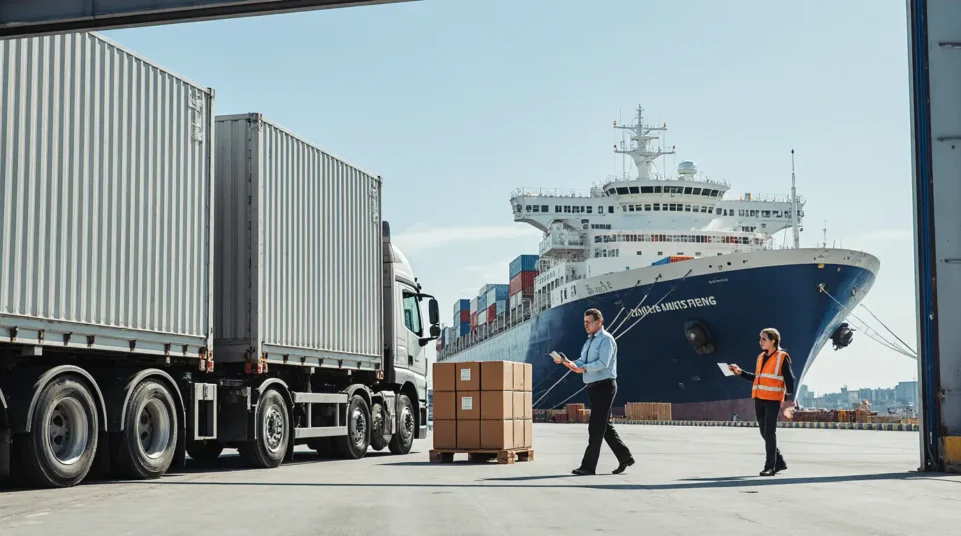
As a B2B importer, managing risk and complexity is your biggest challenge. That’s why DDP (Delivered Duty Paid) service is the gold standard, especially for US Amazon Sellers and high-volume wholesalers. The DDP approach guarantees:
- No Port Delays: Customs clearance and duties are handled well before the cargo arrives at your facility.
- Predictable Budgeting: You know your final landed cost before the goods ship from China.
- Seamless Delivery: The cargo moves directly from the US port to your warehouse or FBA center without requiring your intervention for complex border formalities.
Estimated Average DDP Cost: LCL (Less than Container Load)
This table shows the estimated average total China to US Door-to-Door (DDP) cost for small-volume importers using LCL service. This is the simplest way to budget, as it covers everything from the China factory to your US warehouse.
| Cost Component | Unit | Average Cost Estimate | Notes |
| Ocean Freight (Base Rate + Surcharges) | Per CBM | 160–250 | Varies heavily by port and season. |
| Origin & Destination Port Fees (THC/CFS) | Per CBM | 90–140 | Fees for terminal handling and deconsolidation. |
| US Customs Clearance & Admin | Per Shipment | 180–300 | Brokerage and documentation fees. |
| Import Duties & Taxes | Per Shipment | Varies (e.g., 5% to 25% of value) | Depends entirely on your product’s HS code and value. |
| Inland Freight (Trucking) | Per CBM / Distance | 120–200 | Delivery from the US port to a major US hub. |
| TOTAL DDP ESTIMATE (Excluding Duty/Tax) | Per CBM | ≈550 | Logistics cost only, before US taxes. |
Estimated Average DDP Cost: FCL (Full Container Load)
This table shows the estimated average total Door-to-Door (DDP) cost for larger importers using FCL service. This is the most cost-efficient method per unit.
| Shipment Type | Unit | Average Cost Estimate (China → US West Coast) | Notes |
| Ocean Freight (Base Rate + Surcharges) | 40′ Container | 5,000–8,000 | The most volatile part of the total cost. |
| Origin & Destination Port Fees (THC) | 40′ Container | 800–1,400 | Terminal and handling fees. |
| US Customs Clearance & Admin | Per Shipment | 250–450 | Brokerage and documentation fees. |
| Import Duties & Taxes | Per Shipment | Varies (e.g., 5% to 25% of value) | Depends entirely on your product’s HS code and value. |
| Inland Freight (Trucking) | 40′ Container | 1,000–2,500 | Cost for trucking the container from the US port to a major US hub. |
| TOTAL DDP ESTIMATE (Excluding Duty/Tax) | 40′ Container | ≈9,000 | Logistics cost only, before US taxes. |
Sea Freight vs. Air Freight: Making the Right Call
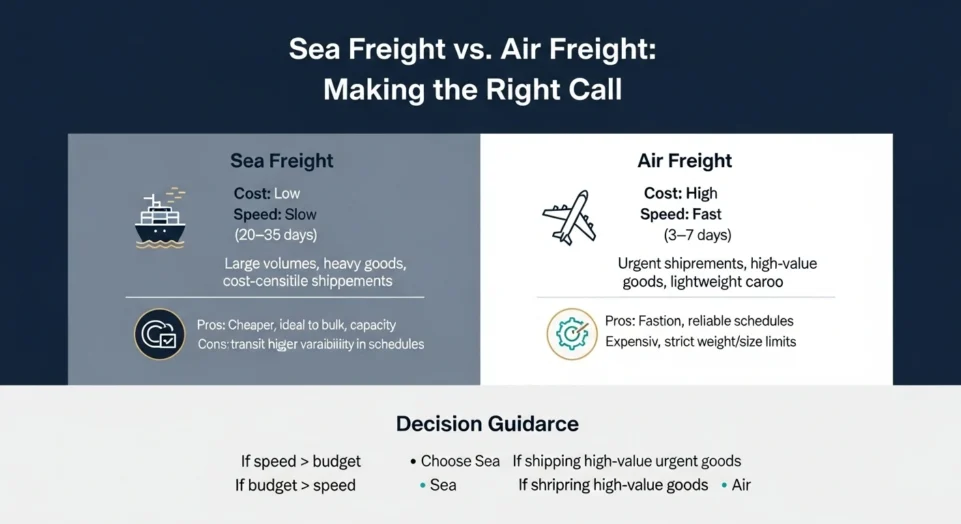
When we talk about freight shipping from China to USA, ocean transport is the dominant method, and for good reason. For importers, especially those buying in bulk, the choice often boils down to cost versus speed.
| Factor | Sea Freight (Ocean) | Air Freight |
| Cost | Significantly lower, especially for heavy or bulky goods. | Much higher, often 5x to 10x the cost of sea freight. |
| Speed/Transit Time | Slow (typically 20-50 days). | Fast (typically 3-10 days). |
| Capacity | Massive (containers like 20ft/40ft/HQ). | Limited by aircraft size and weight restrictions. |
| Best For | Heavy, bulky, non-time-sensitive, or large-volume freight shipping from China to USA. | Lightweight, high-value, perishable, or urgently needed goods. |
Required Documentation for China to US Sea Freight
Getting your paperwork right isn’t sexy, but it’s absolutely crucial. Customs doesn’t care about your tight deadline if your documents are wrong. Essential documents you’ll need:
- Commercial Invoice: Shows what you’re shipping, quantities, unit prices, total value. This is what customs uses to calculate duties.
- Packing List: Details every box, dimensions, weight, contents. Helps customs and carriers know exactly what’s in your shipment.
- Bill of Lading (B/L): Your receipt from the shipping line and your proof of ownership. Guard this document carefully.
- Importer Security Filing (ISF): Also called “10+2,” this must be filed with US Customs at least 24 hours before your cargo loads onto the ship. Missing this deadline results in penalties potentially $5,000.
- Certificate of Origin: Sometimes required depending on your products and whether you’re claiming duty benefits under trade agreements.
- Other documents depending on your cargo: FDA certifications for food/cosmetics, FCC certificates for electronics, USDA permits for wood products, etc.
Pro tip: work with your supplier early to make sure they understand what documentation you need. I’ve seen countless shipments delayed because the factory provided an incomplete or incorrect invoice.
Mastering Customs Clearance for China to US Sea Freight
For importers, US Customs clearance is often the scariest hurdle. While most commercial shipments clear in 2-3 days if everything is perfect, a small mistake in documentation or an unfortunate random inspection can quickly turn a profitable shipment into a costly nightmare of delays and storage fees.
Essential Customs Requirements You Must Meet
Meeting all sea freight from china to us requirements is the foundation of a smooth import. You need:
- Importer Security Filing (ISF): This must be filed with U.S. Customs and Border Protection (CBP) at least 24 hours before the vessel departs China. Failure to file ISF results in immediate fines of 5,000$ per violation.
- Accurate Documentation: This includes the Commercial Invoice and Packing List. CBP must see the correct value, description, and country of origin to assess duties.
- Customs Bond: Every commercial shipment entering the US requires a Continuous or Single Entry Bond to ensure any applicable duties, taxes, or penalties are paid to the US government.
Customs Holds and Examinations: Managing Shipment Risk
If CBP flags your shipment for any reason, it triggers a costly and time-consuming process:
- Documentation Review: If the paperwork is unclear, the cargo is held while CBP requests clarification.
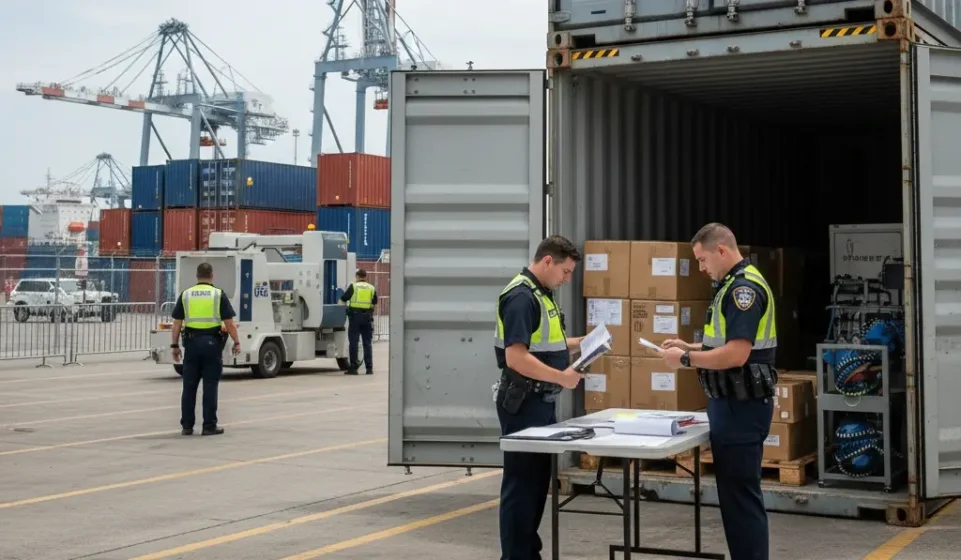
- Intensive Examination (CET Exam): CBP may physically move your container to an examination station, offload the goods, and inspect the contents. This can add a week or more to the timeline and incurs inspection fees, drayage fees, and daily demurrage/storage fees that can run into hundreds of dollars per day.
How DDP Eliminates Customs Stress
This is where the value of TopShipping’s comprehensive service is non-negotiable. When you book Door-to-Door (DDP) with us:
- We manage the risk: We file the ISF, secure the Customs Bond, and manage the full clearance process using our trusted brokerage partners.
- We ensure accuracy: Our team verifies the commercial invoice against the HS code before the shipment leaves China, minimizing documentation errors.
- Fast Intervention: If a hold occurs, our brokers are on-site and authorized to intervene immediately, expediting the release and reducing expensive storage time.
Tracking Your Sea Freight Shipment from China to US
Visibility is confidence. Modern logistics, especially our end-to-end service at TopShipping, goes far beyond simply handing you a tracking number. Tracking your sea freight from China to US involves several critical status updates you need for proactive inventory management.
The Key to Tracking: The Bill of Lading (B/L) and Container Number
Once your goods are loaded onto the vessel, your tracking revolves around two pieces of information:
- Bill of Lading (B/L) Number: This is the primary contract between the shipper and the carrier, acting as your overall shipment identifier.
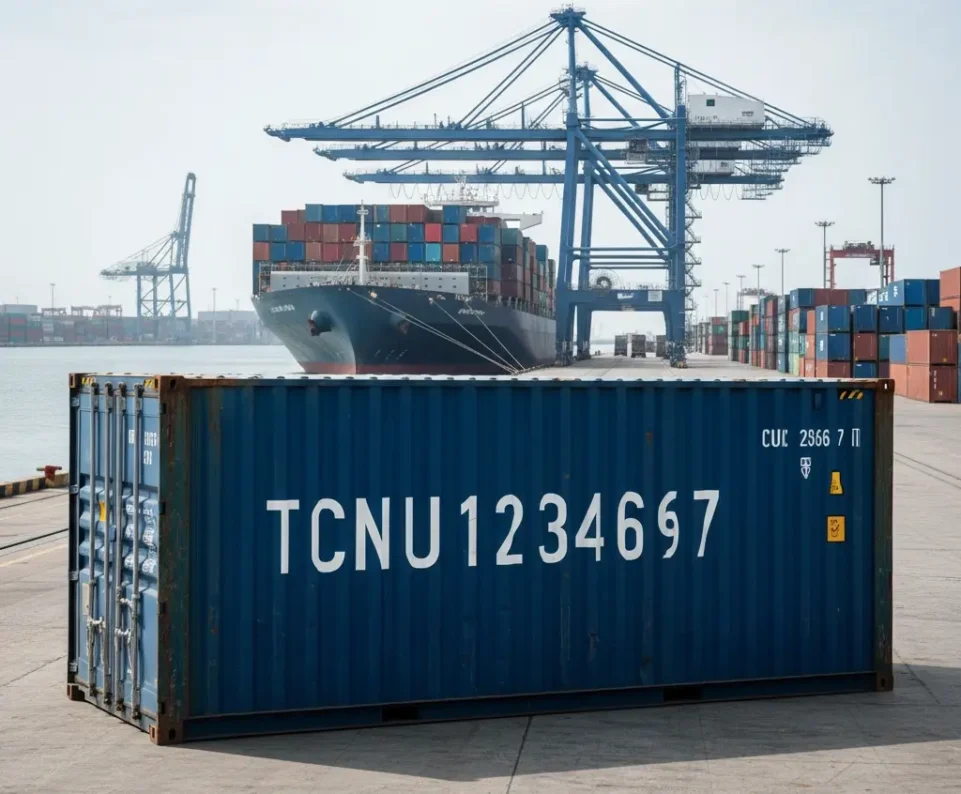
- Container Number: This is the unique 11-digit number painted on the side of your physical container (e.g., TCNU1234567).
From Port to Port: Key Statuses to Monitor
Forget the cryptic updates from the carrier’s direct website. We consolidate the information into clear, actionable statuses. These are the critical checkpoints you need to watch for:
- ETD (Estimated Time of Departure) / ATD (Actual Time of Departure): This confirms the start of the ocean transit. The ATD is often the most important update, as it resets your entire timeline.
- Transshipment/Transfer: If your vessel needs to stop and transfer cargo to a second ship in a hub port (common for smaller routes or LCL), this status is critical to watch.
- ETA (Estimated Time of Arrival): The carrier’s best guess for when the ship will reach the US destination port. Always use this as a starting point, not a guarantee.
- Discharge: The moment the container is physically lifted off the vessel in the US. This triggers the start of the destination logistics clock.
- Customs Released: The moment U.S. Customs and Border Protection (CBP) officially clears your goods. This is when destination fees are confirmed and inland transport can begin.
Choosing the Right Freight Forwarder for China to USA Sea Freight
Not all freight forwarders are created equal, and choosing the wrong partner can turn your shipping experience into a constant source of stress.
What to look for:
- Transparency: Do they give you clear, detailed quotes with no hidden fees? Or do costs keep appearing out of nowhere?
- Communication: Can you reach them easily? Do they respond quickly? Are they proactive about updates, or do you have to chase them down?
- Experience with your route: Forwarders who regularly handle China-USA shipments understand the nuances, know the reliable carriers, and have relationships with customs brokers.
- Technology: Can you track shipments online? Can you get quotes and book shipments through a user-friendly platform? Or are you still dealing with endless email chains?
- Support services: Do they offer warehousing if you need to consolidate from multiple suppliers? Can they handle customs clearance? Do they provide door-to-door delivery?
Working with TopShipping for Your China-USA Ocean Freight
We’ve helped hundreds of US importers navigate sea freight from China, from first-time importers figuring out the basics to established businesses moving multiple containers every month.
What makes us different? We actually care about making your life easier. We respond fast. We explain things clearly without drowning you in logistics jargon. We give you upfront pricing so you can budget accurately. And we use technology to make tracking and communication seamless while keeping real humans available when you need help.
Whether you’re shipping one pallet via LCL or multiple 40-foot containers, whether you’re bringing goods into Los Angeles or New York or anywhere in between, we can handle it. We manage the export process in China (that’s where we’re based), the ocean transit, US customs clearance, and final delivery to your door.
The Bottom Line: China to US Sea Freight Summary
Sea freight from China to the US doesn’t have to be complicated or stressful. Yes, it takes longer than air freight. Yes, there are more moving parts than clicking “buy” on a domestic order. But with proper planning, the right freight forwarder, and attention to documentation, ocean shipping becomes a reliable, cost-effective foundation for your import business.
The key is finding a shipping partner who treats your business like it matters, who communicates clearly, and who has the experience to handle the inevitable hiccups that come up in international logistics.
What’s your biggest challenge with importing from China is it the cost, the timeline, the customs process, or just feeling overwhelmed by all the options?
FAQ: Sea Freight from China to US
How long does sea freight take from China to the USA?
About 14–20 days to West Coast ports and 25–35 days to East Coast. Door-to-door usually 20–45 days. Add a small buffer for delays.
How long is sea freight to the US West Coast?
- Sailing time: 14–20 days.
- Door-to-door: 20–30 days.
Which US ports receive cargo from China?
- West Coast: LA, Long Beach, Oakland, Seattle, Tacoma.
- East Coast: NY/NJ, Savannah, Charleston, Norfolk, Houston.
Fastest sea shipping option?
China → West Coast (14–20 days).
Some carriers offer express services with 3–5 days faster transit.
What route do vessels take?
- Direct Trans-Pacific to West Coast.
- To East Coast: via Panama Canal or rail from a West Coast port.
Do I need a customs broker?
Yes, recommended, US customs is complex and mistakes cause delays or fines.
Can sea freight be delivered to Amazon FBA?
Yes, commonly done. DDP is the easiest option.