Introduction
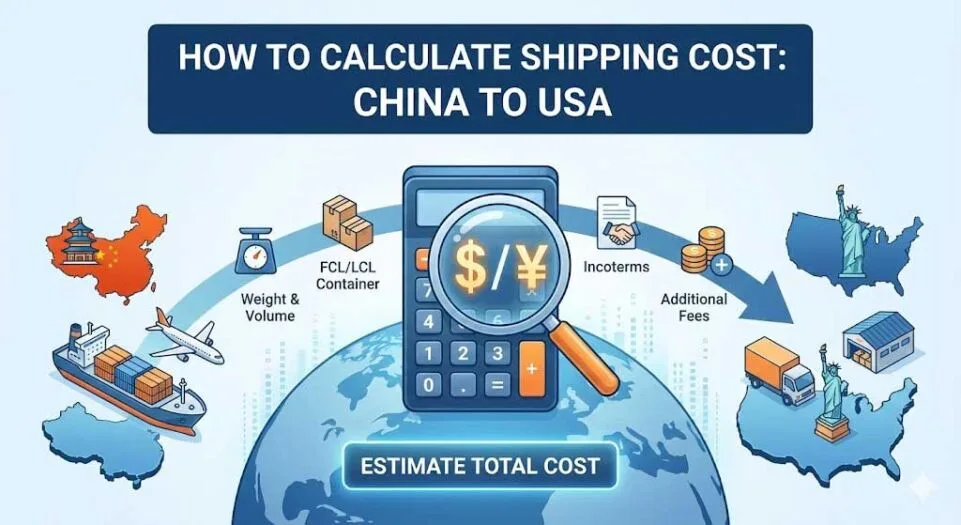
Importing goods from China to the USA is a highly popular and strategic trade route, but without proper planning, it can be time-consuming and costly. In this guide, we’ll show you how to calculate shipping cost from China to USA (calculate-shipping-cost-from-china-to-usa) and choose the most efficient shipping options for your cargo.
We’ll cover various shipping methods, including Sea Freight for FCL and LCL, Door to Door services, and key Incoterms, so you can navigate the import process smoothly and cost-effectively. This guide is designed to help importers make informed decisions, avoid unnecessary expenses, and streamline their China to USA shipments.
What Is the Shipping Cost from China to USA?
Calculate Shipping Cost from China to USA by understanding how shipping from China to USA works across different methods, including Air Freight, Sea Freight, and Express Shipping. The total cost depends on factors such as shipment weight, volume, cargo type, and seasonal demand. Pricing is also affected by volumetric weight, CBM (cubic meters), U.S. customs duties, fuel surcharges, and peak season surcharges.
In general, shipping from China to USA can cost anywhere from $1 to several thousand dollars, depending on the shipment size, urgency, and delivery method. Selecting the right option depends on cargo weight, delivery timeline, and the nature of the goods.
Average Cost for Air, Sea, and Express Shipping
To get a clearer picture, let’s compare the three main shipping methods:
1. Air Freight
Air Freight China to USA is usually suitable for shipments weighing between 50–200 kg. This shipping method offers faster delivery compared to sea freight, but costs are generally higher and depend on weight, volume, and fuel surcharges.
- Average cost: $5–$10 per kg, depending on the route (e.g., Shenzhen → Los Angeles, Shanghai → Chicago).
- Best for: Electronics, fragile items, small batches, and urgent shipments.
2. Sea Freight
Sea freight cost China to USA is ideal for heavy and bulky shipments.
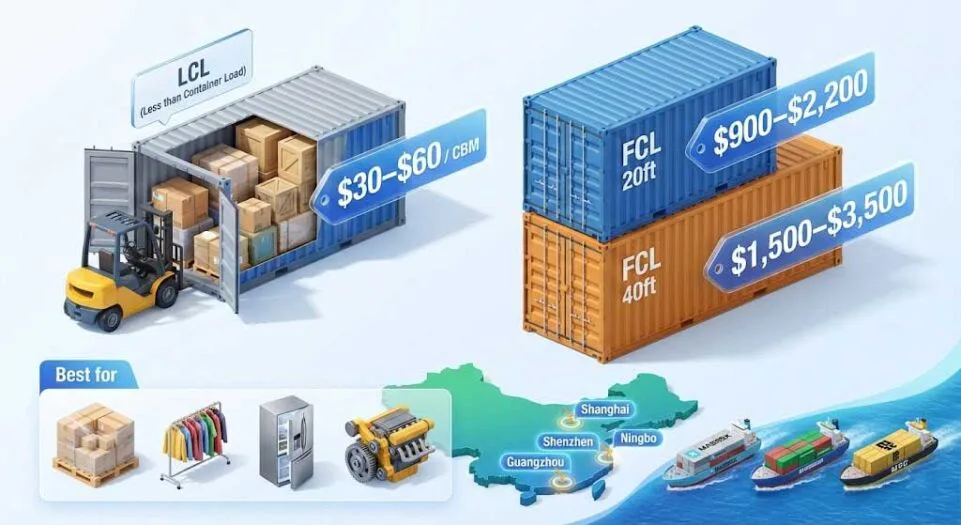
Average cost:
- LCL (Less than Container Load): $30–$60 per CBM
- FCL (Full Container Load):
- 20ft container: $900–$2,200
- 40ft container: $1,500–$3,500
- Best for: Bulk orders, clothing, appliances, and oversized cargo.
- Key ports: Shanghai Port, Ningbo Port, Shenzhen, Guangzhou
- Shipping lines: Maersk, COSCO, Evergreen, MSC
Express Shipping (DHL, FedEx, UPS)
Express shipping is the fastest option, often used for small packages or high-value goods.
- Average cost: $8–$12 per kg for packages over 20 kg.
- Delivery time: 3–7 business days.
- Best for: Electronics, urgent samples, small parcels.
Sea Freight Options: FCL vs LCL
When shipping goods from China to the USA, choosing the right sea freight option is essential. Understanding FCL vs LCL helps you optimize costs, transit times, and cargo safety.
What is FCL?
FCL (Full Container Load) means you book an entire container exclusively for your shipment. This is ideal for larger shipments or when you want complete control over your cargo.
- Container sizes: 20ft (~28 CBM) or 40ft (~56 CBM)
- Advantages: Lower cost per unit for large volumes, faster transit, and reduced risk of damage
- Disadvantages: Higher overall cost if your shipment doesn’t fill the container
What is LCL?
LCL (Less than Container Load) means your cargo shares a container with other shipments. This option is suitable for smaller volumes.
- Cost: Typically $30–$60 per CBM
- Advantages: Pay only for the space you need, flexible volume requirements
- Disadvantages: Slightly longer transit time due to consolidation/deconsolidation and moderate risk of handling damage
FCL vs LCL Comparison
| Feature | FCL (Full Container Load) | LCL (Less than Container Load) |
|---|---|---|
| Ideal Volume | Full container (20ft: ~28 CBM, 40ft: ~56 CBM) | Small shipments |
| Cost | $1,500–$3,000 per 20ft/40ft container | $30–$60 per CBM |
| Transit Time | Faster | Slower due to consolidation |
| Risk of Damage | Low | Moderate |
| Flexibility | Low | High |
Example:
- FCL: Shipping 28 CBM from Shanghai to Los Angeles may require a full 20ft container, costing ~$1,800.
- LCL: Shipping 10 CBM in shared container space costs ~$300–$600, but may take a few extra days due to consolidation.
By comparing FCL vs LCL, importers can choose the most cost-effective and efficient sea freight from China to USA based on their cargo volume and urgency.
Why Shipping Rates Change?
Shipping rates from China to the USA can fluctuate due to several factors:
- Seasonal demand: Peak seasons like Chinese New Year or Black Friday increase rates.
- Fuel costs: Fuel surcharges can add extra charges.
- Customs and tariffs: Import duties, tariffs, and clearance fees affect total costs.
- Cargo type: Hazardous goods, oversized items, or fragile cargo may cost more.
- Global logistics disruptions: Port congestion, strikes, or global events can spike prices.
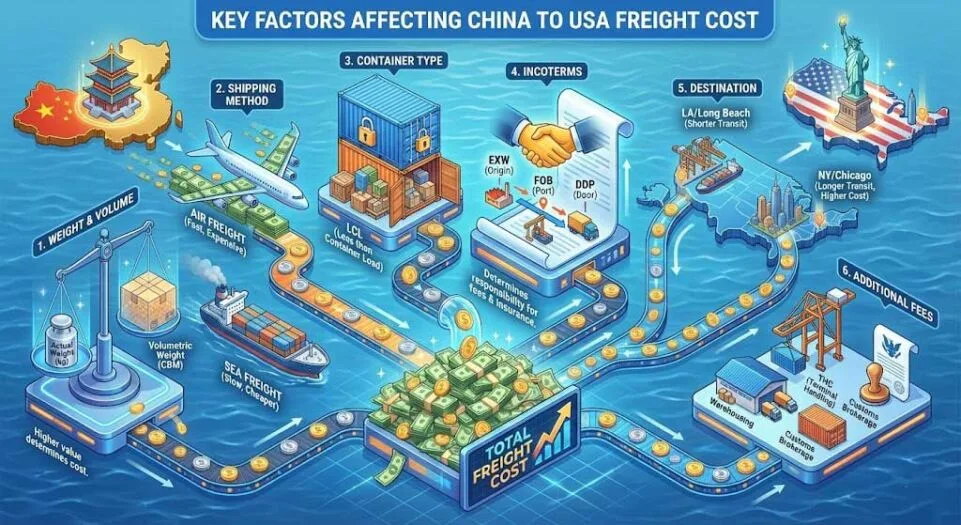
Key Factors That Affect China to USA Freight Cost
- Weight and Volume: Shipping cost per kg and volumetric weight play a major role.
- Shipping Method: Air freight is faster but more expensive, sea freight is slower but cheaper.
- Container Type: FCL vs LCL impacts the price significantly.
- Incoterms: Terms like FOB, EXW, DDP, DAP determine who pays for shipping, duties, and insurance.
- Destination: Costs vary depending on the US port: Los Angeles, Long Beach, New York, Chicago.
- Additional Fees: Warehousing fees, port charges, THC (Terminal Handling Charges), delivery charges, customs brokerage fees.
How to Calculate Shipping Cost from China to USA (Step-by-Step)
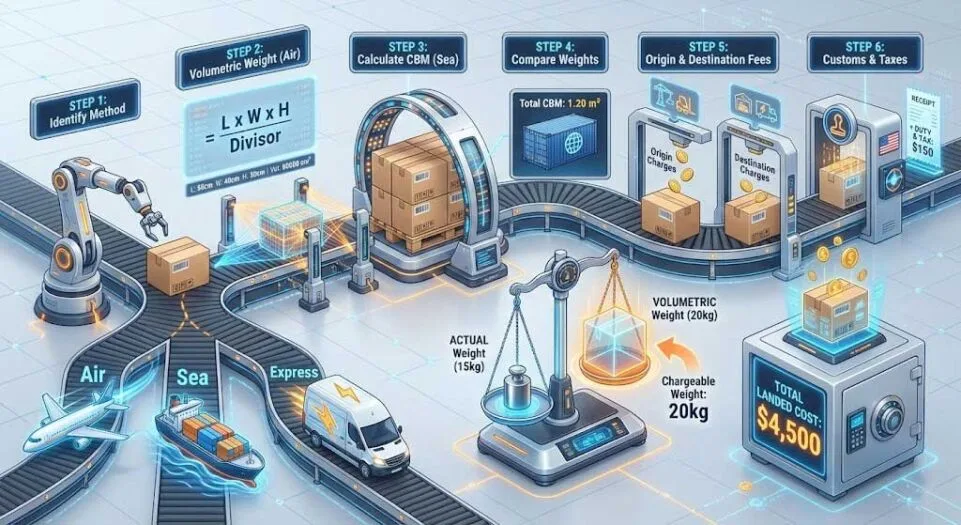
Calculating the shipping cost from China to the USA might seem complex at first, but breaking it down step-by-step makes it much easier. By understanding factors like air freight cost China to USA, sea freight CBM, volumetric weight, customs duties, and port charges, you can accurately estimate your shipping expenses and choose the best method for your shipment.
Step 1: Select the Optimal Shipping Method
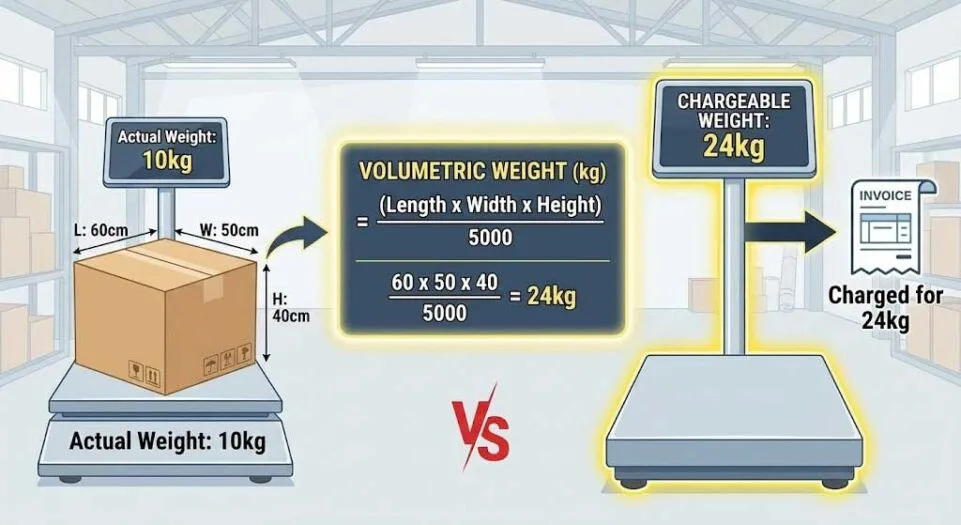
Step 2: Calculate Volumetric Weight (Air & Express)
Airlines charge based on the space a package occupies, not just its weight. You will be billed for whichever is higher: Actual Weight or Volumetric Weight.
Step 3 : Calculate CBM for Sea Freight (LCL)
If you aren’t filling a whole container, you use LCL (Less than Container Load), which is priced per Cubic Meter (CBM).
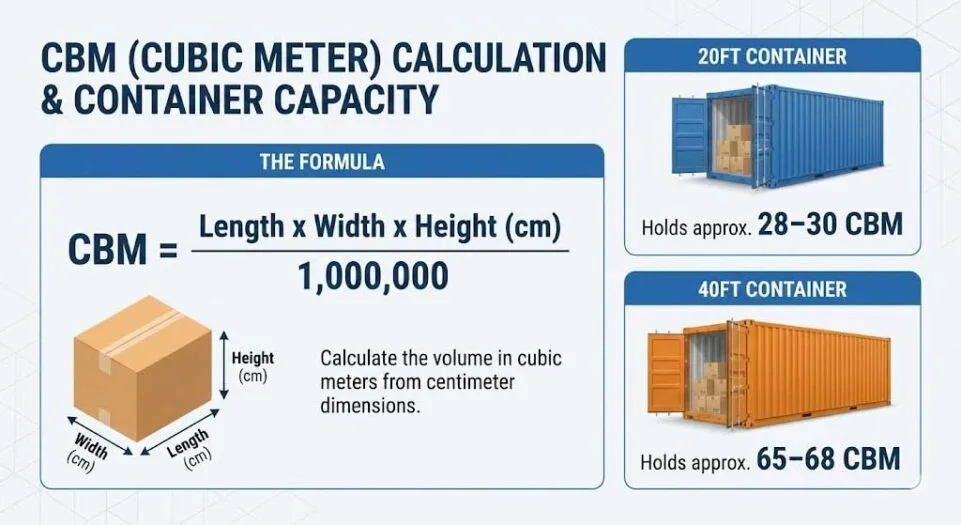
CBM (Cubic Meter) helps determine space usage in a container. Use this basic calculator to estimate sea freight from China to US costs quickly and accurately.
Step 4 : Account for Origin and Destination Charges
The “Freight Rate” is only the cost of moving the box from port to port.
You must add:
- Origin Charges (China): Inland trucking, export clearance, and terminal handling.
- Destination Charges (USA): Custom bonds, Port Maintenance Fees (PMF), and “Last Mile” delivery to your warehouse via UPS or LTL trucking.
Step 5:Include Origin & Destination Charges
Shipping cost includes more than just freight:
- Origin Charges: Packaging, pickup, export documentation, handling.
- Destination Charges: Terminal handling charges (THC), delivery fees, local trucking.
- Example: Port charges in Shanghai + Delivery to Los Angeles warehouse
Always ask your freight forwarder China to USA for a full breakdown.
Step 6: Add Customs Duties & Import Taxes
Customs duties, import taxes, and tariffs significantly affect total cost:
- Customs duties USA depend on HS Code of the product.
- Tariff rates vary by category: electronics, clothing, or hazardous goods may differ.
- Use DDP or DAP shipping terms to know who pays duties seller or buyer.
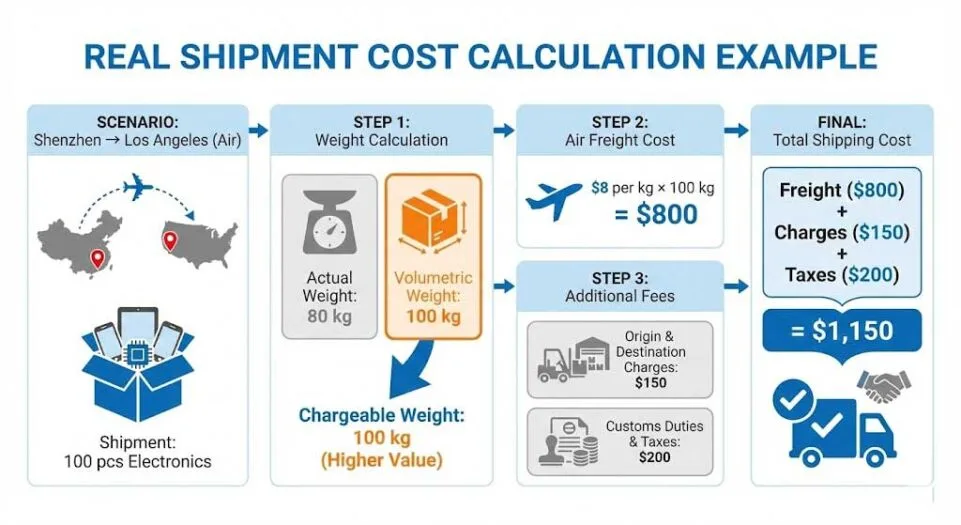
Example: Full Calculation for a Real Shipment
Scenario: Shipping 100 pcs of electronics from Shenzhen to Los Angeles by air.
- Actual Weight: 80 kg
- Volumetric Weight: 100 kg → chargeable weight = 100 kg
- Air Freight Rate: $8 per kg → $800
- Origin & Destination Charges: $150
- Customs Duties & Taxes: $200
Total Shipping Cost = $800 + $150 + $200 = $1,150
This step-by-step method ensures you estimate shipping costs accurately and transparently, helping you make the best decisions for your China to USA shipments.
Shipping Methods from China to USA (And Their Costs)
When shipping goods from China to the USA, choosing the right method is key to balancing speed, cost, and reliability. Shipping costs vary depending on weight, volume, type of goods, and urgency. The main options include Air Freight, Sea Freight, Express Shipping, Rail & Truck Freight, and specialized solutions for Amazon FBA shipments. Understanding each method and its pricing can help you save money and avoid delays.
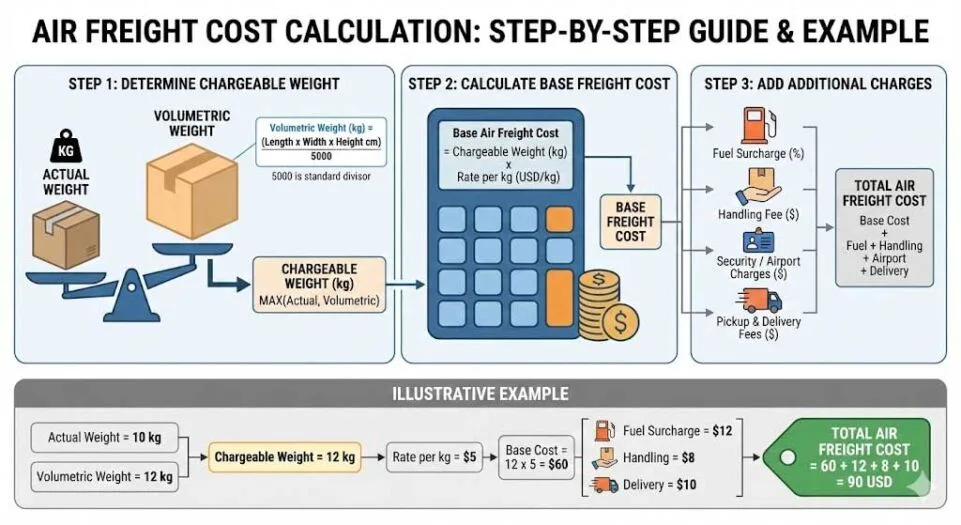
Air Freight Cost (Per KG Formula)
Air freight from China to the USA is the fastest shipping method, ideal for small, high-value, or urgent shipments. Costs are calculated based on the higher of actual weight or volumetric weight, plus additional fees like fuel, handling, and delivery. This method is fast but usually more expensive than sea freight, especially for heavy or bulky cargo. Air freight is faster than sea but usually more expensive, especially for large or heavy cargo.
Sea Freight Cost (FCL & LCL)
Sea freight is the most cost-effective method for large or bulk shipments. Costs depend on whether you choose FCL (Full Container Load) or LCL (Less than Container Load):
FCL: Pay a flat rate for the entire container
- 20ft container: $900–$2,200
- 40ft container: $1,500–$3,500
LCL: Pay based on CBM (cubic meters), typically $30–$60 per CBM
- Ports: Shanghai Port, Ningbo Port, Shenzhen, Guangzhou
- Shipping lines: Maersk, COSCO, MSC, Evergreen
Sea freight is slower (20–40 days) but ideal for heavy, bulky, or non-urgent goods.
Express Shipping Cost (DHL, FedEx, UPS)
Express shipping offers door-to-door delivery and is suitable for parcels and smaller shipments:
- Average cost: $8–$12 per kg for packages over 20 kg
- Delivery time: 3–7 business days
- Best for: Electronics, samples, urgent parcels
- Carriers: DHL, FedEx, UPS, EMS, China Post
Express shipping is faster than sea or rail but more expensive, making it ideal for time-sensitive shipments.
Rail & Truck Freight (For Cross-Border Routes)
Rail and truck freight are increasingly used for China to USA shipments, especially in combination with sea freight (intermodal transport):
- Rail freight: Suitable for cargo from China to western US ports via cross-border connections.
- Truck freight: Used for inland transportation from US ports to final destinations.
- Cost-effective for medium-weight shipments where timing is flexible but faster than full sea freight.
Rail & truck options are often offered by freight forwarding companies in China as part of door-to-door logistics.
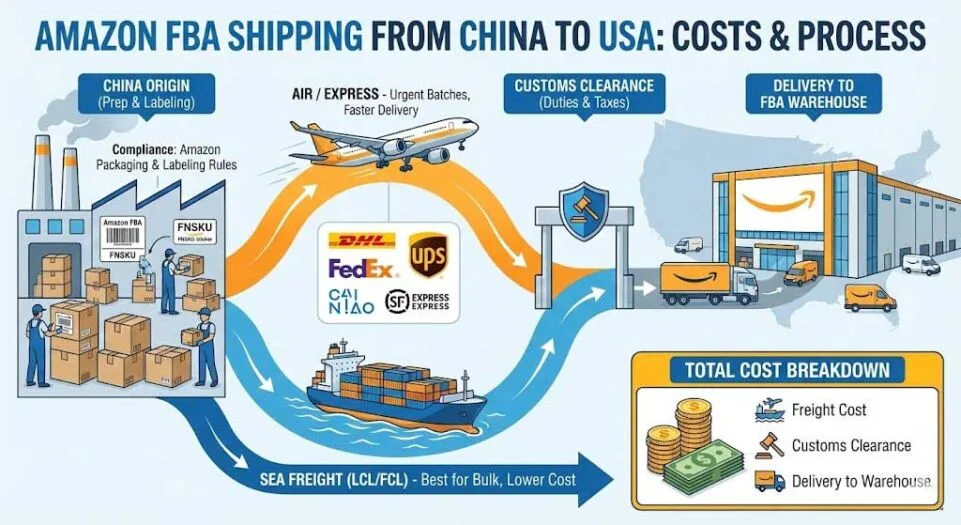
Amazon FBA Shipping Costs from China
Shipping to Amazon FBA warehouses in the USA has specific requirements:
- Must comply with Amazon’s packaging and labeling rules
- Costs include freight, customs clearance, and delivery to the warehouse
- Sea freight (LCL/FCL) is often cheaper for bulk FBA shipments
- Air or express shipping is used for small, urgent batches
- Key carriers: DHL, FedEx, UPS, Cainiao, SF Express
Example: Shipping 100 kg of toys from Shenzhen to an Amazon FBA warehouse in Los Angeles by sea (LCL) → approx. $400–$600 including port and destination charges.
Cost Breakdown by Shipping Method
Understanding the cost breakdown of shipping from China to the USA is essential for accurate budgeting and planning. Shipping costs depend on weight, volume, shipping method, and additional charges such as fuel surcharges, handling fees, warehousing, and customs duties. Below is a detailed look at each method and its cost structure.
Air Freight Cost Breakdown
Air freight is primarily charged per kilogram, but carriers often calculate based on volumetric (dimensional) weight for light but bulky shipments.
Sea Freight Cost Breakdown
Sea Freight from China to US costs are calculated based on CBM (Cubic Meter), especially for LCL (Less than Container Load) shipments. The total price depends on shipment volume, cargo type, port fees, and seasonal demand. Understanding CBM and how it affects freight charges is essential for accurate cost estimation when shipping goods from China to the USA.
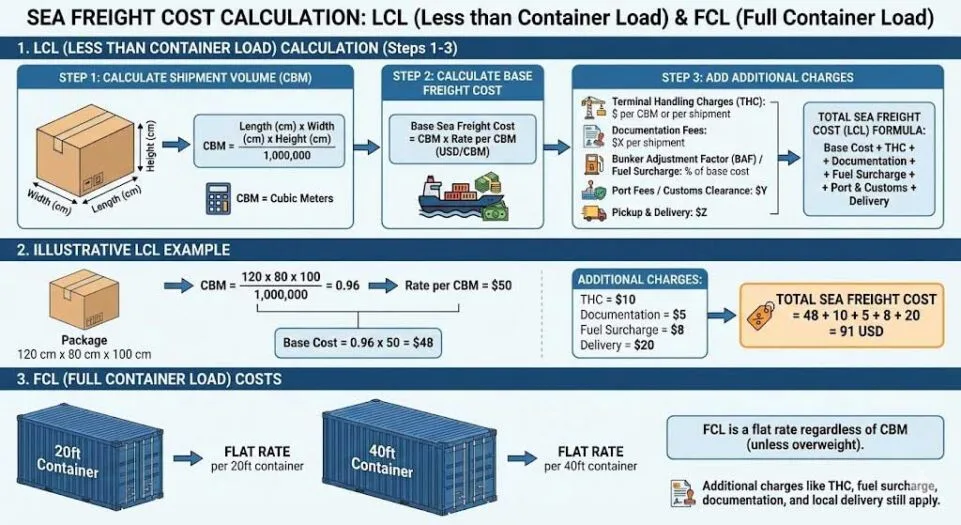
Container Rates — 20FT & 40FT
FCL (Full Container Load) rates are fixed per container:
- 20FT container: $900–$2,200
- 40FT container: $1,500–$3,500
- Best for: Large bulk shipments, heavy cargo, or Amazon FBA orders
- Shipping lines: Maersk, COSCO, MSC, Evergreen
FCL shipping often reduces the per-unit shipping cost for large volumes.
Express Courier Rates (DHL | UPS | FedEx)
Express shipping offers fast, door-to-door delivery but at higher rates:
- Average cost: $8–$12 per kg for packages over 20 kg
- Delivery time: 3–7 business days
- Carriers: DHL, UPS, FedEx, EMS, China Post
- Best for: Small parcels, urgent shipments, samples
Express shipping is ideal for time-sensitive cargo but less economical for bulk shipments.
Additional Fees: Fuel, Handling, Warehousing, Customs
Beyond basic freight charges, additional fees can significantly impact total shipping cost:
- Fuel Surcharge: Adjusted according to global fuel prices
- Handling & Terminal Charges: Loading/unloading at ports, THC
- Warehousing Fees: Storage at origin or destination warehouses
- Customs Duties & Import Taxes: Depend on product HS codes and US tariff rates
- Peak Season Surcharge: Higher rates during busy shipping periods
Including all these factors ensures a realistic estimate of shipping costs from China to the USA.
Factors That Affect China to USA Shipping Rates
Shipping rates from China to the USA are influenced by multiple factors, from the weight and volume of your cargo to the ports of origin and destination. Understanding these factors helps businesses and individuals estimate costs accurately and choose the most cost-effective shipping method.
Weight & Volume (Volumetric Weight)
Shipping costs are highly influenced by both actual weight and volumetric (dimensional) weight:
- Air Freight: Charges the higher of actual weight or volumetric weight.
- Volumetric Weight Formula: Length × Width × Height (cm) ÷ 5000
- Sea Freight: Charges are usually based on CBM (Cubic Meter) for LCL shipments, while FCL uses container rates.
Large but light cargo can result in higher charges due to volumetric weight calculations.
Type of Goods (Electronics, Clothing, Hazmat)
The type of cargo significantly impacts shipping costs:
- Electronics: Require careful handling and sometimes insurance, slightly increasing costs.
- Clothing & Textiles: Standard shipping rates apply, but bulk orders can reduce per-unit cost.
- Hazardous Goods (Hazmat): Require special handling, labeling, and documentation, increasing freight charges.
- Oversized Cargo: Large items may incur additional fees for handling and transport.
Port of Origin: Shenzhen, Guangzhou, Shanghai, Ningbo
Shipping costs vary depending on the port of origin in China:
- Shenzhen & Guangzhou: Faster access to Southern China exporters, competitive rates.
- Shanghai & Ningbo: Major ports in Eastern China, often preferred for bulk shipments.
Impact: Port choice affects pickup costs, terminal handling charges, and transit time.
Destination Ports: Los Angeles, Long Beach, New York
Destination ports in the USA also influence shipping rates:
- Los Angeles & Long Beach: Main entry points for West Coast shipments, ideal for California and nearby states.
- New York & New Jersey: East Coast entry for faster access to Northeastern markets.
- Impact: Port congestion, local delivery fees, and customs clearance can vary, affecting total cost.
Peak Season Surcharges
Shipping rates rise during peak seasons due to high demand:
- Chinese New Year, Black Friday, and Christmas season often see surcharge increases of 10–30%.
- Freight forwarders may apply fuel surcharges and peak season fees during busy months.
Incoterms (DDP, DAP, FOB, EXW)
Incoterms define who is responsible for shipping costs, duties, and risks:
- EXW (Ex Works): Buyer pays for shipping from seller’s warehouse.
- FOB (Free on Board): Seller handles shipment until the port; buyer pays freight and customs.
- DAP (Delivered at Place): Seller delivers goods to destination; buyer handles import duties.
- DDP (Delivered Duty Paid): Seller covers all shipping, customs, and import costs.
Choosing the right Incoterm affects both cost calculation and overall logistics planning.
Cheapest Ways to Ship from China to USA
Finding the cheapest way to ship from China to the USA requires balancing cost, speed, and shipment size. Depending on the type of goods, weight, and urgency, different shipping methods Air Freight, Sea Freight, or Express Shipping offer varying price advantages. Understanding these options helps businesses minimize shipping costs while ensuring timely delivery.
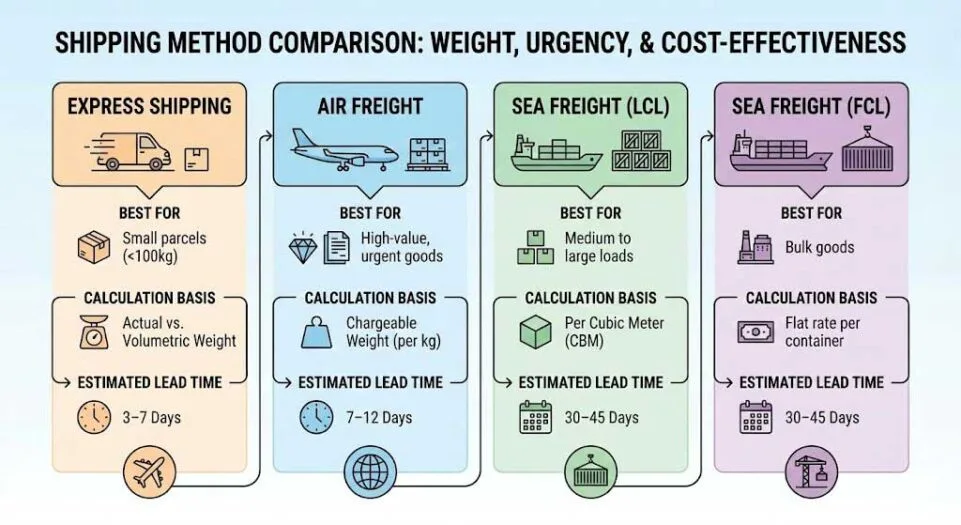
Compare Air vs Sea vs Express
Each shipping method has pros and cons in terms of cost and speed:
| Method | Cost | Speed | Best For |
|---|---|---|---|
| Air Freight | Medium–High ($5–$10/kg) | 3–7 days | Electronics, small parcels, urgent shipments |
| Sea Freight (FCL/LCL) | Low ($30–$60 per CBM for LCL; $900–$3,500 FCL) | 20–40 days | Bulk shipments, heavy cargo, non-urgent deliveries |
| Express (DHL, FedEx, UPS) | High ($8–$12/kg) | 3–7 days | Small parcels, samples, urgent deliveries |
Sea freight is usually the cheapest for large shipments, while air or express is costlier but faster.
Best Methods for Lightweight Goods
For small, lightweight shipments (under 50 kg):
- Air Freight: Cost-effective if urgent; charges based on higher of actual or volumetric weight.
- Express Shipping: Convenient for door-to-door delivery, especially for parcels under 20 kg.
- Tip: Compare DHL vs FedEx vs UPS China to USA rates to find the best deal.
Best Methods for Bulk Shipments
For large or heavy shipments:
- Sea Freight (FCL/LCL): The most economical for bulk orders.
- FCL: Flat container rates reduce per-unit costs.
- LCL: Cost-effective for smaller bulk shipments that don’t fill a full container.
- Rail & Truck Freight: Can supplement sea freight for intermodal delivery in certain regions.
Bulk shipments are rarely economical via air or express due to high per-kg rates.
When DDP Shipping Is the Cheapest Option
DDP (Delivered Duty Paid) means the seller covers all shipping, customs duties, and taxes:
- Best for small to medium shipments where handling all customs paperwork individually would be costly or time-consuming.
- Allows for predictable, all-inclusive pricing.
- Works well when shipping to Amazon FBA warehouses or when buyers want a hassle-free, end-to-end delivery.
Choosing DDP can sometimes be cheaper than paying separate freight, customs, and local delivery fees individually.
How to Get a Shipping Quote from China to USA
Getting an accurate shipping quote from China to the USA is crucial for budgeting and planning your shipments. By understanding what information is needed, how freight forwarders calculate pricing, and how to use online shipping calculators, you can avoid surprises and hidden fees.
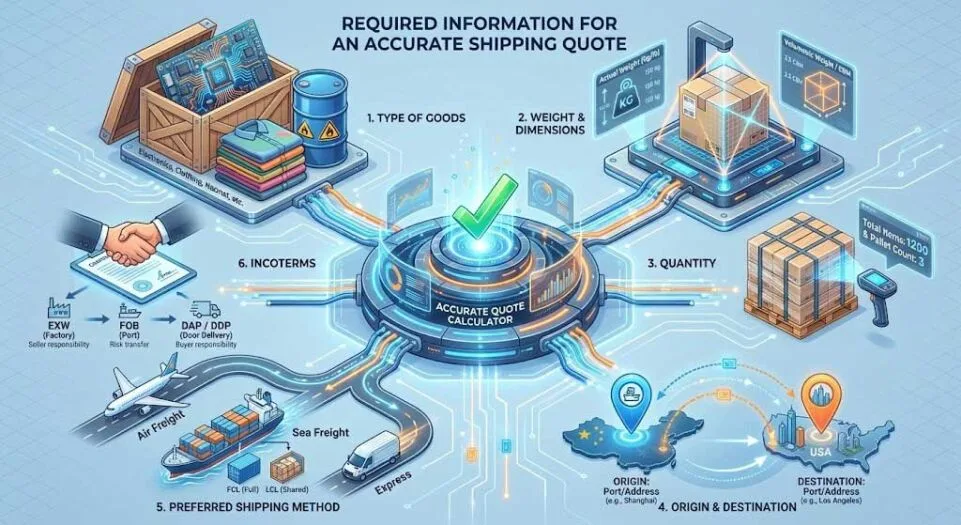
Required Information for an Accurate Quote
To receive an accurate shipping quote, you typically need to provide:
- Type of goods: Electronics, clothing, hazardous materials, etc.
- Weight & dimensions: Actual weight and volumetric weight for air freight; CBM for sea freight.
- Quantity: Number of items or pallets.
- Origin & destination: Ports or addresses (e.g., Shanghai Port → Los Angeles Port).
- Preferred shipping method: Air, sea, express, or FCL/LCL.
- Incoterms: EXW, FOB, DAP, DDP.
Providing complete and precise information ensures your quote reflects the true shipping cost, including all relevant charges.
How Freight Forwarders Calculate Pricing
Freight forwarders calculate shipping costs using a combination of factors:
- Freight charges: Based on weight, volumetric weight, or CBM.
- Container type: FCL or LCL pricing for sea freight.
- Additional fees: Fuel surcharge, terminal handling charges (THC), port fees, and delivery charges.
- Customs duties and import taxes: Depending on HS codes and destination regulations.
- Service level: Express or standard shipping, door-to-door delivery, or warehouse drop-off.
A professional China freight forwarder provides a detailed quote, including all applicable charges for transparency.
Online Shipping Calculators (How They Work)
Many shipping companies and freight forwarders offer online calculators:
- Enter shipment details: weight, dimensions, origin, destination, and type of goods.
- Select shipping method: Air, sea, or express.
- The calculator estimates freight cost, additional fees, and delivery time.
Tips: Always double-check online quotes with a freight forwarder, as hidden fees or special handling charges may not appear in the automated estimate.
How to Avoid Hidden Fees
Hidden fees can increase your total shipping cost unexpectedly. To avoid them:
- Confirm all additional charges: fuel surcharges, peak season fees, port handling, and customs brokerage fees.
- Use DDP or DAP shipping terms to clarify who pays duties and taxes.
- Work with a trusted freight forwarder who provides a detailed, itemized quote.
- Ask for clarification on insurance, storage, and delivery fees in advance.
Being thorough at this stage helps you plan accurately and avoid surprises when your shipment arrives in the USA.
Best Freight Forwarders for China to USA Shipping
Choosing the right freight forwarder can save time, reduce costs, and ensure your shipment from China to the USA arrives safely and on schedule. The best forwarders offer expertise in air freight, sea freight, express shipping, and Amazon FBA deliveries, while helping you navigate customs, duties, and local regulations.
What to Look for in a Freight Forwarder
When selecting a freight forwarder, consider:
- Experience and reputation: Years in business, positive reviews, and reliable service.
- Shipping options: Air, sea, express, FCL/LCL, and intermodal solutions.
- Customs expertise: Knowledge of US customs clearance, tariffs, and import duties.
- Transparency: Clear pricing, no hidden fees, and detailed freight quotes.
- Customer support: Responsive communication throughout the shipping process.
A trusted forwarder ensures a smooth and cost-effective shipping experience.
Top Forwarders for Air Freight
Air freight requires speed and reliability. Leading forwarders for air shipping from China to the USA include:
- DHL Express: Fast door-to-door service for parcels and small shipments.
- FedEx: Global coverage with tracking and customs assistance.
- UPS: Reliable express options for urgent cargo.
- SF Express: Specialized in China-US shipping with competitive rates.
These forwarders offer efficient handling of volumetric and actual weight shipments with professional documentation.
Top Forwarders for Sea Freight
Sea freight forwarders are ideal for bulk shipments. Top choices include:
- Maersk: Extensive container shipping network and competitive FCL rates.
- COSCO: Reliable ocean freight with multiple China ports coverage.
- MSC: Offers LCL and FCL solutions with global tracking.
- Evergreen: Efficient sea freight with flexible container options.
They specialize in FCL/LCL shipments, CBM calculations, and port handling.
Amazon FBA Specialists
Forwarders who specialize in Amazon FBA shipments help sellers:
- Comply with Amazon labeling, packaging, and delivery requirements.
- Ship directly to FBA warehouses in the USA.
- Handle LCL or FCL shipments for bulk inventory.
- Offer DDP options to simplify customs and duties.
Popular choices: Cainiao, DHL, SF Express, UPS, FedEx.
Why Working with a China Shipping Agent Matters
A professional China shipping agent or freight forwarder provides:
- Expert advice on shipping methods and cost-saving strategies.
- Coordination of origin pickup, documentation, freight booking, and customs clearance.
- Assistance with incoterms, insurance, and unexpected delays.
- Access to competitive rates not available directly to individual shippers.
Partnering with a reliable agent ensures your goods are shipped safely, efficiently, and cost-effectively from China to the USA.
Customs Duties & Import Taxes in the USA
When shipping goods from China to the USA, customs duties and import taxes are key components of your total cost. Understanding how duties are calculated, applicable tariff rates, and the customs clearance process helps businesses avoid delays and unexpected fees.
How to Calculate Import Duty Using HS Code
Import duties are based on the Harmonized System (HS) code, which classifies goods for customs purposes:
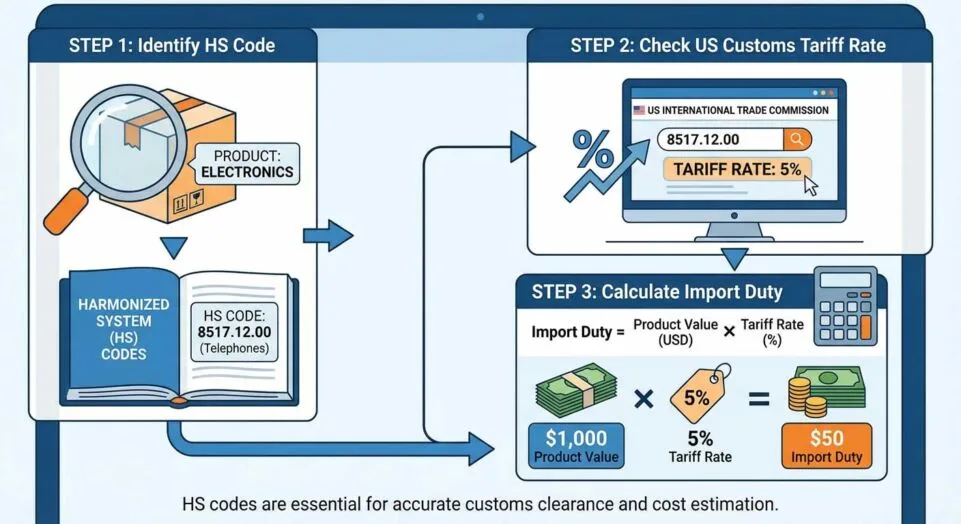
Tariff Rates for China Products
Tariff rates vary depending on the type of goods:
- Electronics: 0–5%
- Clothing & Textiles: 10–20%
- Toys & Accessories: 5–15%
- Special Tariffs: Some products from China may face additional tariffs due to trade regulations.
Check the US Customs website or consult your freight forwarder to ensure accurate duty rates.
Customs Clearance Process in the USA
The customs clearance process involves several steps:
- Arrival of goods at the US port.
- Submission of commercial invoice, packing list, and bill of lading.
- Inspection (if required) and duty assessment by US Customs.
- Payment of duties and taxes.
- Release of goods for inland delivery or final destination.
Working with a freight forwarder or customs broker simplifies the process and reduces the risk of delays.
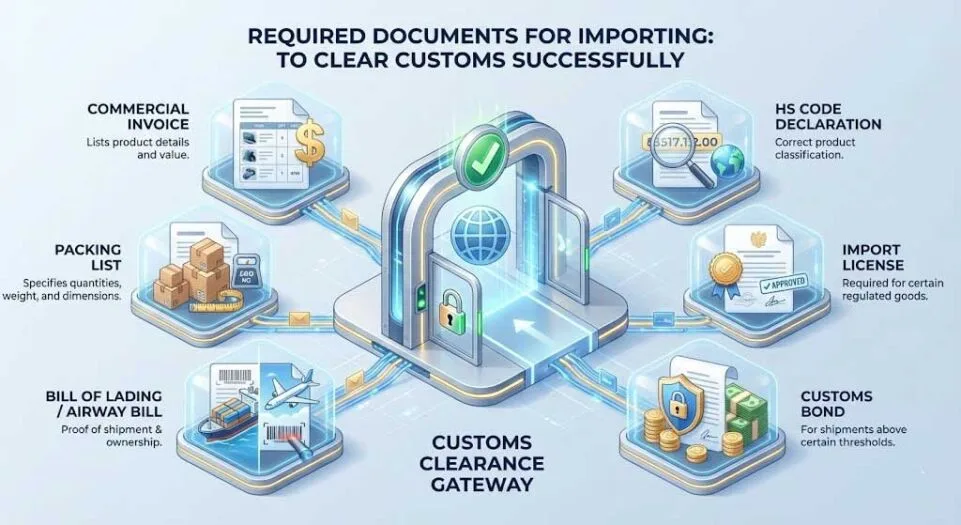
Required Documents for Importing
To clear customs successfully, you generally need:
- Commercial Invoice : Lists product details and value.
- Packing List : Specifies quantities, weight, and dimensions.
- Bill of Lading / Airway Bill : Proof of shipment.
- HS Code Declaration ; Correct product classification.
- Import License : Required for certain regulated goods.
- Customs Bond: For shipments above certain thresholds.
Having all documents prepared avoids delays, penalties, or rejected shipments.
Example Shipping Cost Scenarios
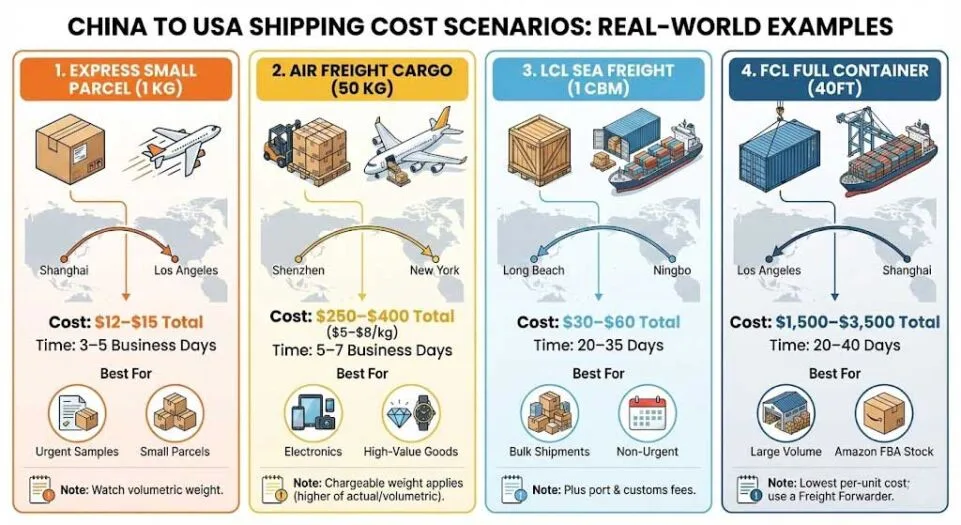
Understanding real-world examples helps businesses and individuals estimate costs and choose the most efficient shipping method. Here are practical scenarios for different shipment sizes and methods from China to the USA.
Shipping 1 KG Product (Express)
- Method: Express courier (DHL, FedEx, UPS)
- Origin → Destination: Shanghai → Los Angeles
- Cost Estimate: $12–$15 per kg
- Delivery Time: 3–5 business days
- Best For: Small parcels, urgent shipments, or samples
- Notes: Volumetric weight may apply if the product is bulky, slightly increasing cost.
Shipping 50 KG Cargo (Air Freight)
Method: Air freight
- Origin → Destination: Shenzhen → New York
- Cost Estimate: $5–$8 per kg → $250–$400
- Delivery Time: 5–7 business days
- Best For: Electronics, high-value items, medium-sized cargo
- Notes: Chargeable weight is the higher of actual weight or volumetric weight. Fuel surcharges and customs fees may apply.
Shipping 1 CBM (Sea Freight)
Method: LCL Sea Freight
- Origin → Destination: Ningbo → Long Beach
- Cost Estimate: $30–$60 per CBM → $30–$60
- Delivery Time: 20–35 days
- Best For: Bulk shipments, non-urgent goods
- Notes: Additional fees for terminal handling, port charges, and customs duties may apply.
Shipping a Full Container (FCL Case Study)
- Method: FCL Sea Freight (40FT container)
- Origin → Destination: Shanghai → Los Angeles
- Cost Estimate: $1,500–$3,500 per container
- Delivery Time: 20–40 days
- Best For: Large volume shipments, heavy cargo, or Amazon FBA stock
- Notes: Per-unit shipping cost decreases with container volume. Working with a China freight forwarder ensures smooth handling, documentation, and customs clearance.
Final Tips for Reducing Shipping Cost from China to USA
Shipping from China to the USA involves multiple factors, including shipping method, weight, and customs duties. Choosing the right freight option air, sea, or express can significantly impact cost and delivery time. Working with a reliable freight forwarder ensures smooth shipping, accurate quotes, and minimal hidden fees.
FAQ Calculate Shipping Cost from China to USA
What factors affect shipping cost from China to USA?
Several factors determine the cost of shipping from China to the USA, including:
- Cargo volume and weight (CBM for sea freight, kg for air freight)
- Shipping method (FCL, LCL, or air freight)
- Incoterms and responsibilities of buyer/seller
- Origin and destination ports
- Customs duties and taxes
- Seasonality and demand fluctuations
How is sea freight calculated?
Sea freight is typically calculated based on:
- Volume (CBM) for LCL shipments
- Container type (20ft or 40ft) for FCL shipments
- Base freight rate charged by shipping lines
Additional charges like terminal handling, documentation, and fuel surcharges
By combining these factors, you can get an accurate sea freight cost from China to USA.
When is air freight suitable?
Air freight is best for:
- Urgent shipments that need faster delivery
- High-value or perishable goods
Small to medium-sized cargo where cost per kg is acceptable
While faster, air freight is generally more expensive than sea freight.
Can I estimate shipping cost using a calculator?
Yes, using an online shipping cost calculator helps you quickly estimate:
- Sea freight for FCL or LCL shipments
- Air freight costs based on weight and dimensions
- Door-to-Door or Port-to-Port charges
This is an efficient way to plan your logistics budget before booking.
How does seasonality affect shipping costs?
Shipping costs can fluctuate due to:
- Peak seasons (e.g., pre-Christmas, Black Friday) causing higher demand
- Off-peak seasons with lower rates
- Weather conditions that may delay shipments or increase fees
Planning ahead and booking early can help you reduce shipping costs from China to USA.
What factors affect shipping cost from China to USA?
Shipping costs depend on weight, volume, shipping method (air, sea, express), cargo type, customs duties, fuel surcharges, and seasonal demand.
How is sea freight from China to USA calculated?
Sea freight is usually calculated based on CBM (Cubic Meter) for LCL shipments or container type (FCL) for full loads. Major carriers include Maersk, COSCO, MSC, and Evergreen.
When is air freight from China to USA suitable?
Air freight is ideal for shipments weighing 50–200 kg that require faster delivery. It is generally more expensive than sea freight.
Can I estimate shipping cost using a calculator?
Yes, you can use a basic CBM-based calculator for sea freight or weight/volumetric calculations for air freight to get an estimated cost.
How does seasonality affect shipping costs?
Peak seasons, such as holidays or Chinese New Year, increase shipping rates due to higher demand and limited space.