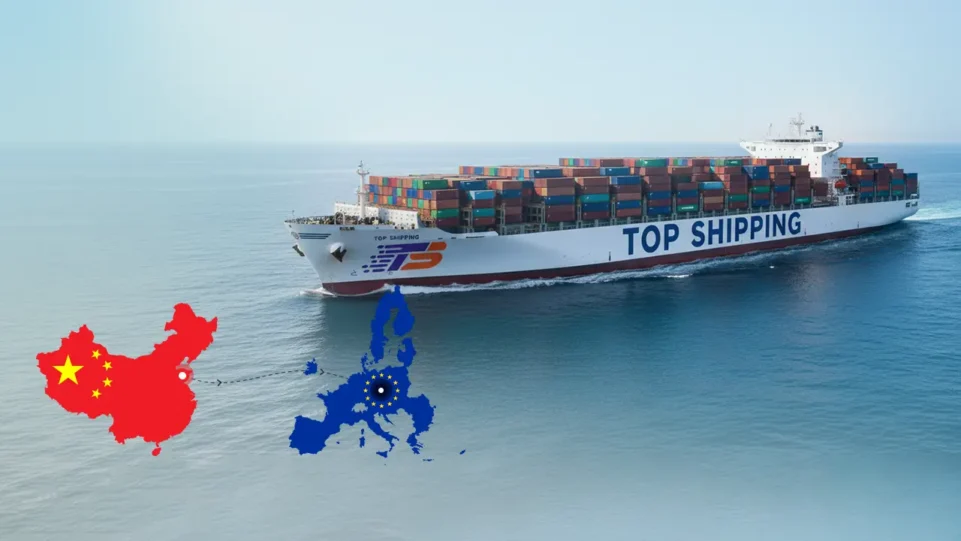
Shipping goods via sea freight from China to Europe remains one of the most cost-effective and reliable options for international trade.
With China being a major manufacturing hub and Europe a top destination for imports, businesses rely on ocean freight to move large volumes efficiently.
Understanding transit times, shipping costs, and customs clearance is crucial for importers aiming to optimize logistics and reduce expenses.
From FCL and LCL shipping options to choosing the best route whether via the Suez Canal, Cape of Good Hope, or Northern Sea Route each decision impacts delivery speed and total cost.
In this guide, we cover everything you need to know about shipping from China to Europe, including major ports, shipping options, costs, transit times, and tips for avoiding delays and extra charges.
What Is Sea Freight from China to Europe?
Sea Freight from China to Europe is one of the most widely used transportation methods for moving large volumes of goods across international borders. In this mode of transport, cargo is shipped from major Chinese ports such as Shanghai, Ningbo, Shenzhen, and Qingdao to key European ports including Rotterdam, Hamburg, Antwerp, and Valencia.
It is commonly used for both FCL shipping and LCL shipping, offering a reliable, cost-effective, and secure solution for importers.
Transit time on China–Europe routes typically ranges between 25–45 days, depending on the Suez Canal route, container type, shipping line, and seasonal rate changes.
Overall, sea freight remains a stable and economical option for international trade, especially for businesses handling bulk shipments.
How Ocean Freight Works for China–Europe Trade?
Ocean freight between China and Europe follows a standardized and well-structured process. The general workflow is as follows:
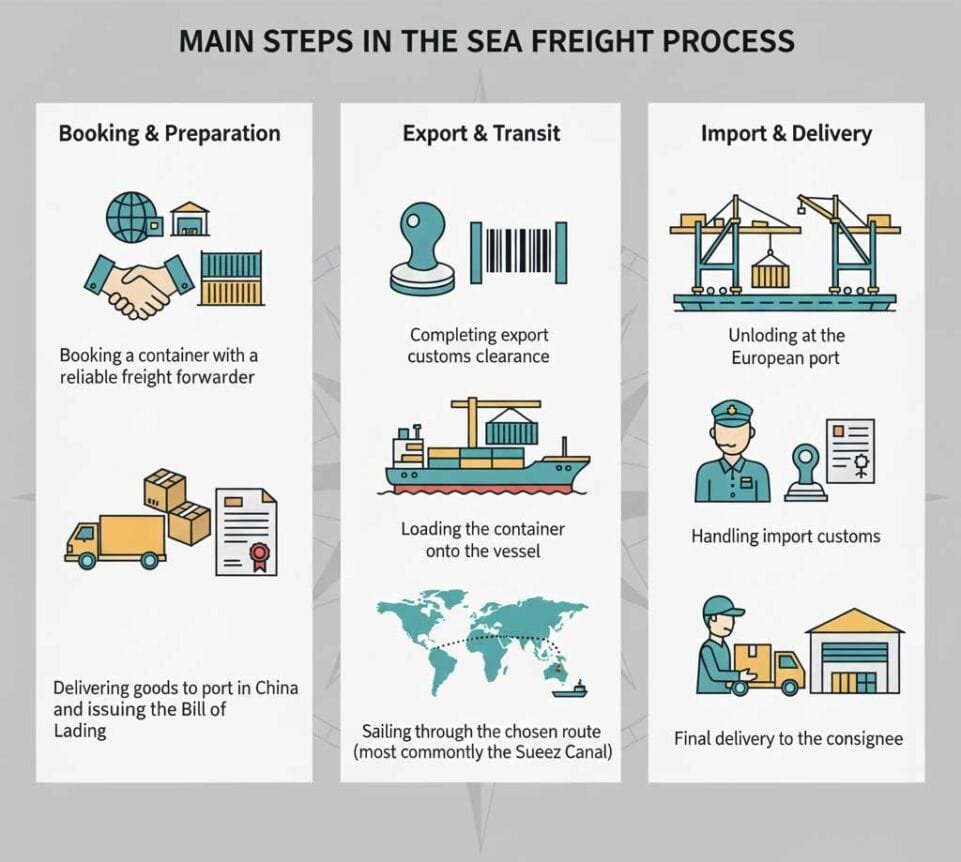
Main Steps in the Sea Freight Process
- Booking a container with a reliable freight forwarder
- Delivering goods to the port in China and issuing the Bill of Lading
- Completing export customs clearance
- Loading the container onto the vessel
- Sailing through the chosen route (most commonly the Suez Canal)
- Unloading at the European port and handling import customs
- Final delivery to the consignee
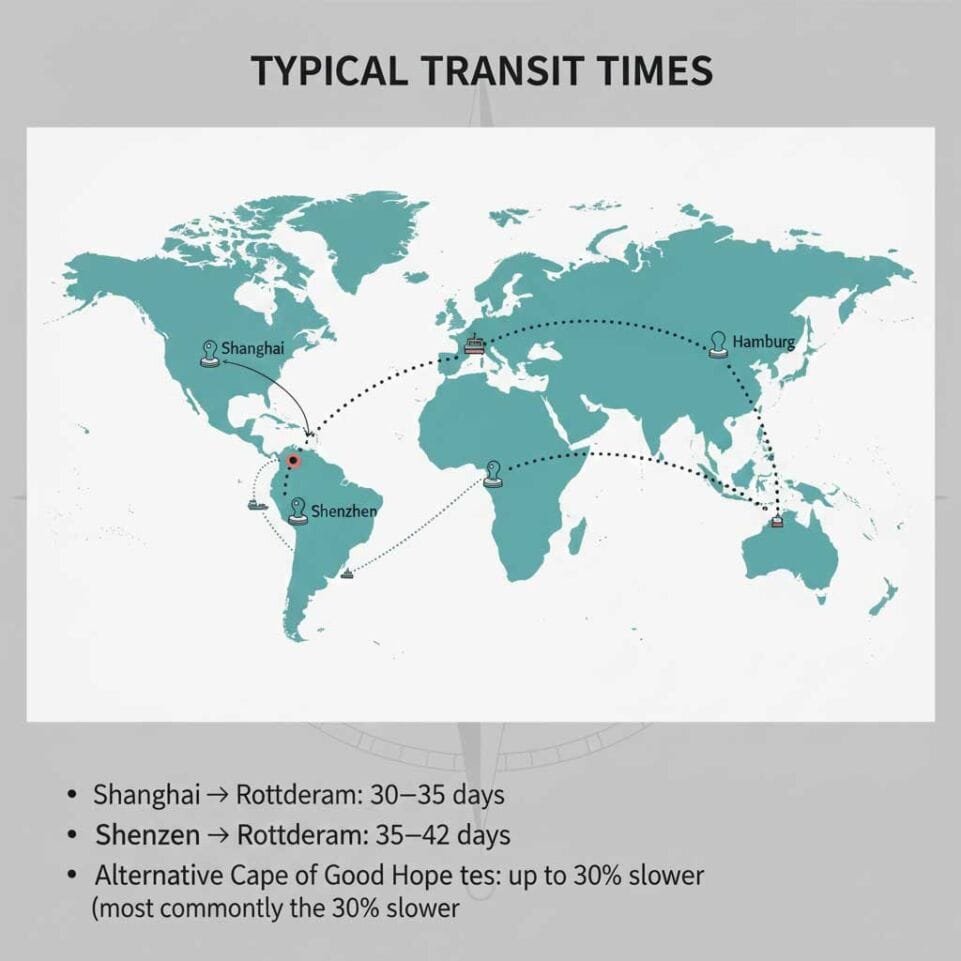
Typical Transit Times
- Shanghai → Rotterdam: 30–35 days
- Shenzhen → Hamburg: 35–42 days
- Alternative Cape of Good Hope routes: up to 30% slower
Key Factors Affecting Time & Cost
- Type of service: FCL or LCL
- Peak season vs. off-season
- Terminal Handling Charges
- Shipping line selection (Maersk, MSC, COSCO)
Efficient coordination by a professional freight forwarder helps importers avoid delays, unnecessary charges such as demurrage, and customs-related issues.
Benefits of Sea Shipping for Importers
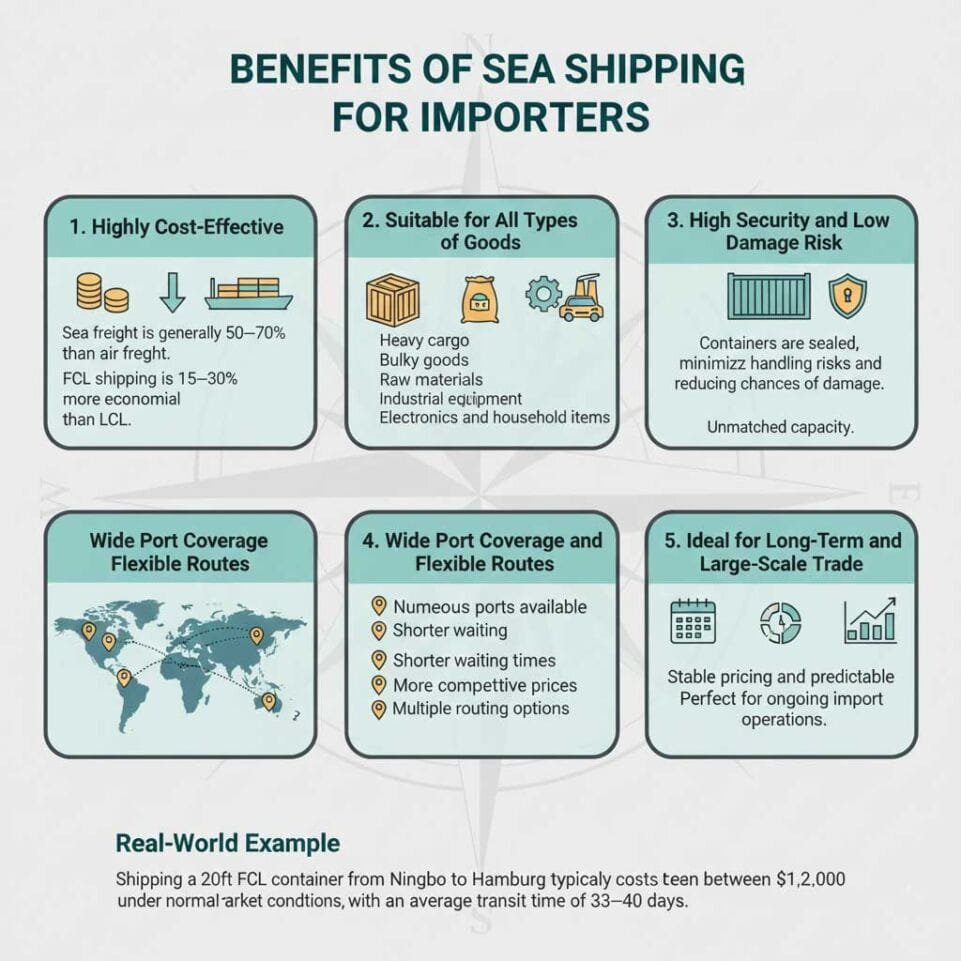
Sea freight from China to Europe offers several strong advantages that make it the preferred choice for many global importers.
1. Highly Cost-Effective
Sea freight is generally 50–70% cheaper than air freight.
Additionally, FCL shipping can be 15–30% more economical than LCL for larger shipments.
2. Suitable for All Types of Goods
Ideal for transporting:
- Heavy cargo
- Bulky goods
- Raw materials
- Industrial equipment
- Electronics and household items
This level of capacity is unmatched by other transportation modes.
3. High Security and Low Damage Risk
Containers are sealed and usually remain closed throughout the journey, minimizing handling risks and reducing chances of damage.
4. Wide Port Coverage and Flexible Routes
With numerous ports available in both China and Europe, importers enjoy:
- Shorter waiting times
- More competitive prices
- Multiple routing options
5. Ideal for Long-Term and Large-Scale Trade
Stable pricing and predictable timelines make sea freight perfect for ongoing import operations.
Real-World Example
Shipping a 20ft FCL container from Ningbo to Hamburg typically costs between $1,200 and $2,200 under normal market conditions, with an average transit time of 33–40 days.
Main Sea Routes from China to Europe
When shipping goods via Sea Freight from China to Europe, choosing the right route has a major impact on transit time, cost, and reliability.
Most shipments move through one of four main pathways: the Suez Canal Route, the Cape of Good Hope Route, the Northern Sea Route, or a Sea + Rail multimodal route.
Each route has its own advantages and limitations depending on market conditions, fuel costs, and global trade disruptions.
Below is a detailed breakdown of each route.
Suez Canal Route
The Suez Canal Route is the primary and most commonly used shipping path between China and Europe. Nearly 60–70% of ocean freight from East Asia to Europe travels through this corridor.
Route Overview
- China → South China Sea → Indian Ocean → Red Sea → Suez Canal → Mediterranean → Europe
- Used by major carriers like Maersk, MSC, COSCO, CMA CGM
Typical Transit Time
- Shanghai → Rotterdam: 30–35 days
- Shenzhen → Antwerp: 32–40 days
Advantages
- Shortest and fastest major sea route
- Stable and predictable transit times
- Lower fuel consumption compared to longer routes
- Works well for both FCL shipping and LCL shipping
Challenges
- Vulnerable to geopolitical tensions
- Canal toll fees increase shipping costs
- Occasional congestion in the Red Sea or Suez entrance
This route remains the default choice for most China–Europe trade due to speed and reliability.
Cape of Good Hope Route
The Cape Route is an alternative pathway used mainly when the Suez Canal becomes congested or unsafe.
Route Overview
China → Indian Ocean → Around South Africa’s Cape of Good Hope → Atlantic Ocean → Europe
Typical Transit Time
- Shanghai → Rotterdam: 40–50 days
- (roughly 25–30% slower than Suez)
Advantages
- Avoids delays or risks in the Suez Canal
- No canal fees, which can partially offset longer sailing distances
- Useful for oversized cargo that may have restrictions in the canal
Challenges
- Much longer distance → higher fuel consumption
- Higher weather risks in South Atlantic waters
- Not ideal for time-sensitive shipments
This route is mostly used during political instability, Red Sea conflicts, or when carriers intentionally re-route vessels.
Northern Sea Route (Arctic Route)
The Northern Sea Route (NSR), also called the Arctic Route, is a seasonal pathway that connects China to Europe via the Arctic Ocean.
Route Overview
China → East China Sea → Sea of Japan → Bering Strait → Arctic Ocean → Northern Europe
Typical Transit Time
- Shanghai → Northern Europe: 22–28 days
- (faster than Suez, but seasonal)
Advantages
- Shortest possible sea distance between China and Europe
- Reduced fuel usage during favorable ice conditions
- Increasingly used for energy products and specific cargo types
Challenges
- Seasonal and limited — navigable only a few months per year
- Requires ice-class vessels and special permits
- Environmental restrictions and unpredictable weather
- Not suitable for standard commercial FCL or LCL cargo
NSR is more of a strategic future route rather than a mainstream commercial path today.
Combined Sea + Rail Transport
A multimodal solution that blends ocean freight with rail freight, offering a faster alternative without the cost of full air transport.
How It Works
Cargo typically travels:
- Sea Freight from major Chinese ports to Vladivostok, Piraeus, or Middle Eastern transshipment hubs
- Then rail transport into Central or Western Europe
Transit Time
- China → Europe via Sea + Rail: 18–25 days
- (faster than pure sea freight)
Advantages
- Balanced solution between speed and cost
- Avoids congested sea routes
- Ideal for medium-value goods that require quicker delivery
Challenges
- Higher cost than traditional sea freight
- Limited capacity during peak seasons
- Dependence on stable rail infrastructure
Combined transport is now widely used for:
- Electronics
- Fast-moving consumer goods (FMCG)
- Automotive parts
It offers a strong alternative when importers need affordable, faster-than-sea but cheaper-than-air delivery.
Major Ports for China–Europe Shipping
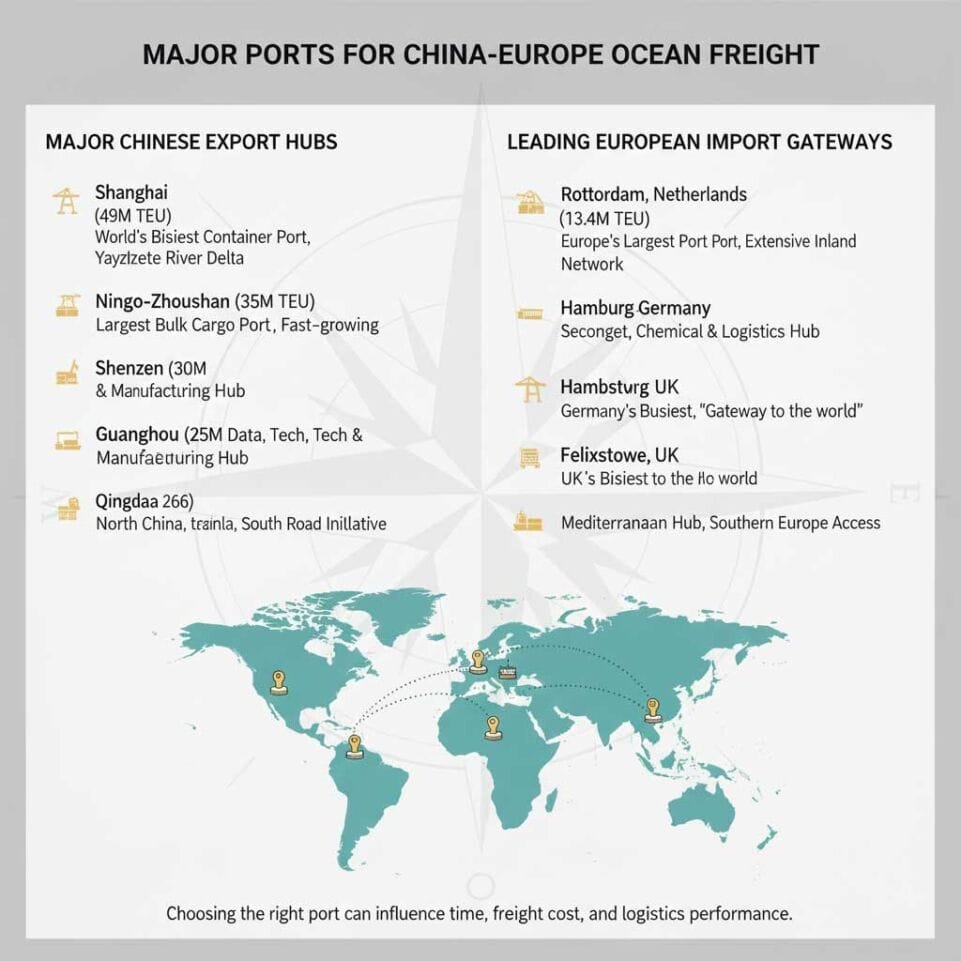
China–Europe ocean freight is supported by some of the world’s busiest and most advanced ports. These ports ensure smooth handling of FCL shipping, LCL shipping, customs clearance, and efficient container movement.
Choosing the right port can influence transit time, freight cost, and overall logistics performance.
Below are the most important export hubs in China and the leading import gateways in Europe.
Top Export Ports in China (Shanghai, Ningbo, Shenzhen)
China’s coastline hosts multiple mega-ports, but three of them dominate Asia–Europe shipping: Shanghai, Ningbo-Zhoushan, and Shenzhen.
Port of Shanghai
The Port of Shanghai is the busiest container port in the world, handling over 47 million TEUs annually.
Key Advantages
- Fastest processing time for European-bound containers
- Excellent availability of vessels from major carriers (MSC, Maersk, COSCO, ONE)
- Strong support for FCL and LCL shipments
- Competitive ocean freight rates due to high volume
Typical Transit Time
- Shanghai → Rotterdam: 30–35 days
- Shanghai → Hamburg: 32–38 days
Shanghai is the preferred port for electronics, textiles, machinery, and general consumer goods.
Port of Ningbo-Zhoushan
Known for its efficiency and deep-water facilities, Ningbo is a top choice for large-volume exporters.
Key Advantages
- Lower congestion than Shanghai
- Excellent for heavy cargo, machinery, and bulk shipments
- Strong feeder network across East China
- Highly competitive pricing for long-distance routes
Typical Transit Time
- Ningbo → Rotterdam: 31–36 days
Ningbo is frequently used for shipments requiring stable schedules and lower Terminal Handling Charges.
Port of Shenzhen
Shenzhen includes major terminals such as Yantian, Shekou, and Chiwan—together forming one of the world’s largest export complexes.
Key Advantages
- Best option for South China manufacturing hubs (Guangdong, Dongguan, Foshan)
- High frequency of Europe-bound vessels
- Strong LCL services with short consolidation times
- Reliable customs clearance performance
Typical Transit Time
- Shenzhen → Hamburg: 35–42 days
Shenzhen is ideal for electronics, furniture, appliances, and high-volume consumer goods.
Main European Import Ports (Rotterdam, Hamburg, Antwerp)
Europe’s import network relies on several large and efficient ports that serve as the entry point for goods arriving from China. The top three are Rotterdam, Hamburg, and Antwerp.
Port of Rotterdam (Netherlands)
Rotterdam is the largest port in Europe and the primary gateway for goods arriving from Asia.
Key Features
- Deep-water terminals suitable for ultra-large container vessels (ULCVs)
- Fast inland connection via rail, barge, and truck
- Advanced customs systems that reduce clearance time
- Preferred hub for FCL shipping
Average Transit Time
- Shanghai → Rotterdam: 30–35 days
Rotterdam distributes goods to the Netherlands, Germany, Belgium, France, and Scandinavia.
Port of Hamburg (Germany)
Hamburg is known as the “Gateway to the World” and is one of Europe’s most important import hubs for Chinese products.
Key Features
- Strong rail connectivity across Central and Eastern Europe
- Efficient container handling and short dwell times
- Excellent for LCL shipments due to large consolidation terminals
Average Transit Time
- Shenzhen → Hamburg: 35–42 days
Hamburg is ideal for machinery, electronics, automotive parts, and industrial supplies.
Port of Antwerp (Belgium)
Antwerp is Europe’s second-largest container port, known for its advanced warehousing and logistics infrastructure.
Key Features
- Central location for distribution across Western Europe
- Strong multimodal connections (rail, barge, road)
- Highly competitive port fees
- Excellent handling for special cargo and reefer containers
Average Transit Time
- Ningbo → Antwerp: 32–38 days
Antwerp is preferred for chemicals, food products, retail goods, and high-volume consumer shipments.
FCL vs LCL Shipping Options
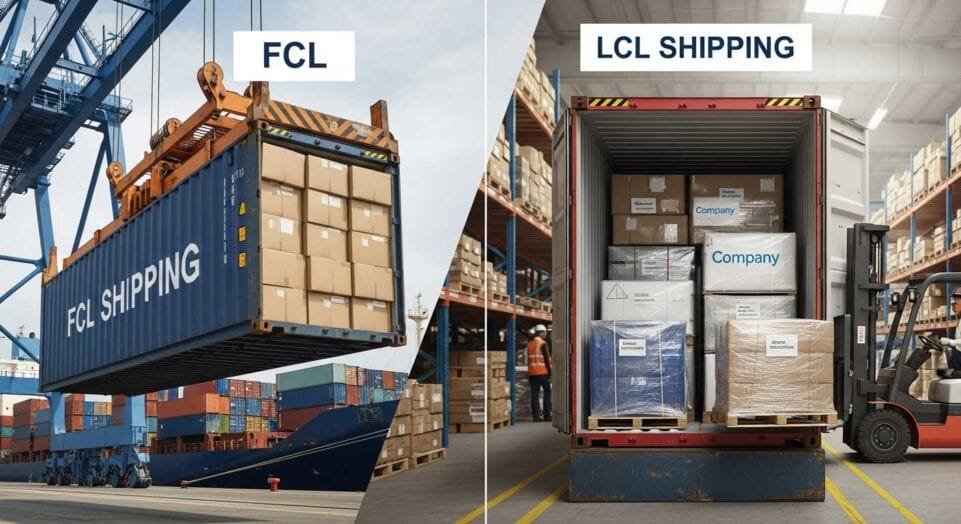
When importing goods through Sea Freight from China to Europe, choosing between FCL shipping (Full Container Load) and LCL shipping (Less than Container Load) is one of the most important decisions.
Each option affects your final ocean freight cost, transit time, handling fees, and even the risk of delays.
Below is a detailed guide to help importers select the most efficient method.
What Is FCL and When to Use It
FCL (Full Container Load) means the entire container—either 20ft, 40ft, or 40ft HQ—is exclusively used by one shipper.
Even if the container is not completely full, it belongs to a single importer, which simplifies handling and reduces the risk of damage.
When FCL Is the Best Choice
You should choose FCL if:
- Your cargo volume is more than 15–18 CBM
- You prefer lower risk of damage, since the container stays sealed
- You want faster handling at both origin and destination
- You need more predictable transit times
- You want to avoid LCL consolidation delays
Benefits of FCL Shipping
- 15%–30% cheaper than LCL when the shipment is large
- Minimal handling → lower risk of damage
- No mixing with other shippers
- Lower Terminal Handling Charges per unit
- Faster customs clearance
Example
- A 20ft FCL from Ningbo to Hamburg can cost $1,200–$2,200, depending on the season and shipping line.
- FCL is ideal for bulk products, furniture, machinery, textiles, electronics, and long-term import programs.
What Is LCL and Best Use Cases
LCL (Less than Container Load) means your goods share a container with shipments from other importers.
This option is perfect for smaller loads that do not require a full container.
Typical LCL Volume
- Usually 1–12 CBM
- Charged by freight forwarders per CBM (cubic meter)
Best Use Cases for LCL
LCL is recommended when:
- Your shipment is too small for FCL
- You want to test a new product or supplier
- You import irregularly or in small quantities
- You want to reduce upfront inventory cost
Benefits of LCL Shipping
- No need to wait until you fill an entire container
- Useful for small and medium-sized businesses
- Flexible shipping schedules
- Lower initial cost compared to paying for a full container
Challenges / Limitations
- More handling → higher risk of damage
- Longer transit time due to consolidation
- Additional fees (CFS charges, deconsolidation fees)
LCL works well for samples, small retail orders, e-commerce shipments, and low-volume product launches.
Which Option Is More Cost-Effective
The most cost-effective choice depends on the volume, value, and frequency of your shipments.
General Rule of Cost Efficiency
- Below 12–15 CBM → LCL is cheaper
- Above 15–18 CBM → FCL becomes more economical
Cost Comparison Example
| Shipping Method | Typical Volume | Total Cost | Best For |
|---|---|---|---|
| 20ft FCL | 25–28 CBM | $1,200–$2,200 | Large importers |
| LCL (10 CBM) | 10 CBM | $450–$750 | Small businesses |
| LCL (18 CBM) | 18 CBM | Often more expensive than 20ft FCL | Switch to FCL |
Why FCL Is Usually Cheaper for Larger Shipments
- Lower cost per CBM
- Fewer port and handling charges
- Faster delivery reduces hidden fees like demurrage or storage
Why LCL Is Better for Small Shipments
- Lower upfront cost
- Suitable for low-volume and test shipments
- No need to commit to a full container
Sea Freight Costs from China to Europe
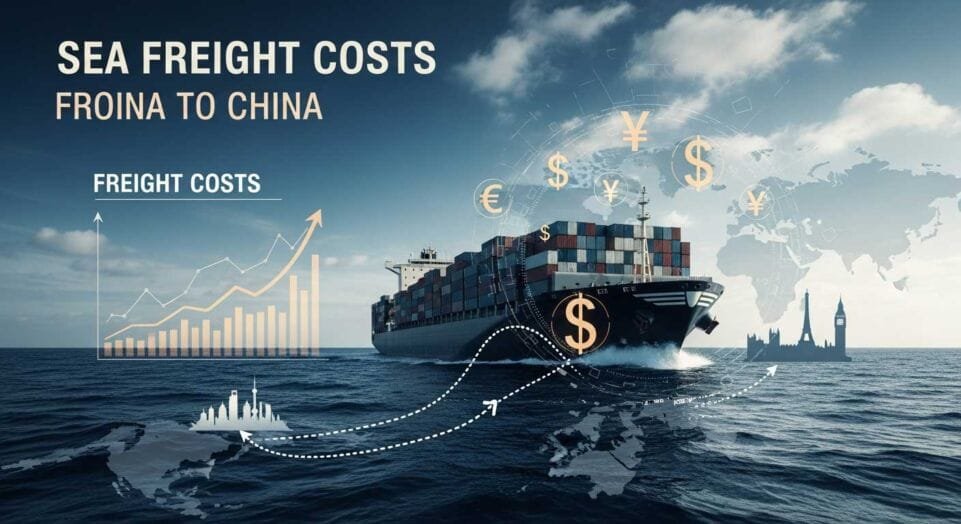
Understanding Sea Freight costs from China to Europe is crucial for importers to plan budgets, compare shipping options, and avoid unexpected charges.
Costs are influenced by multiple factors including container type, shipment volume, route, season, and additional fees such as Terminal Handling Charges (THC) and demurrage.
Below, we break down the main elements affecting ocean freight pricing.
Factors That Affect Ocean Freight Rates
Several key factors determine the final cost of shipping goods via ocean freight:
- Container Type: FCL vs LCL has different pricing models. FCL is charged per container, LCL per cubic meter.
- Route and Transit Time: Routes like the Suez Canal, Cape of Good Hope, or Northern Sea Route vary in distance and fuel costs.
- Port Fees: Each port has different Terminal Handling Charges (THC), local fees, and customs costs.
- Seasonal Demand: Peak seasons (Q3–Q4) can increase freight rates by 20–40%.
- Fuel Surcharge: Rising fuel costs can directly impact the total shipping cost.
- Carrier and Service Level: Shipping lines (Maersk, COSCO, MSC) offer varying rates and schedules.
- Customs and Documentation: Proper paperwork reduces delays and extra charges.
Proper planning and using a reliable freight forwarder helps mitigate unexpected costs.
FCL vs LCL Cost Comparison
Choosing between FCL and LCL affects both the per-unit cost and total shipping expense.
Cost Insights
| Shipping Option | Volume | Typical Cost | Notes |
|---|---|---|---|
| 20ft FCL | 25–28 CBM | $1,200–$2,200 | Best for bulk shipments |
| LCL (10 CBM) | 10 CBM | $450–$750 | Small shipments, higher per CBM cost |
| LCL (18 CBM) | 18 CBM | Often > FCL | Consider switching to FCL for cost efficiency |
Key Takeaways:
- FCL is usually more cost-effective for larger shipments.
- LCL is flexible but can be 15–30% more expensive per CBM for medium-sized shipments.
- Combining shipping volume strategically can save both money and transit time.
Extra Charges: THC, Demurrage, Documentation
In addition to basic freight costs, importers should consider additional charges:
1. Terminal Handling Charges (THC)
- Covers loading/unloading containers at the port.
- Typically ranges from $100–$250 per container.
- Applies to both origin and destination ports.
2. Demurrage
- Fee charged when containers exceed free storage time at the port.
- Preventable with timely pickup and customs clearance.
- Rates vary from $50–$150 per day.
3. Documentation Fees
- Includes Bill of Lading, customs forms, and export/import certificates.
- Usually $50–$150 per shipment, depending on complexity.
Pro Tips
- Always clarify charges with your freight forwarder.
- Plan for holidays and peak seasons to avoid demurrage.
- Consolidate LCL shipments when possible to reduce THC costs.
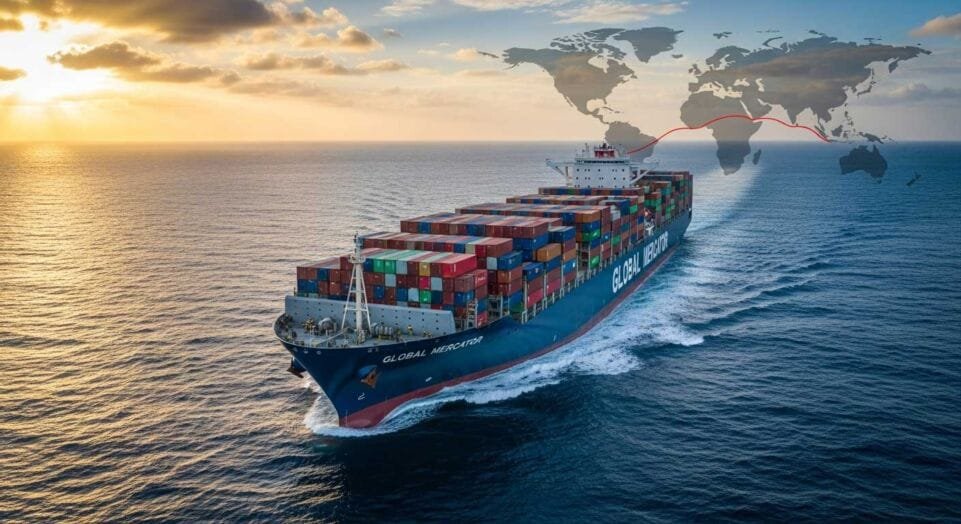
Transit Time for Sea Shipping from China to Europe
Understanding transit time for sea shipping from China to Europe is essential for importers to plan inventory, manage customer expectations, and select the right shipping method.
Transit time varies depending on the route, container type, seasonal conditions, and port efficiency. Below, we break down typical transit durations and factors affecting delivery speed.
Average Transit Time by Route
The average transit time depends largely on the sea route selected:
1. Suez Canal Route
- Most commonly used route for China–Europe trade
- Typical transit: 30–35 days (Shanghai → Rotterdam)
- Efficient and predictable, suitable for FCL and LCL shipments
2. Cape of Good Hope Route
- Alternative when the Suez Canal is congested or blocked
- Transit time: 40–50 days, roughly 25–30% longer than the Suez route
- Higher fuel and operational costs due to longer distance
3. Northern Sea Route (Arctic Route)
- Seasonal route for faster shipping
- Transit time: 22–28 days during navigable months
- Requires ice-class vessels and is less common for standard cargo
4. Combined Sea + Rail Transport
- Multimodal option combining ocean freight with rail
- Transit time: 18–25 days, faster than pure sea freight
- Ideal for medium-value goods needing quicker delivery
Factors Influencing Delivery Speed
Several factors can impact the actual transit time for shipments:
- Route Selection: Suez, Cape, Northern Sea Route, or Sea + Rail
- Port Congestion: Busy ports like Shanghai or Rotterdam may cause delays
- Customs Clearance: Efficient paperwork speeds up delivery; delays increase demurrage fees
- Carrier Schedule: Frequency and reliability of shipping lines (Maersk, COSCO, MSC)
- Seasonal Conditions: Typhoons, ice in the Arctic, and peak seasons can extend delivery times
- Container Type: FCL often clears faster than LCL due to less handling
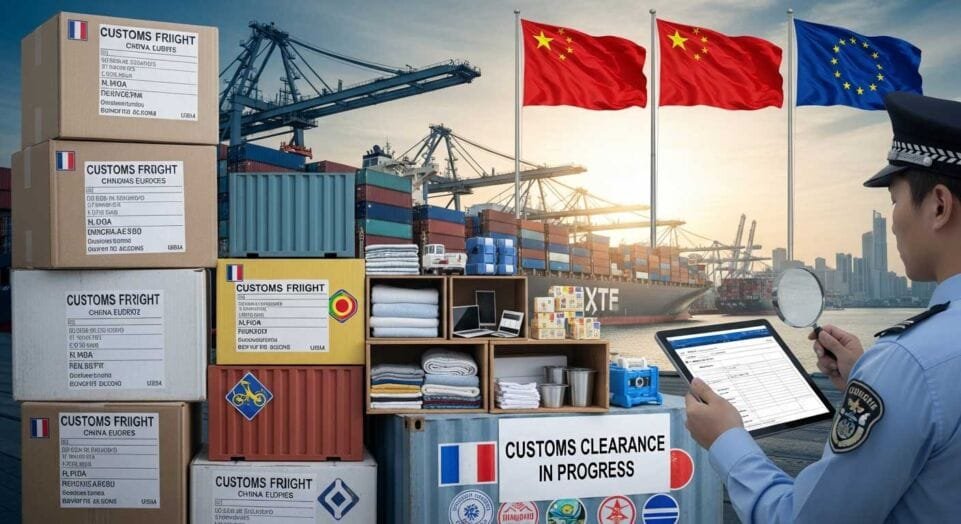
Customs Clearance for China–Europe Sea Freight
Efficient customs clearance for China–Europe sea freight is essential to avoid delays, demurrage, and unexpected costs.
Both importers and freight forwarders must ensure all required documents are prepared, fees are paid, and shipments comply with EU regulations.
Proper planning also ensures faster delivery and smoother port handling.
Required Documents (B/L, Invoice, Packing List)
Several documents are essential for smooth customs clearance:
1. Bill of Lading (B/L)
- Serves as the proof of shipment and contract between the shipper and carrier
- Required by European ports to release containers
- Contains key information: shipper, consignee, container number, and shipping route
2. Commercial Invoice
- Details the goods, value, and transaction between buyer and seller
- Used to calculate duties and taxes
- Must match the packing list and purchase order
3. Packing List
- Provides detailed information about contents, quantity, weight, and packaging
- Essential for customs inspection
- Helps freight forwarders and port authorities manage container unloading efficiently
EU Customs Regulations You Must Know
Importers must comply with the European Union’s customs and trade regulations to avoid penalties:
- EORI Number: Every importer must have an Economic Operators Registration and Identification (EORI) number
- HS Codes: Accurate Harmonized System codes ensure correct duty rates
- Import Duties & VAT: Calculated based on the declared value, shipping, and insurance
- Restricted or Prohibited Goods: Some items require special permits or are banned
- Customs Declarations: Electronic submission via EU’s ICS (Import Control System) is mandatory
Pro Tips for Faster Clearance
- Use a reputable freight forwarder familiar with EU ports
- Double-check all documentation against shipment contents
- Factor in inspection times and peak-season delays
Risks & Challenges in Sea Freight
Shipping via Sea Freight from China to Europe offers many advantages, but importers must be aware of potential risks and challenges.
Understanding these issues helps mitigate delays, avoid unexpected costs, and protect valuable cargo.
Port Congestion
Port congestion is a common challenge at major Chinese and European ports such as Shanghai, Ningbo, Rotterdam, and Hamburg.
Causes
- High volume during peak seasons (e.g., Q3–Q4)
- Delays in vessel arrivals or berthing
- Labor shortages at terminals
Impacts
- Longer waiting times for loading/unloading
- Increased demurrage and storage fees
- Potential delay in delivery to customers
Mitigation Tips
- Plan shipments ahead of peak season
- Use alternative ports or multimodal options (Sea + Rail)
- Work with an experienced freight forwarder who can monitor port schedules
Rate Volatility
Ocean freight rates fluctuate frequently due to supply-demand imbalance, fuel costs, and global trade conditions.
Key Factors
- Seasonal demand spikes (Q3–Q4)
- Fuel surcharge variations
- Carrier capacity and route disruptions (e.g., Suez Canal incidents)
Impacts
- Increased shipping cost for short-notice bookings
- Difficulty in budgeting for import operations
Mitigation Tips
- Lock in rates with long-term contracts for frequent shipments
- Monitor market trends using freight rate platforms (e.g., Freightos)
- Consider volume consolidation to secure better FCL rates
Cargo Damage and Insurance
Cargo damage is a risk in both FCL and LCL shipments, especially during handling, transshipment, or adverse weather.
Causes
- Improper packing or container loading
- Rough handling at ports or during inland transport
- Extreme weather conditions at sea
Prevention & Mitigation
- Use high-quality packaging and secure cargo inside containers
- Purchase marine cargo insurance to cover loss or damage
- Document shipment conditions with photographs for claims
Step-by-Step Sea Freight Process from China to Europe
Shipping via Sea Freight from China to Europe involves multiple steps, from booking the container to final delivery at the European port.
Understanding this process helps importers plan logistics, reduce costs, and avoid delays.
Booking a Container
The first step in sea freight is booking the right container with a reliable freight forwarder.
Key Points
- Choose between FCL and LCL depending on your shipment volume
- Specify container size (20ft, 40ft, 40ft HQ) for FCL shipments
- Confirm shipping route (Suez, Cape, Northern Sea Route, or Sea + Rail)
- Provide complete shipment details for accurate Bill of Lading (B/L) preparation
Loading & Terminal Handling
After booking, the cargo is transported to the port terminal for loading into the container.
Key Activities
- Weighing and inspection of cargo
- Loading cargo into FCL containers or consolidating LCL shipments
- Documentation and customs checks before vessel departure
- Payment of Terminal Handling Charges (THC) and other port fees
Sailing, Tracking & Final Delivery
Once the container is loaded, the vessel sails toward the destination port.
Key Points
Transit times vary by route:
- Suez Canal: 30–35 days
- Cape of Good Hope: 40–50 days
- Northern Sea Route: 22–28 days (seasonal)
- Track shipments online using carrier platforms or freight forwarder portals
- Upon arrival, containers go through customs clearance and terminal handling at the European port
- Final delivery via truck or rail to the importer’s warehouse
Cheapest Route
For cost-conscious importers:
- Suez Canal Route is generally the most economical and widely used for FCL and LCL shipments
- Shipping via Cape of Good Hope is longer and more expensive but can be a backup during canal congestion
- Combining shipments into FCL when volume allows reduces per-CBM costs
- Example: A 20ft FCL from Shanghai to Rotterdam can cost $1,200–$2,200, while a similar LCL shipment may cost 15–30% more per CBM
Fastest Route
If speed is a priority:
- Northern Sea Route (Arctic Route) is the fastest seasonal option (22–28 days)
- Sea + Rail transport offers transit times of 18–25 days and is ideal for medium-value cargo
- Prioritize FCL shipments for faster handling and customs clearance
- Work with a freight forwarder to monitor vessel schedules and avoid delays
Tips for Reducing Sea Freight Costs
Importers can take several steps to optimize ocean freight cost:
- Consolidate smaller shipments into FCL containers when possible
- Avoid peak-season bookings or plan well in advance
- Use alternative ports to reduce Terminal Handling Charges (THC) and congestion delays
- Ensure proper documentation to prevent customs fines and demurrage
- Compare rates from multiple carriers and forwarders
- Opt for long-term contracts for regular shipments to lock in stable rates
Conclusion: Best Way to Ship Goods from China to Europe
Choosing the best method for Sea Freight from China to Europe depends on your priorities: cost, speed, and shipment volume.
By understanding routes, shipping options, and additional charges, importers can optimize transit time, reduce freight costs, and avoid common shipping challenges.
FAQ Sea freight from china to europe
How much does a 20ft/40ft container cost?
The cost of a container depends on route, season, and shipping line.
- 20ft FCL: Typically $1,200–$2,200 from major Chinese ports (Shanghai, Ningbo) to European ports (Rotterdam, Hamburg, Antwerp)
- 40ft FCL: Usually $2,000–$3,500 depending on carrier and peak season
- LCL shipments: Charged per cubic meter (CBM) and can be 15–30% more expensive per CBM for medium-sized shipments
Using a reliable freight forwarder can help get competitive rates and manage additional charges like THC and demurrage.
Which European port is best for imports?
Top European import ports for China shipments include:
- Rotterdam (Netherlands): Largest port, efficient customs, ideal for bulk imports
- Hamburg (Germany): Strong logistics network, good for industrial goods
- Antwerp (Belgium): Central for Western Europe, flexible handling for FCL and LCL
The choice depends on your final delivery location, cargo type, and transport costs from port to warehouse.
How long does ocean shipping take?
Transit time varies by route and shipment type:
- Suez Canal Route: 30–35 days (most common)
- Cape of Good Hope Route: 40–50 days
- Northern Sea Route (Arctic Route): 22–28 days, seasonal
- Sea + Rail (multimodal): 18–25 days, faster than pure sea freight
Factors such as port congestion, customs clearance, and seasonal conditions can extend delivery times.
Is FCL or LCL better for my shipment?
The choice depends on volume, value, and urgency:
FCL (Full Container Load):
- Best for shipments above 15–18 CBM
- Faster handling, less risk of damage
- More cost-effective for bulk cargo
- LCL (Less than Container Load):
- Suitable for small shipments under 12 CBM
- Flexible but may be 15–30% more expensive per CBM
- Longer transit due to consolidation
A professional freight forwarder can help decide the most economical and reliable option based on your cargo.