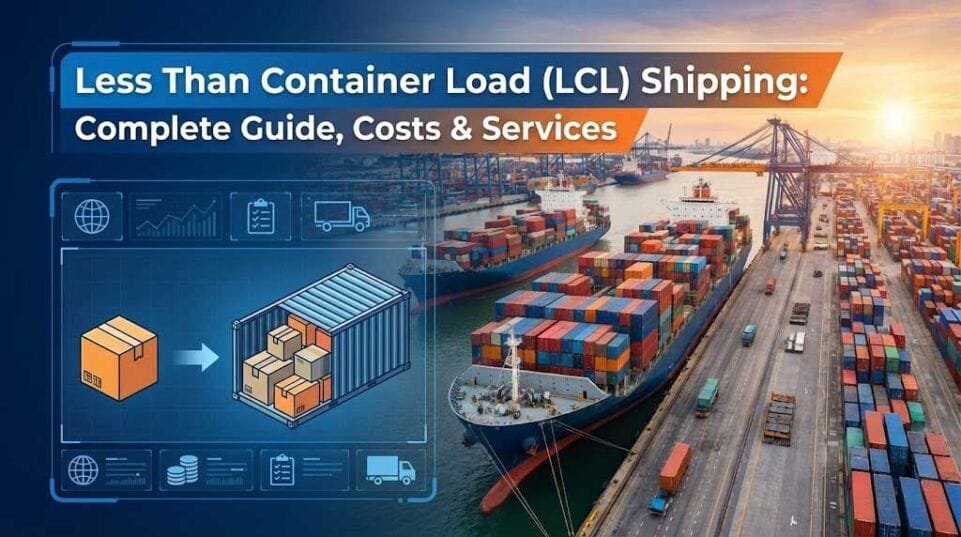
When importing goods from China to the US, choosing the right shipping method is crucial for cost efficiency, timely delivery, and cargo safety. Businesses often face a decision between Less Than Container Load (LCL) and Full Container Load (FCL), each with its own advantages and considerations.
LCL shipping allows small and medium sized businesses to ship cargo that doesn’t fill a full container, paying only for the space they occupy. It is cost-effective and flexible, making it ideal for shipments with lower volumes. On the other hand, FCL shipping provides a dedicated container for larger shipments, offering faster transit times and higher security.
This guide explores the differences between LCL and FCL, explains their respective pros and cons, and provides practical insights for businesses looking to optimize their shipping from China to the US. By understanding both options, importers can make informed decisions to save money, reduce transit time, and streamline their supply chain.
What Is LCL Shipping (Less Than Container Load)?
LCL Shipping, or Less Than Container Load, is an international shipping method where goods from multiple shippers are consolidated into a shared container. This method is ideal for businesses that do not have enough cargo to fill a full container (FCL) but still want a cost-effective and secure shipping solution.
LCL allows small and medium-sized businesses to ship internationally without renting a full container. LCL shipments are typically handled by freight forwarders who manage packaging, customs clearance, and coordination of the shipping route.
LCL Freight Explained
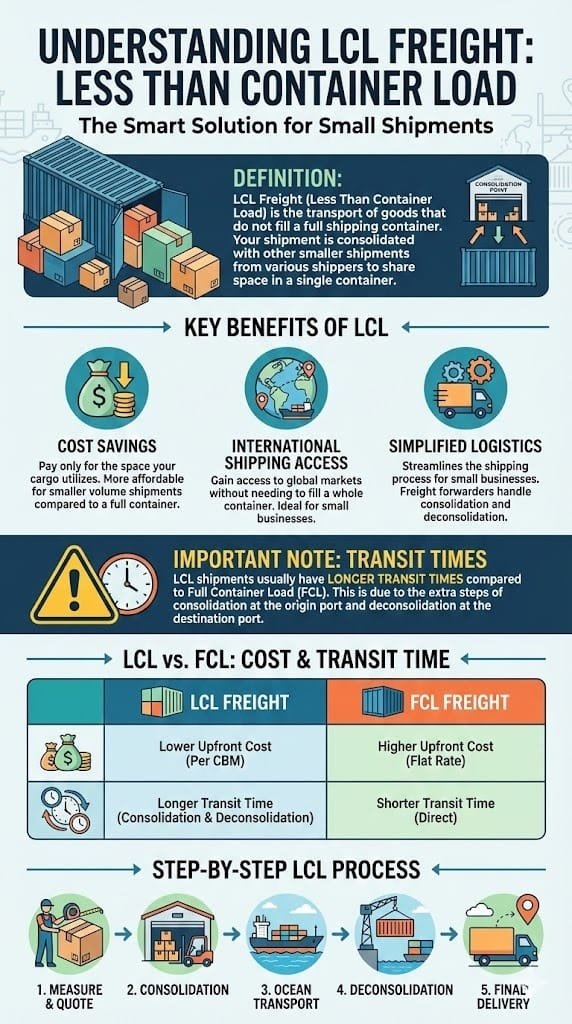
LCL Freight refers to the transport of goods that are not sufficient to fill a full container. These shipments are consolidated with other cargo in a single container to optimize space and reduce shipping costs.
- Key advantages of LCL Freight include:
- Cost savings for smaller shipments
- Ability to ship internationally without a full container
- Simplified logistics for small businesses
However, LCL shipments usually take longer transit times compared to FCL, as shared containers may be loaded and unloaded at multiple warehouses before reaching the final destination.
LCL Cargo vs Full Container Load
Understanding the difference between LCL Cargo and Full Container Load (FCL) is crucial:
| Feature | LCL Cargo | FCL |
|---|---|---|
| Shipment Size | Less than a full container | One full container |
| Cost | Based on volume or weight | Flat rate per container |
| Transit Time | Usually longer | Faster, direct to destination |
| Security | May be opened and handled multiple times | Goods stay in a sealed container |
| Ideal For | Small to medium-sized businesses | Large businesses and manufacturers |
For cost-sensitive shipments, LCL is often the preferred option, while FCL is better for direct and faster delivery.
How LCL Shipment Works in International Shipping
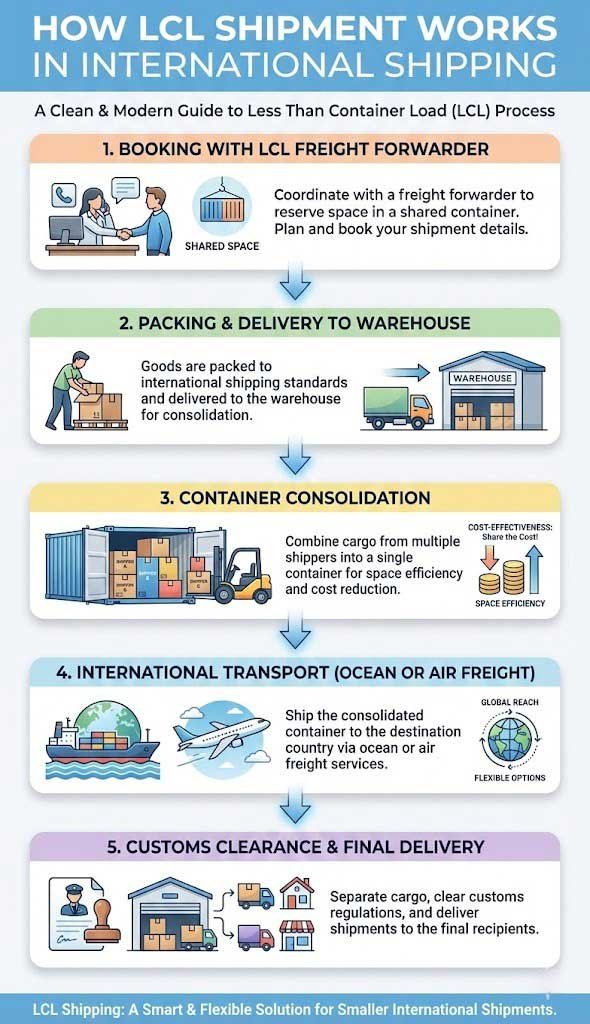
The typical LCL shipment process involves the following steps:
- Booking with an LCL Freight Forwarder: The shipper coordinates with an international freight forwarder to reserve space in a shared container.
- Packing and Delivery to the Warehouse: Goods are packed according to international shipping standards and delivered to the freight forwarder’s warehouse.
- Container Consolidation: Cargo from multiple shippers is combined into a single container to maximize space efficiency.
- International Transport (Ocean or Air Freight): The consolidated container is shipped to the destination country. Transit time depends on the shipping route and mode (sea or air).
- Customs Clearance and Final Delivery: Upon arrival, cargo is separated, cleared through customs, and delivered to the respective recipients.
This process makes LCL shipping cost-effective, manageable, and ideal for businesses with smaller shipments.
LCL Shipping Rates, Costs & Service Options
Shipping via LCL (Less Than Container Load) is a cost-effective option for businesses that don’t have enough cargo to fill a full container. Understanding LCL shipping costs, rates, and service options helps importers and exporters make informed decisions while optimizing their supply chain.
LCL shipping allows goods from multiple shippers to be consolidated in a single container, reducing shipping costs, but pricing and transit times depend on several factors, which we’ll explain below.
Less Than Container Load Costs Explained
The cost of LCL shipping is generally calculated based on the volume (cubic meters) or weight (metric tons) of the cargo whichever is greater. Unlike FCL (Full Container Load), where you pay a flat rate per container, LCL shipments allow you to pay only for the space your cargo occupies.
Other cost components may include:
- Handling fees at the origin and destination ports
- Customs clearance and documentation charges
- Freight forwarding fees for consolidation and delivery
- Insurance for protection during transport
By understanding how LCL freight pricing works, businesses can accurately estimate shipping costs and avoid unexpected charges.
Factors Affecting LCL Shipping Rates
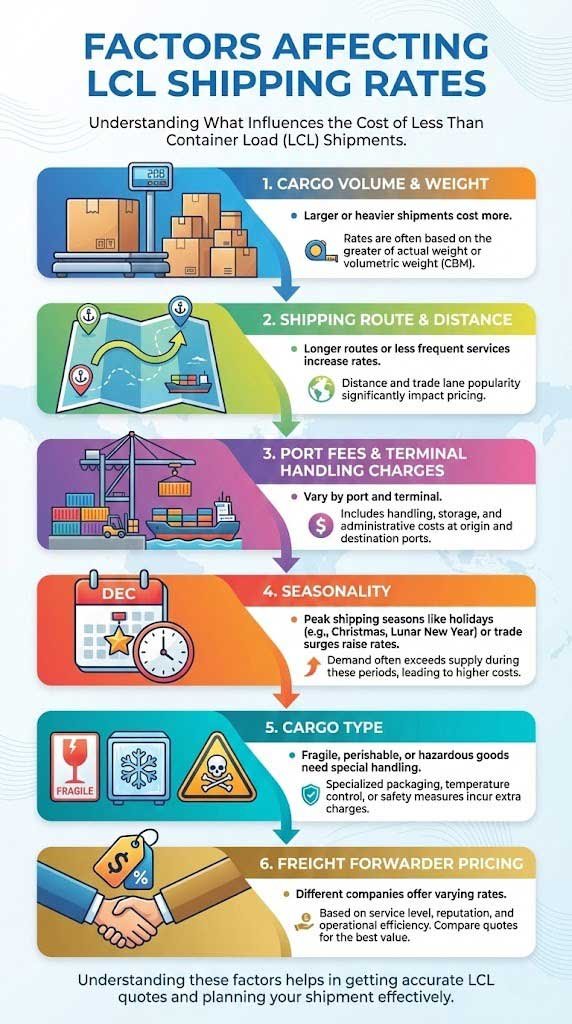
Several factors influence LCL shipping rates:
- Cargo volume and weight: Larger or heavier shipments cost more.
- Shipping route and distance :Longer routes or less frequent services increase rates.
- Port fees and terminal handling charges :Each port may have different handling costs.
- Seasonality : Peak shipping seasons, like holidays or trade surges, can raise rates.
- Cargo type:Fragile, perishable, or hazardous goods may require special handling and higher fees.
- Freight forwarder pricing : Different companies may offer competitive rates, depending on their network and partnerships.
Carefully considering these factors ensures cost-efficient LCL shipping without compromising delivery reliability.
Choosing the Right LCL Shipping Company
Selecting a reliable LCL shipping company is crucial for smooth international transport. When evaluating freight forwarders, consider:
- Experience with LCL shipments and international consolidation
- Transparent rate breakdown and no hidden charges
- Strong global network for ports and carriers
- Availability of customs clearance and cargo documentation services
- Positive customer reviews and track record of on-time delivery
A trusted freight forwarder helps reduce risks, optimize costs, and ensure your LCL cargo reaches its destination safely.
International LCL Shipping Services Overview
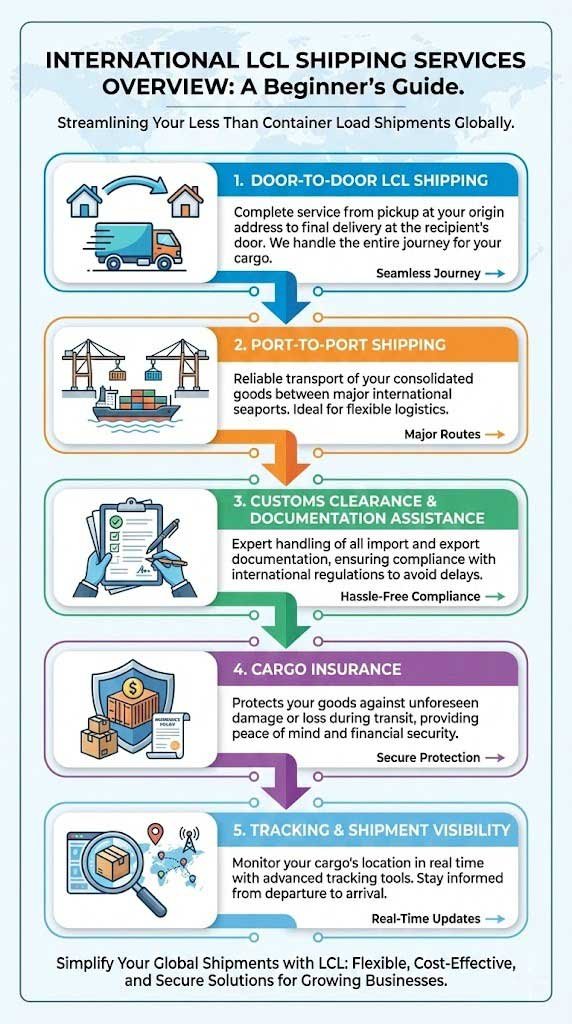
Most freight forwarding companies offer a variety of international LCL shipping services, including:
- Door-to-door LCL shipping: Pick up at origin and delivery to the final address
- Port-to-port shipping : Shipping between international ports, ideal for experienced shippers
- Customs clearance and documentation assistance: Ensures compliance with import/export regulations
- Cargo insurance: Protects goods against damage or loss during transit
- Tracking and shipment visibility : Allows monitoring of cargo status in real time
By selecting the right service package, businesses can balance cost, speed, and convenience according to their priorities.
LCL Sea Freight: Cost vs Transit Time
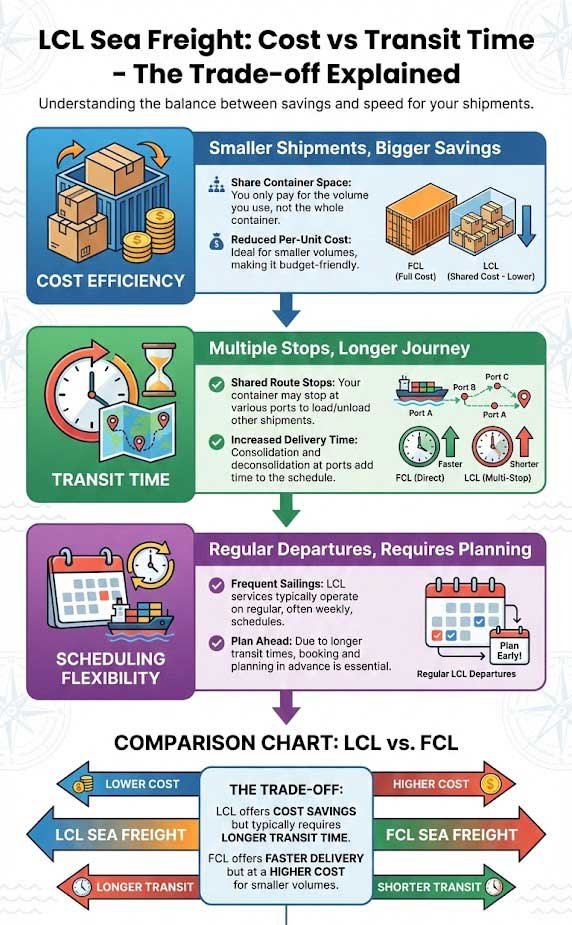
LCL sea freight is typically the most economical option for international shipments but may have longer transit times than FCL.
Key points to consider:
- Cost efficiency : LCL allows smaller shipments to share container space, reducing per unit cost.
- Transit time : Shared containers may stop at multiple ports, which can increase delivery time.
- Scheduling flexibility: LCL services usually operate on regular shipping schedules, but planning ahead is essential to meet delivery deadlines.
Ultimately, the choice between LCL cost savings and transit speed depends on your business needs and shipment urgency.
LCL Meaning in Shipping & Logistics
LCL, or Less Than Container Load, is a commonly used term in shipping and logistics. It refers to the transportation of cargo that does not fill an entire shipping container, allowing multiple shipments from different shippers to be consolidated into a single container. Understanding LCL is essential for businesses looking to optimize shipping costs, transit times, and logistics efficiency.
What Is LCL Shipping?
LCL shipping is a method of transporting goods when the shipment size is smaller than a full container load (FCL). Instead of paying for a full container, shippers pay only for the portion of the container their cargo occupies.
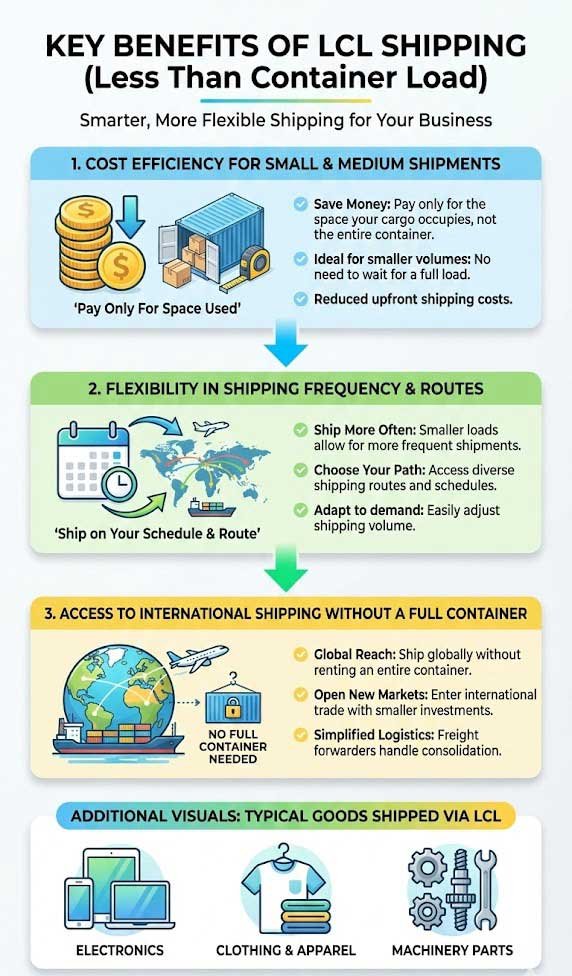
Key benefits of LCL shipping include:
- Cost efficiency for small and medium sized shipments
- Flexibility in shipping frequency and routes
- Access to international shipping without the need to rent a full container
LCL is widely used for international shipping of goods such as electronics, clothing, machinery parts, and other products where volume does not justify a full container.
LCL Full Form in Logistics
The full form of LCL is “Less Than Container Load”. In logistics, this term specifically refers to:
- Shipments that share container space with other cargo
- Goods that are charged based on volume (cubic meters) or weight, not a flat container rate
- Shipments that require consolidation and deconsolidation services at ports and warehouses
Knowing the full form and meaning of LCL helps businesses select the right shipping method for their cargo size and cost requirements.
Difference Between LCL and FCL Shipping
Understanding the difference between LCL and FCL is crucial for choosing the most suitable shipping method:
| Feature | LCL (Less Than Container Load) | FCL (Full Container Load) |
|---|---|---|
| Shipment Size | Smaller than a full container | Full container |
| Cost | Based on cargo volume or weight | Flat rate per container |
| Transit Time | Usually longer due to consolidation | Faster, direct to destination |
| Security | Cargo may be handled multiple times | Cargo stays sealed in container |
| Ideal For | Small and medium businesses | Large businesses and manufacturers |
LCL is cost-effective for smaller shipments, while FCL is better for direct and faster shipping.
Incoterms and LCL Shipments Explained
Incoterms (International Commercial Terms) play an important role in LCL shipments, as they define the responsibilities of buyers and sellers for shipping, insurance, and customs clearance. Common points related to LCL include:
- Determining who is responsible for freight charges, customs duties, and documentation
- Defining the point of delivery, which could be a port or door-to-door
- Clarifying risk transfer, i.e., when responsibility shifts from seller to buyer
Popular Incoterms used with LCL shipments include FOB (Free On Board), CIF (Cost, Insurance, and Freight), and DAP (Delivered At Place). Understanding how Incoterms affect LCL shipping helps businesses avoid unexpected costs and delays.
When Should You Use Less Than a Container Load Service?
Less Than Container Load (LCL) shipping is an ideal solution for businesses that do not have enough cargo to fill a full container. Choosing LCL allows small and medium-sized businesses to ship internationally cost-effectively without overpaying for unused container space.
Understanding when to use LCL helps businesses optimize their logistics, reduce shipping costs, and maintain a smooth supply chain.
Ocean Freight LCL Shipping Explained
Ocean freight LCL shipping is the most common method for international LCL shipments. In this process:
- Cargo from multiple shippers is consolidated into a single container.
- The container is transported via ocean freight to the destination port.
- Upon arrival, the container is deconsolidated, and each shipment is delivered separately.
Ocean LCL is cost effective for small shipments and widely used for goods such as electronics, apparel, machinery, and non-perishable items. While transit time may be slightly longer than FCL due to multiple handling points, it offers significant savings for smaller loads.
LCL Container Shipping Meaning for Small Businesses
For small businesses, LCL container shipping means they can access international freight services without renting a full container. Key points include:
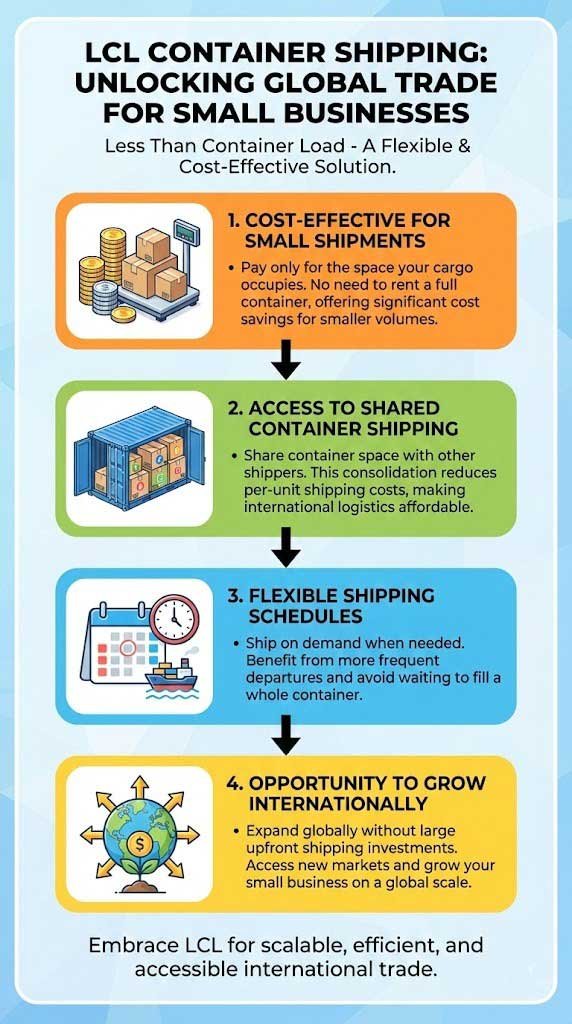
- Paying only for the space occupied by their cargo
- Access to shared container shipping, reducing per-unit shipping costs
- Flexible shipping schedules, allowing small businesses to ship on demand
- Opportunity to grow internationally without large upfront shipping investments
LCL empowers small businesses to compete globally while controlling shipping costs and logistics complexity.
Less Than Container Load Shipment Definition
A Less Than Container Load (LCL) shipment is defined as any cargo that:
- Does not fill an entire shipping container
- Requires consolidation with other shippers’ cargo
- Is charged based on volume (cubic meters) or weight, not a flat container rate
- May involve multiple handling points at origin, ports, and destination
Essentially, LCL is the practical alternative for small and medium shipments that are too large for courier services but too small for FCL.
Is LCL Shipping Right for Small & Medium Shipments?
LCL shipping is generally ideal when:
- Your shipment size is smaller than a container
- Cost efficiency is a priority over fastest possible transit
- You need international shipping flexibility without a full container
- You want to avoid overpaying for unused container space
However, if your shipment is large enough to fill a container or requires direct, faster delivery, FCL may be a better option. For most small and medium-sized businesses, LCL offers the best balance of cost and convenience.
Pros and Cons of LCL Shipping
Shipping via Less Than Container Load (LCL) has several advantages and disadvantages. Understanding them helps businesses choose the right shipping method.
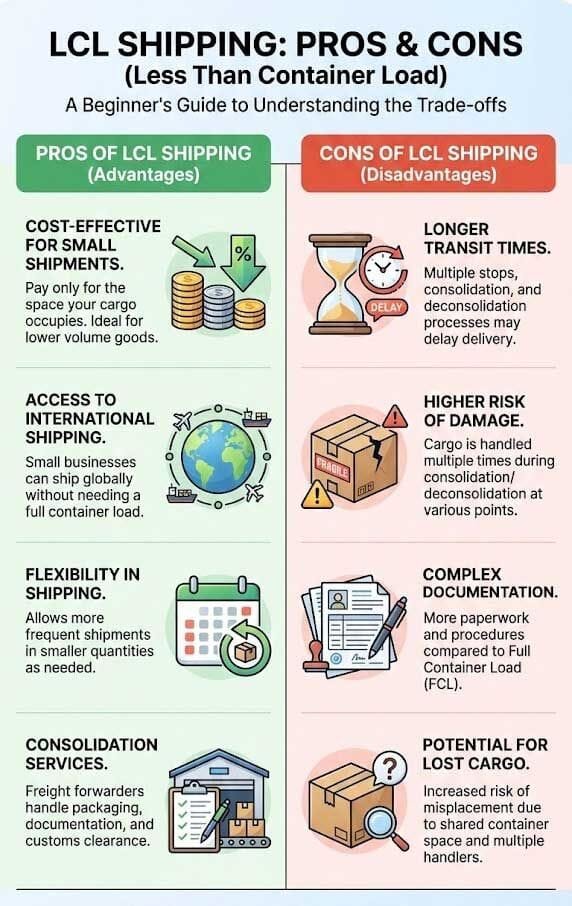
Pros of LCL Shipping:
- Cost-effective for small shipments: You pay only for the space your cargo occupies.
- Access to international shipping: Small businesses can ship globally without a full container.
- Flexibility: LCL allows more frequent shipments in smaller quantities.
- Consolidation services: Freight forwarders handle packaging, documentation, and customs clearance.
Cons of LCL Shipping:
- Longer transit times: Multiple stops and container handling may delay delivery.
- Higher risk of damage: Cargo is handled multiple times during consolidation and deconsolidation.
- Complex documentation: More paperwork may be involved compared to FCL.
LCL Shipping vs FCL: Which One Is Better for You?
Choosing between LCL (Less Than Container Load) and FCL (Full Container Load) depends on shipment size, cost priorities, and delivery urgency:
| Feature | LCL | FCL |
|---|---|---|
| Shipment Size | Less than a full container | Full container |
| Cost | Pay for occupied space | Flat container rate |
| Transit Time | Usually longer | Faster, direct shipping |
| Security | Handled multiple times | Sealed container, higher security |
| Ideal For | Small/medium businesses | Large shipments, manufacturers |
Key Takeaway:
Use LCL for smaller shipments, cost efficiency, and international flexibility.
Use FCL when you have enough cargo to fill a container or need direct, faster shipping.
Common Mistakes in LCL Cargo Shipping
Avoiding mistakes in LCL shipping ensures smooth international logistics:
- Incorrect volume or weight calculations:Over- or underestimating can increase costs.
- Not consolidating shipments properly :Leads to delays and higher charges.
- Ignoring customs requirements :Can result in fines or shipment delays.
- Choosing the wrong freight forwarder : May compromise security, transit time, or cost.
- Poor packaging:Increases the risk of damage during handling.
Proper planning, packaging, and working with experienced LCL freight forwarders minimize these common errors.
FAQs About LCL Freight & Container Consolidation
What does LCL mean in shipping?
LCL stands for Less Than Container Load, a method for shipping cargo that doesn’t fill a full container, sharing space with other shipments.
How are LCL shipping costs calculated?
Costs are typically based on volume (cubic meters) or weight, whichever is greater, plus handling, documentation, and customs fees.
Is LCL slower than FCL?
Yes, LCL may take longer due to multiple handling points and consolidation with other shipments.
Can small businesses use LCL shipping?
Absolutely! LCL is ideal for small and medium shipments that don’t justify renting a full container.
What is container consolidation in LCL shipping?
Container consolidation combines multiple small shipments into a single container to optimize space and reduce shipping costs.