Introduction
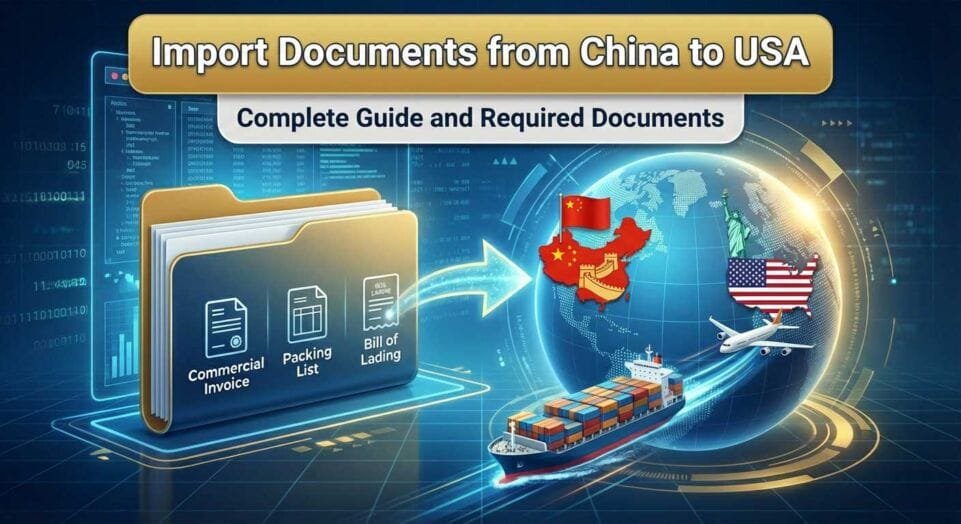
Import Documents from China to USA are essential for businesses of all sizes looking to import products smoothly. Correct documentation ensures timely customs clearance and prevents delays, extra costs, or holds by U.S. Customs and Border Protection (CBP). In this guide, you will learn which documents are required, why they matter, and how to stay fully compliant when shipping from China to the USA..
Why Documentation Matters When Importing from China to the USA?
Import documentation is the foundation of every international shipment. CBP uses these documents to verify the value, origin, classification, and safety of your goods. Even minor errors such as an incorrect HS Code, mismatched quantities between the Commercial Invoice and Packing List, or missing ISF Filing can trigger inspections or penalties.
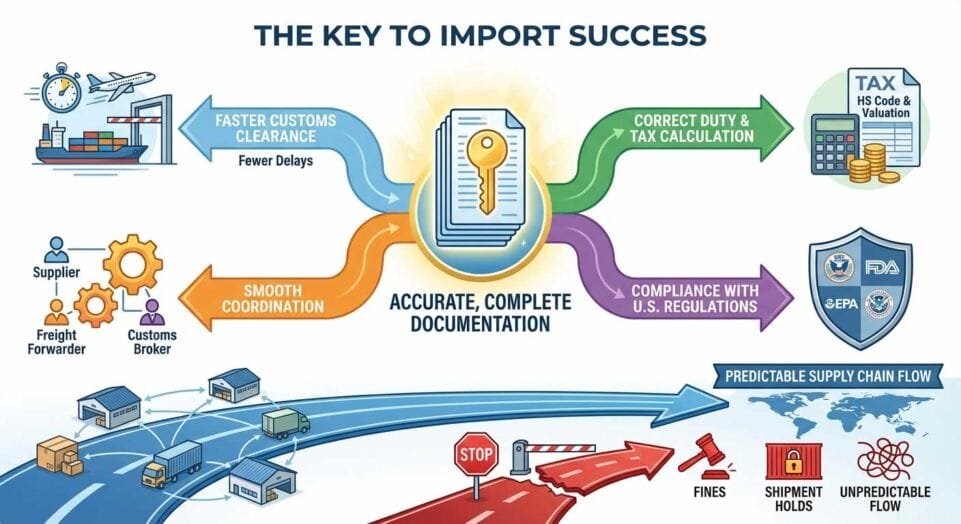
Accurate, complete documentation ensures:
- Faster customs clearance with fewer delays
- Correct duty and tax calculation based on HS Code and valuation
- Smooth coordination between the supplier, freight forwarder, and customs broker
- Compliance with U.S. regulations, including CBP, FDA, EPA, and other agencies
For any importer, proper paperwork is not optional it’s the key to avoiding fines, preventing shipment holds, and ensuring predictable supply chain flow.
Overview of CBP Requirements and Import Compliance
The United States enforces strict documentation and compliance rules for all goods entering the country. CBP relies on a core set of documents such as the Commercial Invoice, Bill of Lading, Packing List, Certificate of Origin, and Importer Security Filing (ISF 10+2) to screen shipments before and after arrival.

Key CBP requirements include:
- Accurate product classification using Harmonized System (HS) Codes
- Proper valuation of goods for duty assessment
- Timely ISF Filing before container loading in China
- Providing complete shipping and commercial documents upon arrival
- Compliance with partner agencies, such as FDA for food/cosmetics and EPA for restricted materials
Understanding these requirements helps importers reduce risks, avoid customs penalties, and maintain full compliance throughout the China-to-USA shipping process.
Essential Documents Required for Importing from China to the USA
To successfully import goods from China into the United States, CBP requires several core documents that verify the shipment’s value, origin, classification, and legitimacy. These documents must be accurate, consistent, and provided on time to avoid customs delays, unnecessary inspections, or penalties. Each document plays a specific role in the customs entry process, and together they form the foundation of import compliance.
Below are the most important documents every importer must prepare, review, and submit when shipping goods from China to the USA.
Commercial Invoice – Details, Format, and Required Information
The Commercial Invoice is the primary document used by CBP to determine the value and classification of imported goods. It acts as the official record of the transaction between the supplier and the importer. Any mistake in the invoice can affect duty calculation, HS Code classification, and compliance.

What the Commercial Invoice must include:
- Full names and addresses of the importer and exporter
- Detailed product description (materials, model, purpose)
- HS Code and country of origin
- Unit price and total value
- Currency used in the transaction
- Incoterms (FOB, CIF, DAP, etc.)
- Quantity, weight, and packaging information
- Invoice number and issue date
- Supplier’s signature or company stamp
Best practice:
Always request a clear, consistent invoice from your supplier. The information must match exactly with the Packing List and the Bill of Lading to avoid customs holds.
Packing List – Why It Is Important for Customs Clearance
The Packing List provides CBP with detailed information about the physical contents of the shipment. While it does not include pricing, it lists how the goods are packed, their dimensions, weight, and how they are arranged inside the container or shipment.
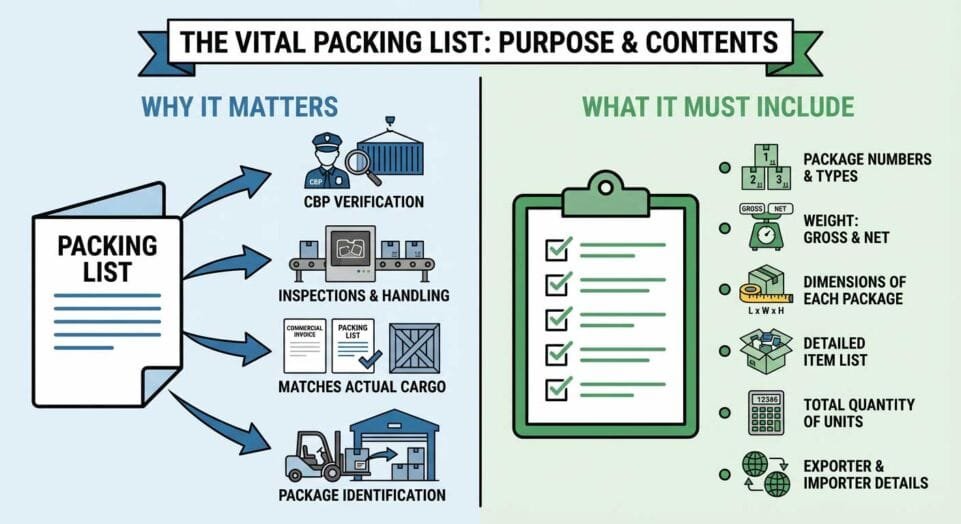
Why the Packing List matters:
- Helps CBP verify the shipment’s physical contents
- Used during customs inspections, X-ray checks, and warehouse handling
- Ensures the Commercial Invoice details match the actual cargo
- Helps warehouse and trucking companies identify each package
Items that must appear on a Packing List:
- Package numbers and types (cartons, pallets, crates)
- Weight: gross & net
- Dimensions of each package
- Detailed list of items inside each package
- Total quantity of units
- Exporter and importer details
- Shipping marks and container numbers
Bill of Lading (B/L) or Air Waybill – Types and Key Elements
The Bill of Lading (B/L) for sea freight and the Air Waybill (AWB) for air shipments are transportation documents issued by the carrier or freight forwarder. They serve as proof of shipment and include essential details about the goods in transit.
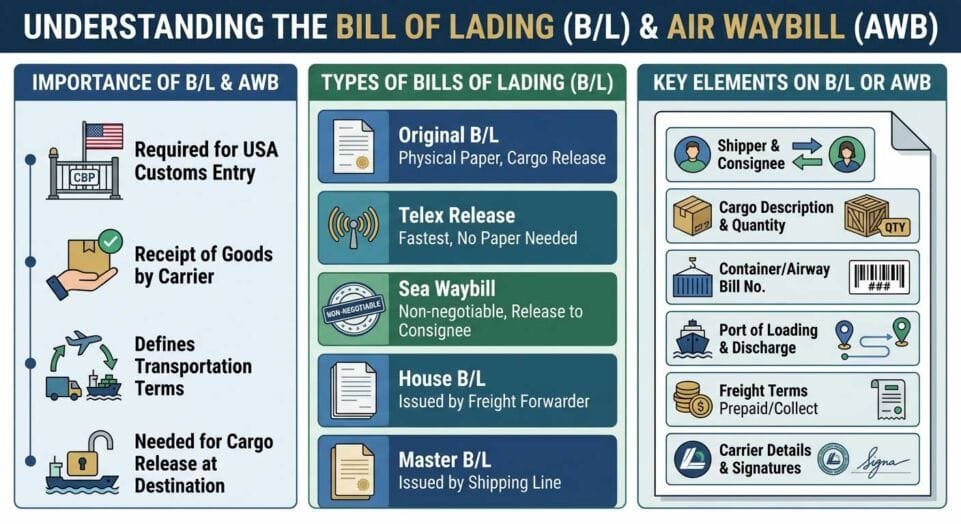
Why the B/L or AWB is important:
- It is required for customs entry into the USA
- Serves as a receipt of goods by the carrier
- Defines the terms of transportation
- Needed to release the cargo at the destination port or airport
Types of Bills of Lading:
- Original B/L – physical paper document required for cargo release
- Telex Release – the fastest method; no paper is needed
- Sea Waybill – non-negotiable; cargo is released to the named consignee
- House B/L – issued by a freight forwarder
- Master B/L – issued by the shipping line
Key elements found on a B/L or AWB:
- Shipper and consignee information
- Cargo description and quantity
- Container or airway bill number
- Port of loading and port of discharge
- Freight terms (Prepaid or Collect)
- Carrier details and signatures
Without a correct B/L or AWB, cargo cannot be released in the United States.
Certificate of Origin (COO) – When You Need It and How to Obtain It
The Certificate of Origin verifies the country where the goods were manufactured. While CBP does not require a COO for every shipment, it is mandatory for certain product categories, trade agreements, and compliance checks.
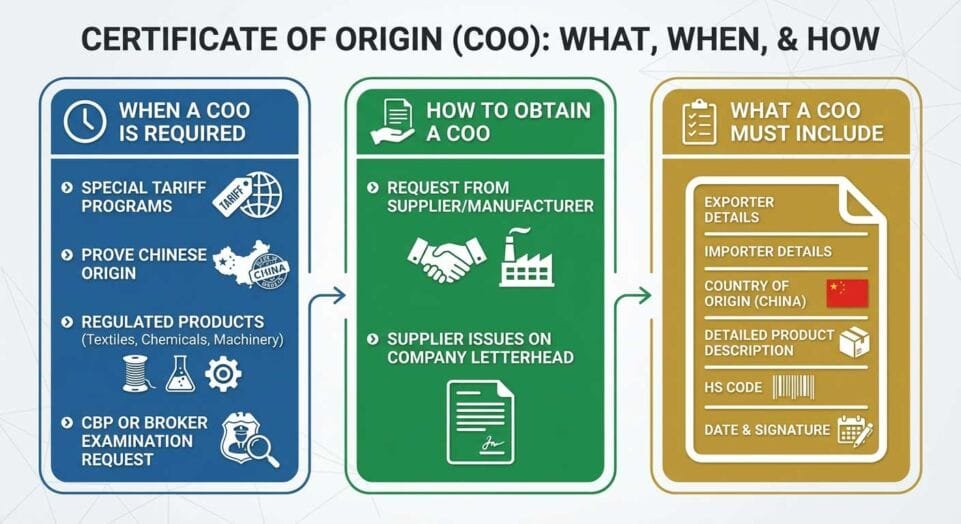
When a COO is required:
- When importing products under special tariff programs
- When the importer needs to prove the goods were made in China
- For certain regulated products (textiles, chemicals, machinery, etc.)
- When requested by the customs broker or CBP during examination
How to obtain a Certificate of Origin:
- Request it directly from your supplier or manufacturer
- The supplier issues the document on company letterhead
It must include:
- Exporter details
- Importer details
- Country of origin (China)
- Detailed product description
- HS Code
- Date and signature
A correct COO helps avoid disputes during duty assessment and prevents customs delays.
Import Licenses and Special Permits You May Need
Certain products require more than the standard shipping documents to enter the United States. Import licenses and special permits ensure compliance with U.S. regulations and help prevent shipment delays, fines, or confiscation. Depending on the type of goods, you may need permissions from CBP, FDA, EPA, FCC, or other federal agencies. Understanding which permits apply to your shipment is essential for smooth customs clearance.

Import Export Permit – When It Is Required for the USA
An Import Export Permit is a legal authorization that allows certain goods to be imported into or exported from the United States. Not all products require this permit, but it is mandatory for controlled or regulated items.
Key points about Import Export Permits:
- Needed for restricted commodities like firearms, chemicals, or high-tech equipment
- Helps CBP verify legal compliance before cargo arrival
- Can be obtained through the U.S. Department of Commerce or other relevant agencies
- Must be filed in advance to avoid shipment delays
Tip: Always confirm with your customs broker or freight forwarder whether your products need an import or export permit before shipping.
Import and Export Permit for Restricted or Regulated Goods
Certain goods are subject to special restrictions under U.S. law. Examples include agricultural products, pharmaceuticals, electronics, and chemicals. For these products, an Import and Export Permit ensures the shipment meets safety, environmental, and trade regulations.
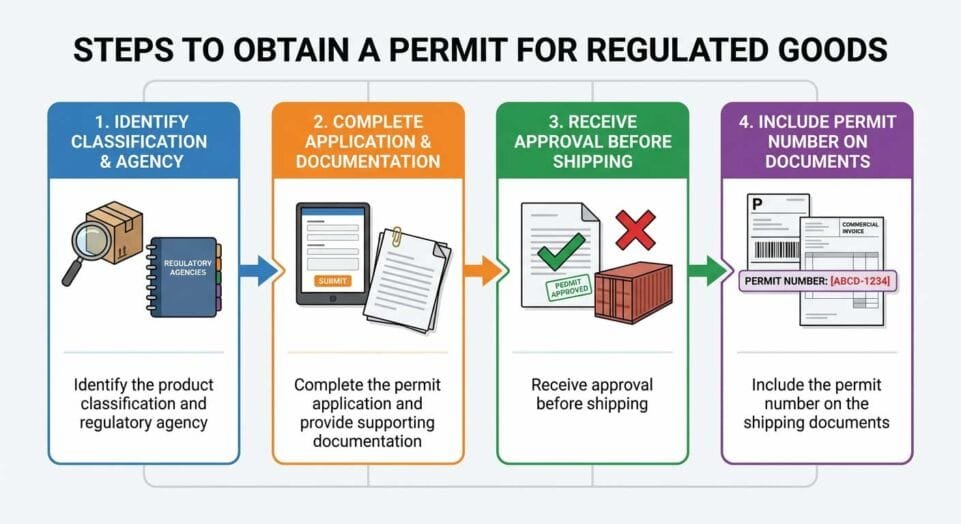
Steps to obtain a permit for regulated goods:
- Identify the product classification and regulatory agency
- Complete the permit application and provide supporting documentation
- Receive approval before shipping
- Include the permit number on the shipping documents
Having these permits ready avoids customs holds and demonstrates compliance with U.S. import laws.
FDA, EPA, FCC and Other Agency-Specific Permits
Some shipments must meet the requirements of specific U.S. federal agencies:
- FDA (Food and Drug Administration): For food, beverages, cosmetics, dietary supplements, and medical devices
- EPA (Environmental Protection Agency): For chemicals, pesticides, and environmentally regulated items
- FCC (Federal Communications Commission): For electronic devices that emit radio frequency
- Other Agencies: USDA, CPSC, DOT, or other specialized authorities
Why these permits matter:
- Ensure product safety and regulatory compliance
- Prevent shipment rejections or fines
- Streamline customs clearance and reduce delays
ISF Importer Security Filing (10+2) Requirements
The Importer Security Filing (ISF 10+2) is a mandatory requirement for shipments arriving in the U.S. by ocean freight.
CBP requires this filing to enhance supply chain security, assess risks, and prevent illegal cargo from entering the United States.
Proper ISF submission is critical for compliance and helps avoid fines or shipment delays.
What Is ISF Filing and Why CBP Requires It?
The ISF Filing is a security measure that requires importers to provide detailed information about the cargo and parties involved in the shipment. CBP uses this data to:
- Identify potential security threats before cargo arrives in U.S. ports
- Ensure compliance with U.S. customs laws
- Streamline inspection and clearance processes
The “10+2” term refers to the 10 data elements required from the importer and the 2 elements required from the carrier.
ISF Filing must be submitted electronically at least 24 hours before the cargo is loaded onto the vessel in China.
ISF Importer Security Filing vs. CBP Importer Security Filing (Difference Explained)
Many importers confuse ISF Filing with other CBP security filings.
Here’s the distinction:
- ISF Importer Security Filing (10+2): Filed by the importer or their authorized customs broker, contains 10 importer-provided elements and 2 carrier elements. Mandatory for ocean freight shipments to the USA.
- CBP Importer Security Filing: Refers broadly to the CBP’s requirements and oversight of ISF filings. Essentially, CBP enforces ISF compliance, including verifying data accuracy and submission timing.
Bottom line: ISF is the specific filing, while CBP monitoring ensures compliance and can penalize late or incorrect submissions.
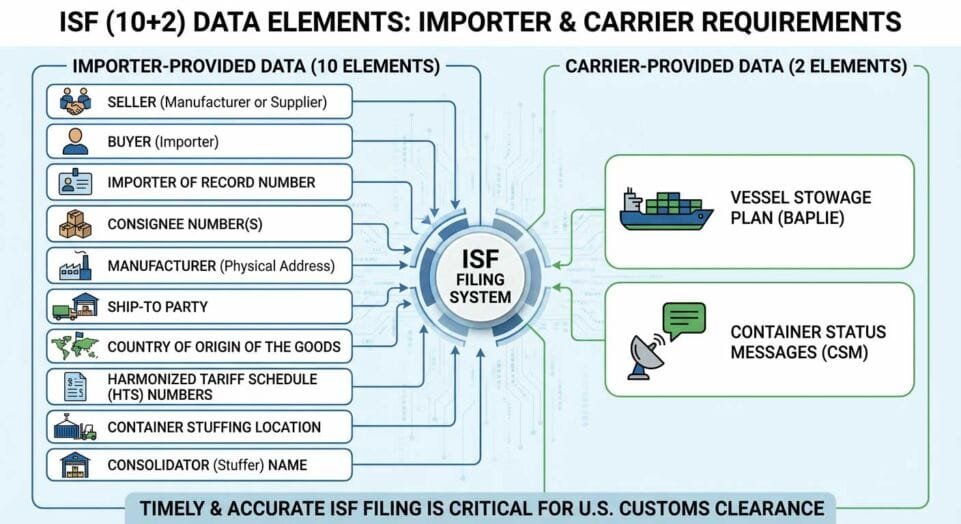
Information Needed for ISF (10 Data Elements + 2 Carrier Elements)
- Importer-provided data (10 elements):
- Seller (manufacturer or supplier)
- Buyer (importer)
- Importer of Record number
- Consignee number(s)
- Manufacturer (physical address)
- Ship-to party
- Country of origin of the goods
- Harmonized Tariff Schedule (HTS) numbers
- Container stuffing location
- Consolidator (stuffer) name
Carrier-provided data (2 elements):
- Vessel stow plan
- Container status messages
Providing accurate information for all 12 elements is critical. Inaccurate or missing data can result in cargo holds, penalties, or shipment delays.
ISF Filing Deadlines and Penalties for Late Submission
Deadline: ISF must be filed at least 24 hours before the cargo is loaded onto the vessel at the foreign port.
- Late filing penalties: CBP may impose fines up to $5,000 per violation. Repeated delays can result in stricter scrutiny of future shipments.
- Other consequences: Cargo may be held at the U.S. port, inspections may increase, and release times can be delayed, adding extra costs and storage fees.
Additional Documents Needed for China-to-USA Importing
Beyond the essential documents like the Commercial Invoice, Packing List, and Bill of Lading, certain additional documents may be required depending on the shipment type, product category, and U.S. regulations. These documents help ensure smooth customs clearance, legal compliance, and protection of goods during transit. Preparing them in advance reduces delays, prevents fines, and ensures a seamless import process.
Proforma Invoice
A Proforma Invoice is a preliminary invoice issued by the supplier before the actual shipment. Unlike a Commercial Invoice, it is not used for customs clearance, but serves as a formal quotation or contract reference.
Why it is important:
- Confirms product description, quantity, and price before order placement
- Helps importers secure letters of credit or financing
- Assists customs brokers in preparing accurate Commercial Invoices
Customs Bond (Single Entry / Continuous Bond)
A Customs Bond guarantees that the importer will pay all duties, taxes, and fees to CBP. Without a bond, goods cannot be legally released in the U.S.
Types of Customs Bonds:
- Single Entry Bond: Covers a single shipment; suitable for occasional importers
- Continuous Bond: Covers multiple shipments over a year; ideal for frequent importers
- Why it matters: A valid customs bond ensures compliance and prevents cargo from being delayed or rejected at the port.
Arrival Notice
An Arrival Notice is issued by the carrier or freight forwarder to notify the importer that the shipment has reached the U.S. port or airport.
Key purposes:
- Alerts the importer to prepare customs clearance
- Provides container or airway bill numbers
- Specifies release instructions and pickup details
Tip: Keep the Arrival Notice accessible when coordinating with your customs broker to ensure timely cargo release.
HS Codes and Product Classification Documents
Harmonized System (HS) Codes are essential for classifying imported goods and calculating duties. Accurate classification is a critical part of compliance.
Required documents:
- HS code declaration on the Commercial Invoice
- Supporting product specification sheets, if requested
- Certificates or permits for regulated or restricted products
Best practice: Confirm HS codes with your customs broker to avoid penalties, fines, or misclassification.
Insurance Certificate (for CIF Shipments)
For CIF (Cost, Insurance, and Freight) shipments, an Insurance Certificate is required to show that the cargo is covered during transit.
Why it matters:
- Protects against loss or damage during ocean or air transport
- Required for letters of credit or bank-financed shipments
- Ensures claims can be processed if incidents occur
Tip: Ensure the insured value matches the Commercial Invoice to avoid claim disputes.
CBP Customs Clearance Requirements
U.S. Customs and Border Protection (CBP) enforces strict procedures for all imported goods to ensure compliance with federal laws. Proper customs clearance requires accurate documentation, correct duty classification, and adherence to security requirements. Failing to meet CBP standards can result in shipment delays, fines, or even seizure of goods. Understanding the clearance process is essential for a smooth China-to-USA import operation.
What CBP Checks During Import Processing
During import processing, CBP evaluates multiple aspects of the shipment to ensure compliance:
- Documentation: Commercial Invoice, Packing List, Bill of Lading, ISF Filing, and any required permits
- Product Classification: Correct HS codes and tariff rates
- Valuation: Accurate reporting of invoice value for duties and taxes
- Regulatory Compliance: FDA, EPA, FCC, or other agency-specific requirements
- Security & Risk Assessment: Identification of high-risk cargo for inspections
Tip: Providing complete and accurate documentation greatly reduces inspection likelihood and speeds up clearance.
Responsibilities of the Importer vs. Freight Forwarder vs. Customs Broker
Clear roles and responsibilities help avoid errors during customs clearance:
- Importer: Ensures proper documentation, HS codes , duties, and compliance with U.S. regulations
- Freight Forwarder: Manages shipping logistics, transportation, and coordination with carriers
- Customs Broker: Prepares and submits customs entries (Form 7501, ISF), calculates duties, and communicates with CBP
Tip: Collaborate closely with your customs broker and freight forwarder to minimize delays and ensure all requirements are met.
Common Mistakes That Delay US Customs Clearance
Importers often face delays due to simple, avoidable mistakes:
- Incorrect or missing HS Codes
- Mismatched information between Commercial Invoice, Packing List, and B/L
- Late or incomplete ISF Filing
- Missing or expired permits for regulated goods
- Inadequate customs bond or insurance documentation
Pro tip: Conduct a pre-shipment checklist to verify all documents and ensure compliance before the cargo leaves China.
How to Prepare Your Documents Correctly
Accurate and consistent documentation is the key to smooth importing from China to the USA. Incorrect or mismatched paperwork is one of the main reasons shipments are delayed, fined, or held at U.S. ports. Preparing documents correctly ensures compliance with CBP regulations, avoids inspection delays, and speeds up customs clearance.
Document Format Standards (Names, Values, HS Codes, Incoterms)
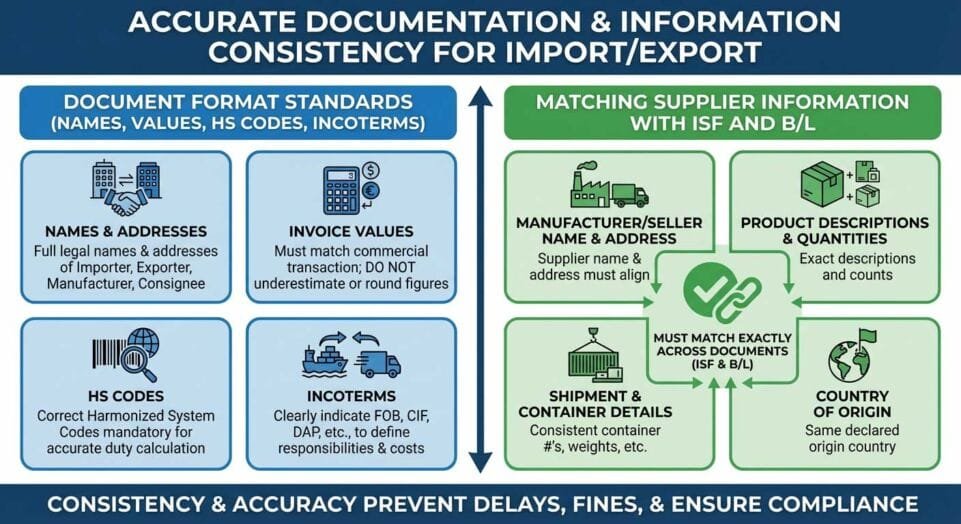
CBP requires that all documents follow standard formats to be accepted:
- Names and Addresses: Full legal names and addresses of the importer, exporter, manufacturer, and consignee
- Invoice Values: Must match the commercial transaction; do not underestimate or round figures
- HS Codes: Correct Harmonized System Codes are mandatory for accurate duty calculation
- Incoterms: Clearly indicate terms like FOB, CIF, or DAP to define responsibilities and costs
Tip: Use a consistent format across Commercial Invoice, Packing List, B/L, and ISF to avoid discrepancies.
Matching Supplier Information With ISF and B/L
All supplier-related information must match exactly across documents:
- Manufacturer/Seller name and address
- Product descriptions and quantities
- Shipment and container details
- Country of origin
Why it matters: CBP checks for consistency between the Commercial Invoice, ISF Filing, and Bill of Lading. Mismatched data can trigger cargo holds, fines, or additional inspections.
Pro tip: Keep a master copy of supplier information to ensure consistency in every document submission.
How to Avoid Inconsistencies That Trigger Customs Hold
Common document inconsistencies can delay your shipment. To prevent issues:
- Double-check HS Codes and product descriptions for every line item
- Verify names, addresses, and invoice values match across all documents
- Confirm Incoterms and shipping terms are consistent on the invoice, B/L, and contract
- Cross-check ISF Filing information with the Commercial Invoice and B/L
- Use a pre-shipment checklist to catch errors before cargo leaves China
Key takeaway: Small errors can cause major delays. Investing time in document verification saves money and prevents shipment holds.
Tips for First-Time Importers from China to the USA
Importing from China to the USA for the first time can be challenging due to strict CBP regulations, complex documentation, and multiple compliance requirements. Following best practices helps avoid shipment delays, fines, or cargo holds. These tips focus on the most common issues faced by new importers and how to handle them efficiently.
Choose the Right Freight Forwarder for Documentation Handling
Selecting a reliable freight forwarder is critical for smooth importing.
A good forwarder can:
- Prepare and submit ISF filings correctly
- Ensure all shipping documents match and comply with CBP requirements
- Advise on agency-specific permits (FDA, EPA, FCC, etc.)
- Coordinate with customs brokers to streamline cargo release
Tip: Verify the forwarder’s experience with China-to-USA shipments and their track record in document accuracy.
Always Double-Check Commercial Invoice Values
The Commercial Invoice is the primary document for customs valuation. Errors in invoice values can trigger fines, shipment holds, or duty reassessment.
Best practices:
- Ensure the total invoice value matches the purchase order and payment records
- Include currency, unit price, quantity, and total value for each line item
- Confirm that the invoice aligns with the Packing List, Bill of Lading, and ISF filing
Pro tip: Cross-check invoice values with your supplier before shipment to prevent discrepancies.
Use Correct Incoterms to Avoid Document Errors
Incoterms define the responsibilities of buyers and sellers for shipping, insurance, and duties. Using incorrect terms can lead to document mismatches and customs delays.
Key points:
- Confirm whether you are shipping FOB, CIF, or DAP
- Ensure the same Incoterms appear on the Commercial Invoice, Purchase Order, and Bill of Lading
- Clarify who is responsible for freight, insurance, and duties
Tip: Align Incoterms with your freight forwarder and customs broker to prevent misunderstandings and document errors.
Final words
Importing from China to the USA requires careful preparation, accurate documentation, and strict compliance with CBP regulations. From essential documents like the Commercial Invoice, Packing List, and Bill of Lading, to special permits, ISF Filing, and HS code classification, each step plays a critical role in smooth customs clearance.
By following best practices such as double-checking document values, using correct Incoterms, and working with a reliable freight forwarder or customs broker first-time importers can avoid common mistakes, prevent fines, and ensure timely delivery of goods.
Next step: Begin by creating a detailed pre-shipment checklist and confirming all documentation requirements for your products. Taking these steps early will save time, reduce costs, and make your China-to-USA import process efficient and hassle-free.
Import Documents from China to USA – FAQ
What documents are required to import from China to the USA?
The main import documents include a Commercial Invoice, Packing List, Bill of Lading or Air Waybill, Importer Security Filing (ISF), and U.S. Customs Entry documents. Depending on the product, additional permits or certificates may be required.
Do I need an Importer of Record (IOR) to import from China?
Yes. A U.S.-based Importer of Record is required to clear goods through U.S. Customs and Border Protection (CBP). The IOR is responsible for duties, taxes, and compliance.
Is an ISF filing mandatory for all shipments from China?
ISF (10+2) filing is mandatory for all ocean shipments to the USA. It must be submitted at least 24 hours before the cargo is loaded at the port of origin.
What happens if import documents are incorrect or missing?
Incorrect or missing documents can cause shipment delays, customs holds, penalties, or fines by CBP. In some cases, goods may be returned or seized.
Do import documents differ for air and sea freight?
Yes. Sea freight requires a Bill of Lading and ISF filing, while air freight uses an Air Waybill and does not require ISF.
Can a freight forwarder handle import documents from China to the USA?
Yes. A professional freight forwarder can prepare, review, and submit all required import documents, ensuring compliance with U.S. customs regulations.