How HS Codes Affect Import Duties When Shipping from China to the US?
For B2B importers, HS Codes directly impact landed cost, duty exposure, and compliance risk when shipping from China to the United States.
Each HS Code defines applicable base tariffs, Section 301 duties, anti-dumping measures, and additional import taxes enforced by US Customs.
Misclassification can trigger retroactive duty assessments, customs audits, penalties, or cargo holds, increasing operational risk and disrupting supply chains.
Accurate HS Code classification enables importers to optimize duty payments, forecast costs accurately, and maintain regulatory compliance, making it a strategic component of international sourcing and procurement.
Avoid Costly Customs Mistakes: Correct HS & HTS Codes for China Imports
Using the correct HS and HTS codes is essential to avoid costly customs mistakes when importing from China to the United States. These codes determine import duties, taxes, tariff exposure, and regulatory requirements, and even a minor classification error can lead to overpaid duties, customs penalties, shipment delays, or cargo holds.
For B2B importers, HS & HTS code accuracy is a core part of cost control and compliance strategy. US Customs applies base tariffs, Section 301 duties, and anti-dumping measures strictly based on these codes. Relying only on supplier-provided classifications increases the risk of misclassification, audits, and retroactive duty assessments. Proper verification before shipment helps importers optimize landed costs, protect profit margins, and ensure predictable supply chains.
How to Prevent HS & HTS Code Errors (Quick Checklist):
- Verify HS & HTS codes independently before shipping
- Classify products based on material, function, and technical specifications
- Check applicable US import duties and Section 301 tariffs
- Review anti-dumping and countervailing duty risks
- Confirm codes before customs filing and booking
- Keep documentation for compliance audits
By applying accurate HS and HTS codes and following a structured verification process, importers can reduce duty costs, prevent compliance risks, and avoid unexpected customs issues in China–US trade.
HTS vs HS Codes: What You Must Know Before Shipping from China to USA
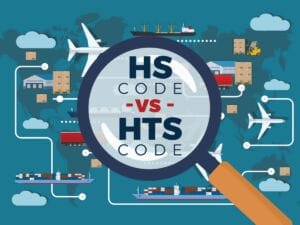
HS Codes and HTS Codes are closely related but serve different purposes in China–USA trade. HS Codes are international product classification numbers used worldwide, while HTS Codes are the US-specific extension of HS Codes that determine exact import duty rates, tariffs, and compliance rules enforced by US Customs.
When shipping from China to the USA, using only the HS Code is not enough. Import duties, Section 301 tariffs, and trade restrictions are calculated based on the full HTS Code, not the basic HS classification. Misunderstanding this difference is one of the most common reasons importers face unexpected duty charges, customs delays, or audits.
For B2B importers, knowing when to use HS vs HTS Codes helps control landed costs, avoid compliance risks, and ensure smooth customs clearance. Before shipping, importers must confirm that the HS Code provided by the supplier correctly matches the US HTS Code used in customs filings.
What Is an HS Code and Why It Matters in China to USA Shipping?
An HS Code (Harmonized System Code) is an international product classification number used by customs authorities worldwide to identify traded goods. In China to USA shipping, HS Codes determine how a product is classified, which directly affects import duties, taxes, customs clearance requirements, and tariff eligibility.
Using the correct HS Code is critical because US Customs relies on it to apply the appropriate duty rates, Section 301 tariffs, and regulatory controls. An incorrect HS Code can lead to overpaid duties, customs penalties, shipment delays, or audits, while accurate classification helps importers control costs, ensure compliance, and avoid customs risks when shipping from China to the United States.
What Is an HS Code in International Shipping?
HS Code stands for Harmonized System Code, a globally standardized numeric system used to classify products in international trade. Developed by the World Customs Organization (WCO), it ensures a uniform framework for identifying goods across borders.
Key Features of the Harmonized System:
- 6-digit Global Standard: The HS Code consists of 6 digits that categorize products based on their material, function, and industry. The first two digits indicate the chapter, the next two the heading, and the final two the subheading.
- Product Classification: HS Codes help customs authorities accurately identify goods for tariff assessment, regulatory compliance, and statistical reporting.
- Role in China to USA Shipping Customs: When importing from China to the United States, HS Codes are the foundation for the Harmonized Tariff Schedule (HTS). The HTS adds additional digits to the HS Code, specifying US-specific duties, taxes, and trade regulations. Accurate classification ensures correct import duties, prevents customs delays, and avoids fines or audits.
By understanding the HS Code system and its role in product classification, importers can streamline China to USA shipping, reduce costs, and maintain compliance with US Customs requirements.
HTS vs. HS Code – Key Differences Importers Must Understand
When importing from China to the United States, understanding the difference between HS Codes and HTS Codes is crucial for accurate customs classification, duty calculation, and compliance.
What is HTSUS?
The Harmonized Tariff Schedule of the United States (HTSUS or HTS) is a 10-digit US-specific extension of the 6-digit HS Code. While HS Codes provide a global standard, HTS codes include additional digits to specify US import duties, trade restrictions, and regulatory requirements for each product.
Why Does the US Use 10-Digit Codes?
The US expands the standard 6-digit HS Code to 10 digits to differentiate between products that fall under the same HS category but have different duty rates or trade treatments. This allows US Customs to apply accurate tariffs, Section 301 duties, and anti-dumping measures.
Differences Between HTS, HS, and Schedule B:
- HS Code: 6-digit global standard for product classification.
- HTS Code: 10-digit US-specific code used for import classification and duty calculation.
- Schedule B Number: Used by exporters to report shipments leaving the US; closely aligned with HTS codes but for export purposes.
- General Rules of Interpretation (GRI): Apply to both HS and HTS codes, guiding how products are classified consistently under international trade law.
Understanding these differences ensures that importers can avoid costly misclassification, comply with US customs regulations, and optimize landed costs when shipping goods from China to the USA.
How HS Codes Impact Import Duties from China to the US?
HS Codes play a direct role in determining import duties when shipping goods from China to the United States. Each HS Code classifies a product for US Customs, affecting ad valorem duty rates, Most-Favored-Nation (MFN) rates, and Section 301 tariffs.
Key Impacts on Import Costs:
- US Import Duty from China: The HS Code dictates the base duty applied to imported goods. Misclassification can lead to overpayment or customs disputes.
- Section 301 Tariffs: Certain products from China are subject to additional tariffs ranging from 7.5% to 25%, depending on their HS classification. Correct HS coding ensures these extra duties are applied accurately.
- Landed Cost Calculation: Accurate HS Codes are essential for calculating the total landed cost, which includes product cost, shipping, insurance, and all applicable duties. Proper classification allows businesses to forecast expenses, protect profit margins, and avoid unexpected charges.
By understanding the relationship between HS Codes and US import duties, importers can optimize tariffs, ensure compliance, and maintain predictable costs when bringing goods from China to the USA.
Section 301 Tariffs – Hidden Costs Many Importers Miss
Section 301 tariffs are additional duties applied specifically to certain goods imported from China as part of US trade enforcement measures. These tariffs are HS Code-dependent, meaning the classification of your product directly determines whether it is subject to these extra charges.
Why Only China?
Section 301 tariffs target products from China due to trade policy measures addressing intellectual property practices, forced technology transfer, and trade imbalances. Goods from other countries are generally not affected.
Role of HS Codes:
US Customs uses the HS Code to identify which products fall under Section 301 duties. An incorrect HS classification can lead to unexpected costs or customs penalties, while accurate classification ensures compliance and predictable import expenses.
Real-World Example:
A US company importing electronics from Shenzhen used an incorrect HS Code. The shipment was subject to a 25% Section 301 tariff, adding over $12,000 in unexpected costs for a single container. After reclassifying the product under the correct HS Code, the applicable tariff was correctly calculated at 7.5%, saving thousands in import duty.
Understanding HS Codes and Section 301 tariffs helps importers accurately calculate customs value, import duty, and landed cost, preventing hidden fees and protecting profit margins when shipping from China to the US.
How to Find the Correct HTS Code for Your Product
Finding the correct HTS Code is crucial for accurate import duty calculation, compliance, and smooth customs clearance when shipping from China to the US. Using the wrong code can lead to overpaid duties, customs penalties, or shipment delays.
Official Tool – USITC HTS Lookup:
The United States International Trade Commission (USITC) provides an official HTS lookup tool to search by product description or HS number. This tool helps importers identify the 10-digit HTS Code required by US Customs (CBP) for proper classification.
Classification Tips for Specific Products:
- Multi-component goods: Consider the primary function or value of the item to assign the correct HTS Code.
- Electronic parts: Verify the material, technical specifications, and intended use to avoid misclassification.
- Kits and assemblies: Classify based on the main component or purpose of the kit, not each individual part.
By using the USITC HTS lookup and following product-specific classification rules, importers can ensure accurate CBP filings, calculate US import duties correctly, and avoid costly compliance issues.
Common HS Code Mistakes & CBP Penalties
Misclassification occurs when an importer assigns an incorrect HS Code to a product. Even small errors can have significant financial and operational consequences when shipping from China to the US.
Consequences of HS Code Errors:
- Overpaid or underpaid duties: Incorrect classification can result in paying too much or too little import duty, leading to adjustments or penalties.
- Customs penalties and delays: CBP may impose fines, require a customs bond, or hold shipments for inspection.
- Increased audit risk: Repeated misclassification increases the likelihood that Customs and Border Protection (CBP) will review future imports, potentially causing long-term disruptions.
CBP Review Process:
When CBP identifies misclassified goods, they may request documentation, invoices, and product specifications to verify the correct HS Code.
Importers may face retroactive duties, penalties, and delays until the issue is resolved.
Avoiding these mistakes requires careful HS Code verification, proper documentation, and accurate product classification, ensuring smooth customs clearance and reducing compliance risk in China–US trade.
Why Using a Customs Broker Saves Time and Money
A Customs Broker acts as a licensed intermediary between importers and US Customs and Border Protection (CBP), ensuring compliance and smooth clearance of goods shipped from China to the United States. Their expertise helps businesses save time, reduce costs, and minimize risk.
Key Benefits:
- Risk Reduction: Customs brokers ensure accurate HS/HTS classification, Section 301 tariff application, and duty calculations, reducing the likelihood of misclassification penalties.
- Avoiding Fines: They verify commercial invoice requirements, documentation, and regulatory compliance, preventing customs penalties or shipment holds.
- Faster Clearance: Brokers handle filings, respond to CBP inquiries, and coordinate inspections, allowing shipments to clear customs more quickly and efficiently.
By leveraging a customs broker, importers can streamline China to US shipping, optimize landed costs, and maintain compliance, making them an essential partner in international trade.
Tips for Smooth Customs Clearance When Shipping from China
Ensuring smooth customs clearance is essential for minimizing delays and avoiding extra costs when importing goods from China to the United States. Following these best practices helps importers reduce risk, optimize duty payments, and maintain supply chain efficiency.
Key Tips for Importers:
- Accurate Commercial Invoice: Ensure the invoice clearly lists product descriptions, quantities, values, and HS/HTS codes. Proper documentation is critical for CBP compliance and duty calculation.
- Correct HS Code on All Documents: Misclassified goods can trigger penalties, delays, or audits. Verify that the HS/HTS codes match product specifications across all shipping and customs documents.
- Work with a Professional Freight Forwarder: Experienced forwarders guide shipments through logistics, documentation, and customs processes, reducing errors and ensuring faster clearance.
By implementing these steps, importers can avoid costly mistakes, expedite customs processing, and maintain predictable landed costs when shipping from China to the US.
Final Checklist Before Shipping from China to the US
Before sending your goods from China to the United States, make sure you’ve covered these essential steps to avoid delays, fines, and unexpected costs:
Importer’s Final Checklist:
- Verify HS & HTS Codes: Ensure correct classification to calculate duties accurately and avoid CBP penalties.
- Check Section 301 Tariffs: Identify if your products are subject to additional US-China trade tariffs.
- Prepare Accurate Commercial Invoices: Include product descriptions, quantities, values, and correct HS codes.
- Collaborate with a Professional Customs Broker or Freight Forwarder: Streamline customs clearance, reduce risk, and save time.
- Maintain Documentation: Keep all records for compliance audits and potential CBP reviews.
Next Step: For reliable guidance and smooth China–US shipping, consult a specialist at Topshipping. Our team ensures accurate HS classification, optimized duties, and hassle-free customs clearance, helping your business save time and money on every shipment.