Introduction: The Changing Landscape of China-USA Freight
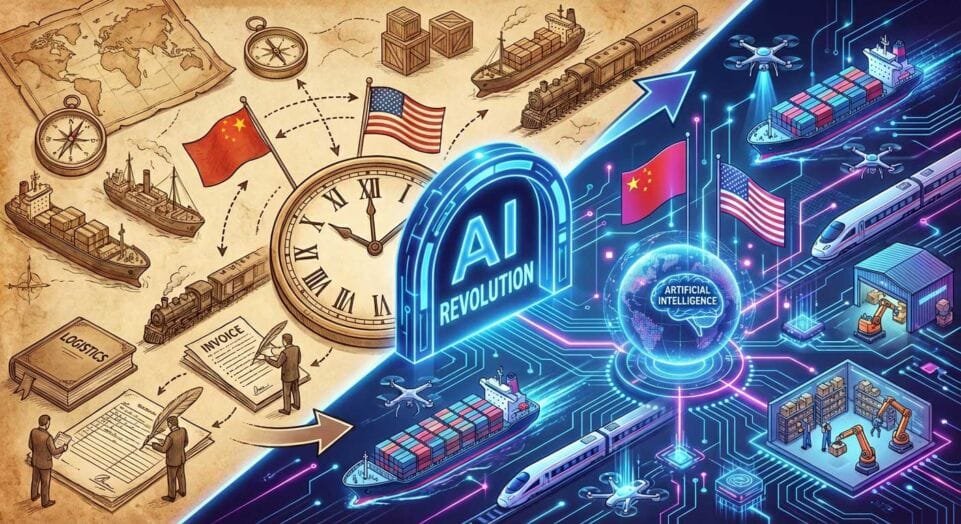
The freight forwarding industry between China and the USA is undergoing a major transformation. Traditional methods are being challenged by the rapid adoption of AI in freight forwarding and digital logistics platforms, reshaping how goods move across oceans and borders. With smart freight solutions and predictive analytics in shipping, companies can now optimize China to USA shipping technology for speed, accuracy, and cost efficiency.
Why Traditional Freight Forwarding Faces Challenges?
Traditional freight forwarding often relies on manual processes and fragmented systems, leading to:
- Delays in freight tracking technology
- Inefficient load optimization software usage
- Higher operational costs due to lack of supply chain automation
- Limited real-time shipment visibility
These challenges make it difficult for businesses to keep up with the fast-paced demands of international trade, especially in high-volume corridors like China-USA.
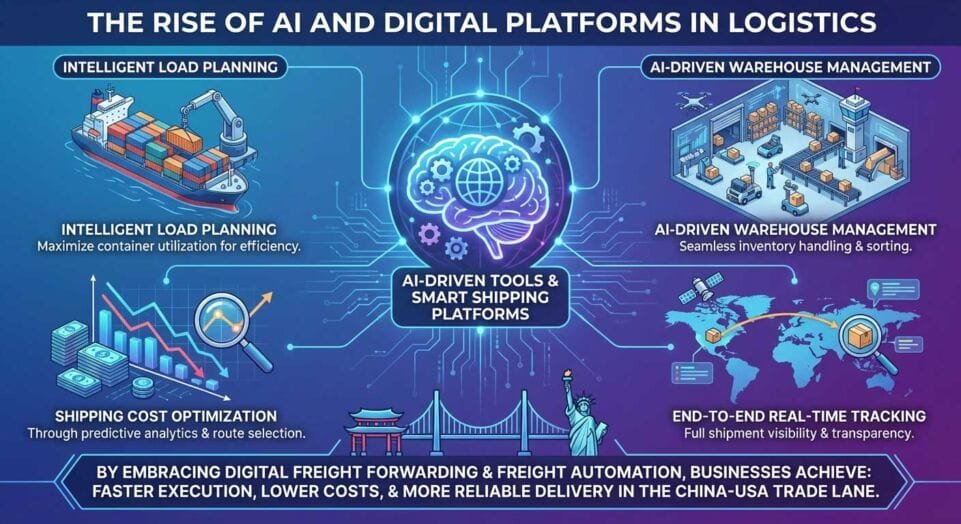
The Rise of AI and Digital Platforms in Logistics
AI-driven tools and smart shipping platforms are revolutionizing freight forwarding by offering:
- Intelligent load planning to maximize container utilization
- AI-driven warehouse management for seamless inventory handling
- Shipping cost optimization through predictive analytics
- End-to-end real-time tracking in logistics for full shipment visibility
By embracing digital freight forwarding and freight automation, businesses can achieve faster execution, lower costs, and more reliable delivery in the China-USA trade lane.
Role of AI in Optimizing Freight Forwarding
Artificial Intelligence (AI) is transforming the China-USA freight forwarding process by introducing smarter, data-driven solutions. AI in freight forwarding allows companies to enhance efficiency, reduce delays, and achieve freight automation at every stage of the supply chain. From predictive insights to intelligent load planning, AI is reshaping how goods are shipped between China and the USA.
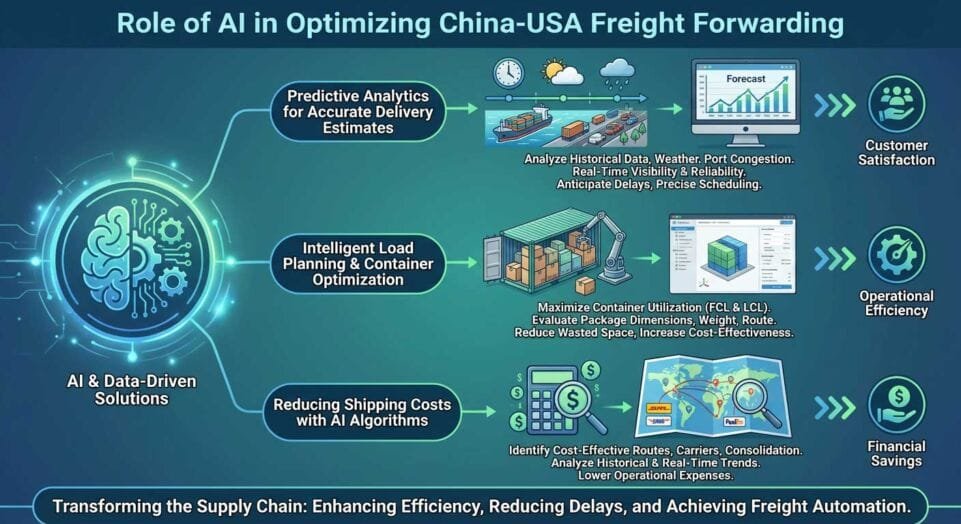
Predictive Analytics for Accurate Delivery Estimates
With predictive shipping analytics, freight forwarders can accurately forecast delivery times, anticipate delays, and provide customers with real-time updates. Transportation management systems (TMS) integrated with AI analyze historical data, weather patterns, and port congestion to ensure precise scheduling. This level of real-time shipment visibility helps businesses maintain reliability and improve customer satisfaction.
Intelligent Load Planning and Container Optimization
Intelligent load planning powered by AI maximizes container utilization for both FCL and LCL shipments. Load optimization software evaluates package dimensions, weight distribution, and route efficiency, reducing wasted space and increasing cost-effectiveness. These smart freight solutions ensure that every shipment is optimized, whether by sea or air, significantly enhancing operational efficiency.
Reducing Shipping Costs with AI Algorithms
AI algorithms enable shipping cost optimization by identifying the most cost-effective routes, carriers, and consolidation opportunities. By analyzing historical shipping data and real-time trends, digital platforms help businesses lower operational expenses while maintaining high service quality. Implementing AI-driven solutions in digital logistics platforms translates to measurable savings in China to USA shipping technology, making international shipping faster, smarter, and more economical.
Digital Platforms Transforming International Shipping
Digital logistics platforms are revolutionizing China-USA freight forwarding by providing end-to-end visibility and automation. These platforms integrate smart shipping solutions with AI, enabling companies to streamline operations, reduce errors, and enhance customer satisfaction. From predictive insights to real-time shipment visibility, digital platforms are shaping the future of international shipping.
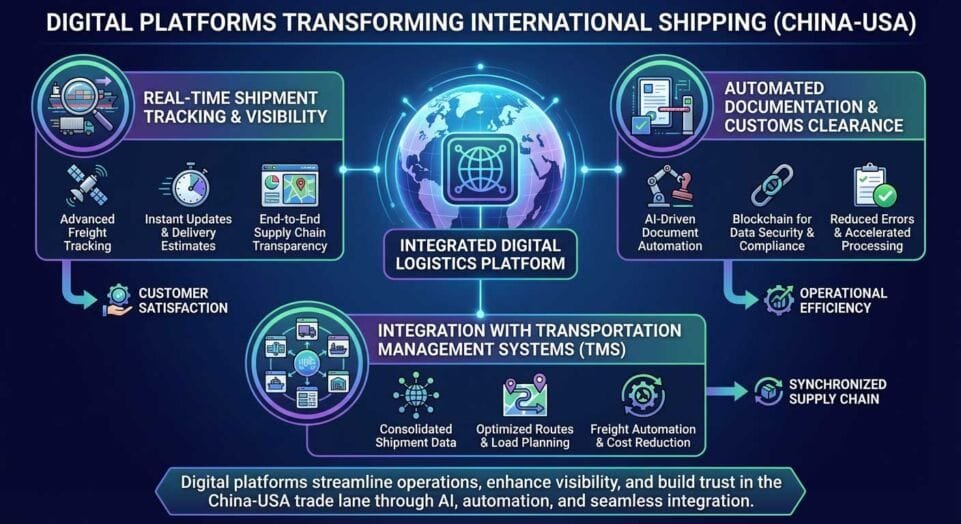
Real-Time Shipment Tracking and Visibility
With advanced freight tracking technology, businesses can monitor shipments at every stage of transit. Real-time tracking in logistics allows forwarders to provide clients with instant updates, anticipate delays, and improve overall supply chain transparency. This capability not only increases operational efficiency but also builds trust with customers by ensuring accurate delivery estimates.
Automated Documentation and Customs Clearance
Digital platforms simplify the often-complex paperwork involved in international shipping. AI-driven freight management systems automate documentation and customs clearance, reducing human errors and accelerating shipment processing. By integrating blockchain in supply chain, platforms enhance data security, traceability, and compliance, ensuring shipments move smoothly across borders.
Integration with Transportation Management Systems (TMS)
Seamless integration with Transportation Management Systems (TMS) allows digital platforms to consolidate shipment data, optimize routes, and improve load planning software efficiency. This integration supports freight automation and cost reduction, enabling logistics teams to make informed decisions quickly. By connecting AI-powered tools with TMS, companies achieve a fully synchronized supply chain from origin to destination.
Benefits of AI and Digital Freight Forwarding
The adoption of AI in freight forwarding and digital logistics platforms is redefining the China-USA freight forwarding landscape. Companies leveraging smart freight solutions enjoy faster operations, lower costs, and higher accuracy throughout the shipping process. These technologies enable a more efficient, transparent, and customer-focused supply chain.
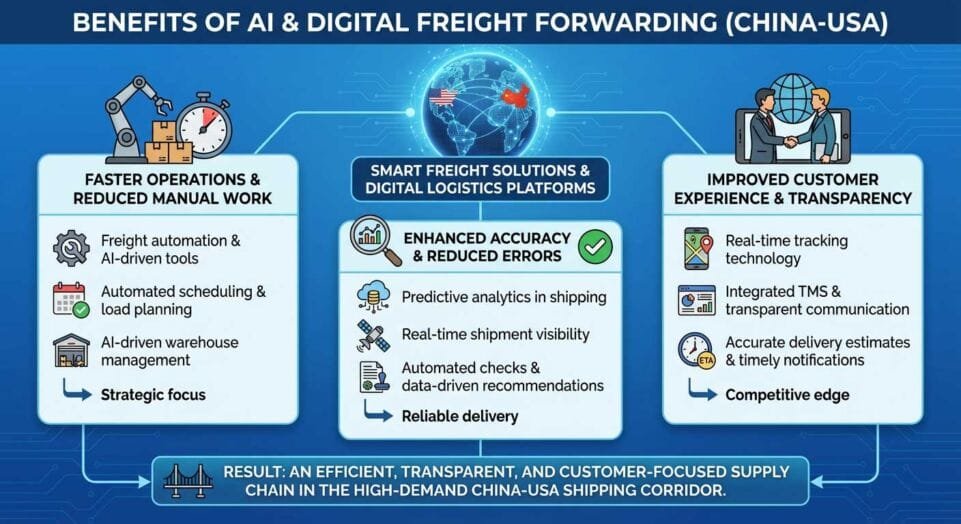
Faster Operations and Reduced Manual Work
Freight automation and AI-driven tools significantly reduce manual processes. Tasks such as scheduling, load planning, and shipment tracking are handled automatically, leading to faster execution and fewer delays. By implementing intelligent load planning and AI-driven warehouse management, logistics teams can focus on strategic decisions instead of repetitive work.
Enhanced Accuracy and Reduced Errors
With AI-powered predictive analytics in shipping and real-time shipment visibility, errors in documentation, routing, and cargo handling are minimized. Digital freight forwarding platforms provide automated checks and data-driven recommendations, ensuring shipments move efficiently and accurately. This results in fewer costly mistakes and more reliable delivery schedules.
Improved Customer Experience and Transparency
Real-time tracking technology and integrated transportation management systems (TMS) allow customers to monitor their shipments at every stage. Transparent communication, accurate delivery estimates, and timely notifications enhance trust and satisfaction. Businesses using digital freight solutions can offer superior service, giving them a competitive edge in the high-demand China-USA shipping corridor.
Challenges and Considerations
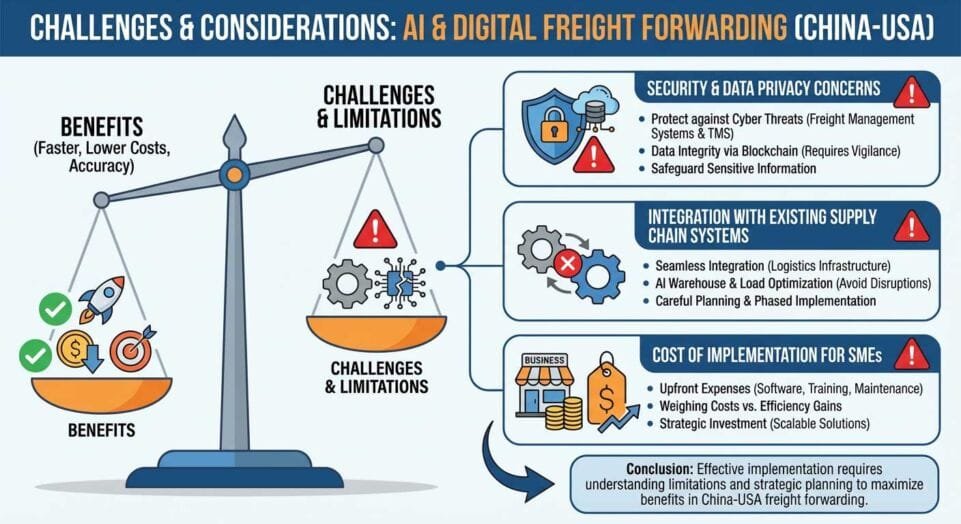
While AI in freight forwarding and digital logistics platforms offer numerous benefits, companies must also consider potential challenges. Understanding these limitations helps businesses implement solutions effectively and avoid disruptions in China-USA freight forwarding.
Security and Data Privacy Concerns
Digital platforms rely on vast amounts of shipment and customer data, raising security and data privacy issues. Companies must ensure their freight management systems and TMS integrations are protected against cyber threats. Implementing blockchain in supply chain can enhance data integrity, but organizations must remain vigilant to safeguard sensitive information.
Integration with Existing Supply Chain Systems
Adopting smart shipping platforms requires seamless integration with existing logistics infrastructure. AI-driven warehouse management and load optimization software must work alongside current systems to avoid operational disruptions. Careful planning and phased implementation are critical for smooth transition from traditional processes to freight automation.
Cost of Implementation for Small and Medium Enterprises
Implementing AI and digital platforms can be costly, particularly for SMEs. Expenses include software, training, and ongoing system maintenance. While larger companies benefit from predictive shipping analytics and intelligent load planning, smaller enterprises must weigh upfront costs against potential efficiency gains and shipping cost optimization. Strategic investment and choosing scalable solutions can make digital transformation feasible even for smaller players.
Case Studies / Success Stories
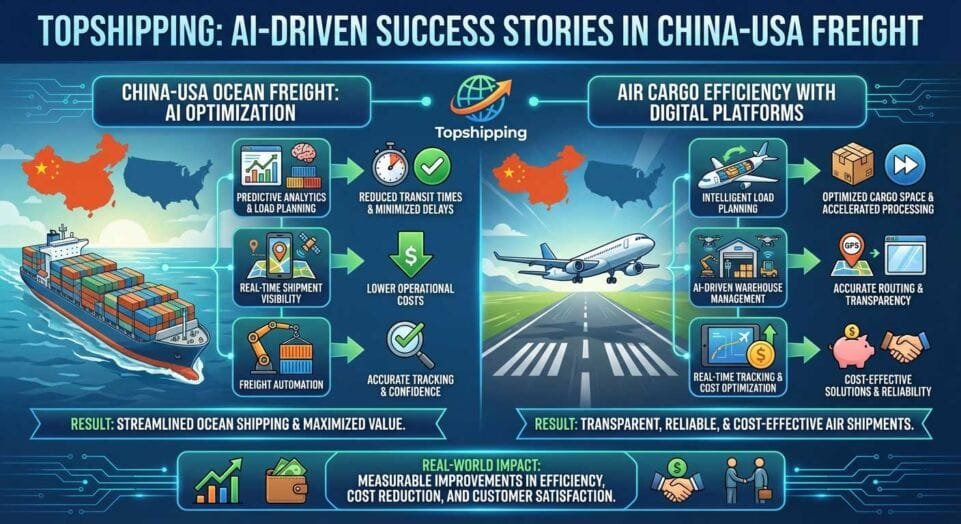
Real-world examples demonstrate how AI in freight forwarding and digital logistics platforms are transforming the China-USA freight forwarding landscape. Companies that adopt smart freight solutions are seeing measurable improvements in efficiency, cost reduction, and customer satisfaction. Topshipping, a leading provider of digital freight services, exemplifies how modern logistics can streamline international shipping while maximizing value for clients.
China-USA Ocean Freight Using AI
Topshipping has successfully implemented AI-driven load planning and predictive analytics in shipping for ocean freight between China and the USA. By analyzing historical shipping data, port congestion, and container utilization, Topshipping reduces transit times, minimizes delays, and lowers operational costs. With freight automation and real-time shipment visibility, clients can track their shipments accurately and confidently throughout the journey.
Air Cargo Efficiency with Digital Platforms
In the air cargo sector, Topshipping leverages digital freight forwarding platforms to handle urgent shipments efficiently. Through intelligent load planning and AI-driven warehouse management, Topshipping optimizes cargo space, accelerates processing, and ensures accurate routing. Combined with real-time tracking in logistics and shipping cost optimization, their services provide businesses with transparency, reliability, and cost-effective solutions for China-USA air shipments.
Conclusion: The Future of Freight Forwarding
The future of China-USA freight forwarding is clearly AI-driven and heavily reliant on digital logistics platforms. Companies that embrace smart freight solutions and freight automation are better positioned to navigate the complexities of international shipping, reduce costs, and enhance service quality. Topshipping exemplifies how forward-thinking logistics providers can leverage technology to stay ahead in this rapidly evolving industry.
AI-Driven Global Supply Chains
AI in freight forwarding is not just transforming individual shipments—it is reshaping entire global supply chains. With predictive analytics in shipping, intelligent load planning, and real-time shipment visibility, businesses can make data-driven decisions that improve efficiency and reliability across multiple trade lanes. Companies adopting these technologies can respond faster to disruptions and optimize both ocean and air freight operations.
Preparing for a Fully Digital Freight Ecosystem
As the industry moves toward a fully digital freight ecosystem, integrating digital freight forwarding platforms with existing Transportation Management Systems (TMS) becomes essential. Automation, AI-driven insights, and smart shipping platforms will define the next generation of China to USA shipping technology. Providers like Topshipping are leading the way by combining technology, expertise, and real-time solutions, helping businesses transition smoothly into a more efficient, transparent, and cost-effective international shipping landscape.