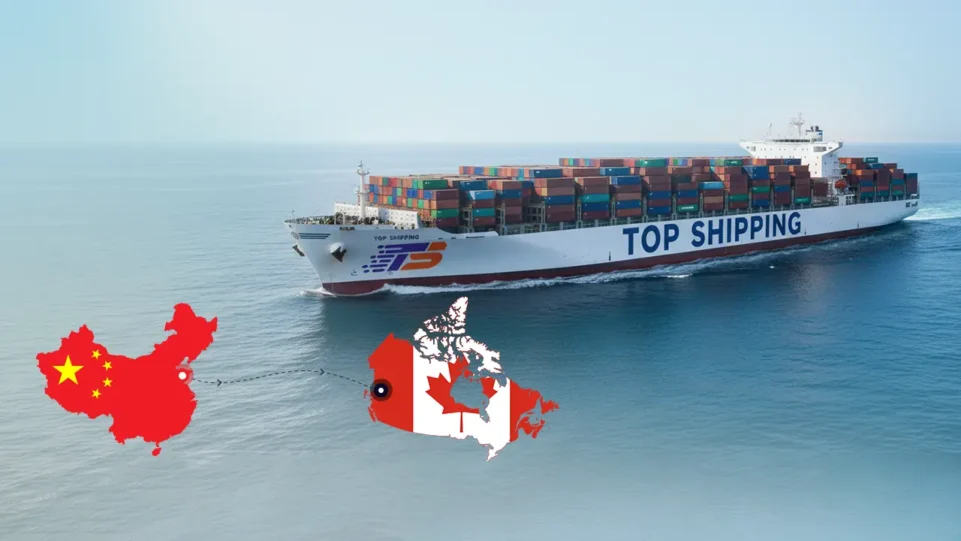
Sea freight from China to Canada is one of the most important shipping methods in trade between the two countries. Given Canada’s high import volume from China, sea freight has become highly popular among importers due to its affordable cost, high capacity, and greater security. If you plan to ship your goods from China to Canada with minimal cost and optimal delivery time, it is essential to understand the main routes, shipping rates, transit times, ports, documentation, and customs regulations. This guide provides comprehensive and professional information to help you choose the best sea freight option and ensure a smooth, hassle free shipping process.
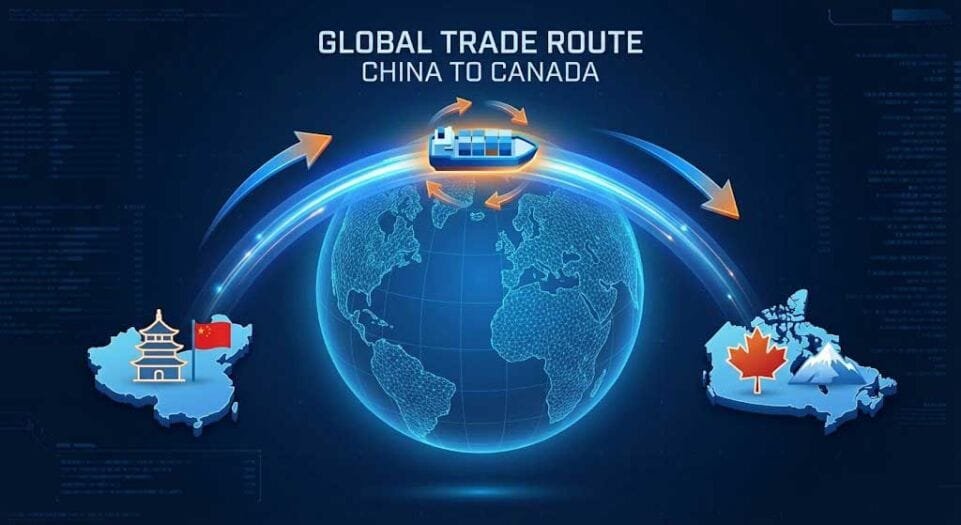
What Is Sea Freight from China to Canada?
Sea Freight from China to Canada refers to the transportation of goods by ocean vessels across the Pacific Ocean, connecting major ports such as Shanghai, Ningbo, Shenzhen, and Qingdao to Canadian ports like Vancouver, Prince Rupert, and Montreal.
This method is one of the most widely used shipping solutions for importers because it offers large capacity, low cost per unit, and flexible options such as FCL (Full Container Load) and LCL (Less than Container Load) for different shipment sizes.
In a typical China–Canada ocean freight shipment, goods are packed in containers, cleared at Chinese customs, loaded onto a vessel, transported across the Transpacific route, and finally processed by the CBSA (Canada Border Services Agency) upon arrival.
If your shipment involves large volumes, bulk cargo, machinery, electronics, furniture, or pallets, sea freight provides the most economical and reliable solution.
Why Ocean Freight Is the Most Popular Method?
| Comparison Factor | Ocean Freight (China → Canada) | Air Freight |
|---|---|---|
| Shipping Cost | Typically 60–80% cheaper than air freight | 5–10× more expensive depending on weight/volume |
| Capacity | High — a 40HQ can hold up to ~76 CBM; suitable for bulky goods | Limited by weight and dimensional limits |
| Suitable Cargo Types | Furniture, machinery, bulk electronics, palletized freight | Lightweight, high-value, urgent consignments |
| Transit Time (Typical) | Shanghai → Vancouver: 14–18 days Ningbo → Prince Rupert: 10–14 days | 2–5 days (airtime only; door-to-door longer) |
| Container Types | Standard, Reefer, Open-Top, Flat-Rack, Bulk | Limited special options for oversized cargo |
| Scalability | Excellent for FCL and LCL — easy to scale volume | Best for small-volume, urgent shipments |
| Cost per Unit (weight/volume) | Very low — cost-effective for large volumes | Very high — cost rises quickly with weight/volume |
| Schedule Reliability | Generally stable on Transpacific routes; subject to port congestion during peaks | Fast but can be affected by capacity shortages and seasonal spikes |
| Best For | Importers with large volumes, bulky goods, or non-urgent deliveries | Businesses needing fastest possible delivery for high-value or urgent goods |
Ocean freight dominates China to Canada logistics primarily due to its cost efficiency. Shipping a 40ft container from China to Canada often costs 60–80% less than air freight. While air shipping is fast, it becomes extremely expensive for shipments above 300–500 kg, making sea freight the practical choice for most businesses.
Sea freight also provides massive capacity. A single 40HQ container can hold up to 76 CBM, making it ideal for bulky cargo such as furniture, machinery, or wholesale electronics. The variety of container types—standard, refrigerated (reefer), open top, and flat rack also allows companies to ship a wide range of goods safely.
Besides cost and flexibility, ocean freight offers stable transit times through well established Transpacific shipping routes.
For example, the Shanghai → Vancouver route typically takes 14–18 days, and Ningbo → Prince Rupert takes around 10–14 days, making ocean freight a predictable and scalable option for importers.
China–Canada Trade Overview
Trade between China and Canada is one of the strongest Asia North America corridors, with China being Canada’s second largest trading partner. Each year, thousands of containers move through the Asia Pacific trade corridor, carrying goods such as electronics, auto parts, machinery, clothing, home appliances, and consumer goods.
Ports like Shanghai, Ningbo Zhoushan, Shenzhen, and Qingdao are among the busiest export hubs in the world, offering frequent sailings to Canada. On the Canadian side, Port of Vancouver handles over 60% of all containerized imports from China, followed by Prince Rupert and Montreal.
Because of this high trade volume, carriers such as Maersk, MSC, COSCO, Hapag Lloyd, Evergreen, and freight forwarders like Topshipping, operating in both countries, provide competitive rates, reliable schedules, and diversified service options such as port-to-port, door-to-port, and full door-to-door sea freight solutions.
When Sea Freight Is Better Than Air Freight
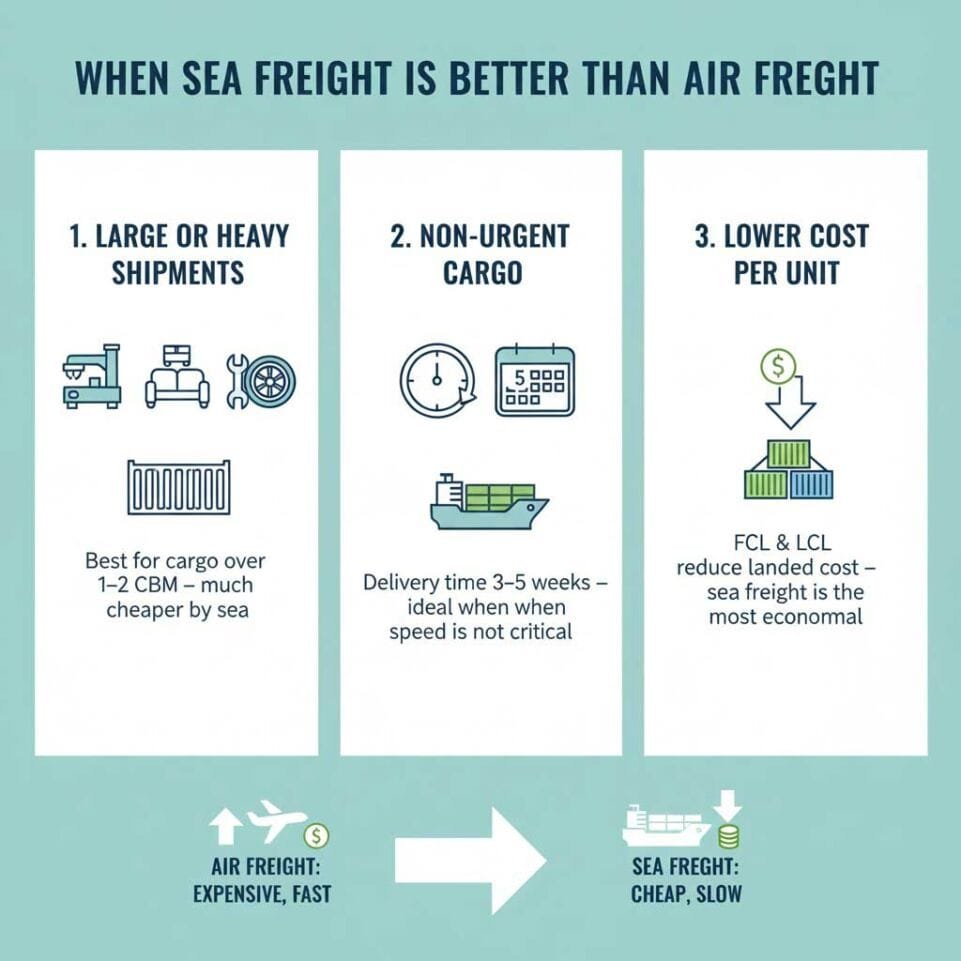
Sea freight becomes the better choice when:
- You have large or heavy shipments :For example, machinery, furniture, auto parts, or pallets that exceed 1–2 CBM are far cheaper to ship by sea.
- The cargo is not urgent : If your delivery window allows 3–5 weeks, sea freight offers significantly better pricing.
- Your goal is lowering cost per unit :Importers reduce landed cost dramatically when using FCL or LCL options. For instance, the cost of shipping 1 CBM by sea can be 10–20 times cheaper than air freight.
- You need flexibility with container types :Refrigerated goods, dangerous goods, oversized cargo, and bulk items rely heavily on sea transport.
- Your business requires consistent large volume shipments:Many Canadian importers receive monthly or quarterly container loads because ocean freight offers predictable schedules and stable capacity.
Shipping Routes from China to Canada
Shipping goods from China to Canada involves multiple Transpacific sea freight routes connecting major Chinese ports to Canadian terminals. Choosing the right route depends on factors like shipment volume, cargo type, transit time, and cost. Understanding the main port to port options and transit times helps importers plan their logistics efficiently.
Ocean freight from China offers FCL and LCL options, with different transit durations and costs depending on the selected route. Frequent sailings ensure reliability, while major carriers and freight forwarders provide tracking and customs support from origin to destination.
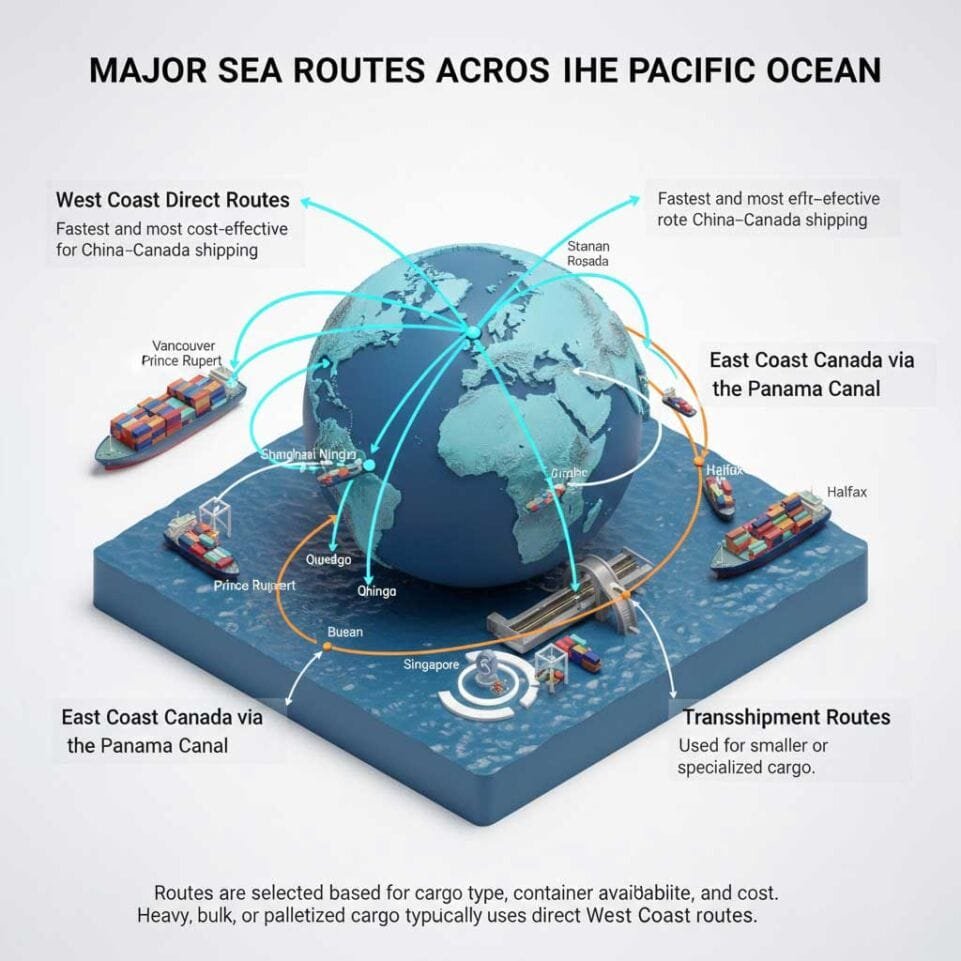
Major Sea Routes Across the Pacific Ocean
The Pacific Ocean is the primary corridor for China–Canada shipping. Key routes include:
East Coast Canada via Panama Canal: Less common for China–Canada trade due to longer transit.
West Coast direct routes: Most popular, faster, and cost effective, connecting Shanghai, Ningbo, Shenzhen, Qingdao, and Guangzhou to Vancouver, Prince Rupert, or Halifax.
Transshipment routes: Containers may transfer at hubs such as Singapore or Busan before reaching Canada, especially for smaller or specialized cargo.
These routes are selected based on cargo type, container availability, and cost. Heavy, bulk, or palletized goods typically use direct West Coast routes for efficiency.
Best Port-to-Port Combinations
Here are the most reliable and frequently used portto port combinations for China–Canada sea freight
| Origin Port (China) | Destination Port (Canada) | Transit Time (Days) | Cargo Notes |
|---|---|---|---|
| Shanghai | Vancouver | 14–18 | Electronics, machinery, bulk cargo |
| Ningbo-Zhoushan | Montreal | 21–25 | Furniture, appliances, industrial goods |
| Shenzhen | Halifax | 25–30 | Heavy cargo, bulk shipments, specialized containers |
Transit Time Comparison (FCL vs LCL)
The choice between FCL and LCL significantly impacts transit time and cost:
| Container Type | Typical Transit Time (China → Canada) | Ideal Use | Cost Efficiency |
|---|---|---|---|
| FCL (Full Container Load) | 14–25 days depending on port | Large shipments, single client | Very cost-effective per CBM |
| LCL (Less than Container Load) | 18–30 days including consolidation | Small shipments shared with others | Slightly higher cost per CBM, flexible for smaller loads |
Example:
If you plan to ship 1–2 pallets of electronics, LCL may be suitable. But for a 40HQ container of furniture, FCL provides faster transit and lower unit cost.
Sea Freight Cost from China to Canada
The cost of sea freight from China to Canada varies depending on factors such as container size, shipment type, fuel surcharges, and seasonal demand. Importers must understand these cost components to optimize their logistics budget.
Shipping a 20ft container or 40HQ container can have significantly different rates, and choosing between FCL and LCL also impacts the overall cost.
Ocean freight remains the most cost effective option for bulk shipments compared to air freight, especially for goods like furniture, machinery, electronics, and pallets.
Factors That Affect Shipping Rates
Several factors directly affect sea freight charges from China to Canada:
Fuel Surcharge
Fluctuations in fuel prices affect the overall shipping cost. Most carriers adjust rates monthly or quarterly.
Container Size
- 20ft container: Ideal for smaller shipments, limited cargo volume (~28 CBM).
- 40ft container: Larger shipments, more cost efficient per CBM.
- 40HQ container: Maximum volume (~76 CBM), best for bulk cargo.
Peak Season Surcharg
High demand periods such as August–October increase rates due to limited container availability.
Additional Charges
- Port handling fees
- Customs clearance costs
- Documentation fees (Bill of Lading, Export/Import declarations)
Using a reliable freight forwarder can help manage these variables and provide accurate, up to date quotations.
Average Shipping Rates in 2025
| Container Type | Shanghai → Vancouver | Ningbo → Montreal | Shenzhen → Halifax |
|---|---|---|---|
| 20ft Container | $1,200–$1,500 | $1,500–$1,800 | $1,600–$1,900 |
| 40ft Container | $2,000–$2,500 | $2,400–$2,800 | $2,500–$3,000 |
| 40HQ Container | $2,400–$3,000 | $2,800–$3,400 | $3,000–$3,600 |
| LCL (per CBM) | $60–$80 | $70–$90 | $75–$95 |
How to Reduce Ocean Freight Cost
Choose the Right Container Type
- For smaller shipments, LCL may save upfront costs but can be more expensive per CBM.
- For bulk shipments, FCL or 40HQ containers reduce unit cost.
Book in Advance
Early bookings avoid peak season surcharges and limited container availability.
Optimize Cargo Volume
- Consolidate shipments to maximize container space.
- Avoid underutilized containers, which increase per unit cost.
Use a Reliable Freight Forwarder
They can negotiate rates with carriers, handle customs clearance, and provide cost effective routing.
Flexible Shipping Schedule
Off peak shipping months often have lower rates and more availability.
By applying these strategies, importers can significantly reduce the cost of shipping from China to Canada while ensuring safe and timely delivery.
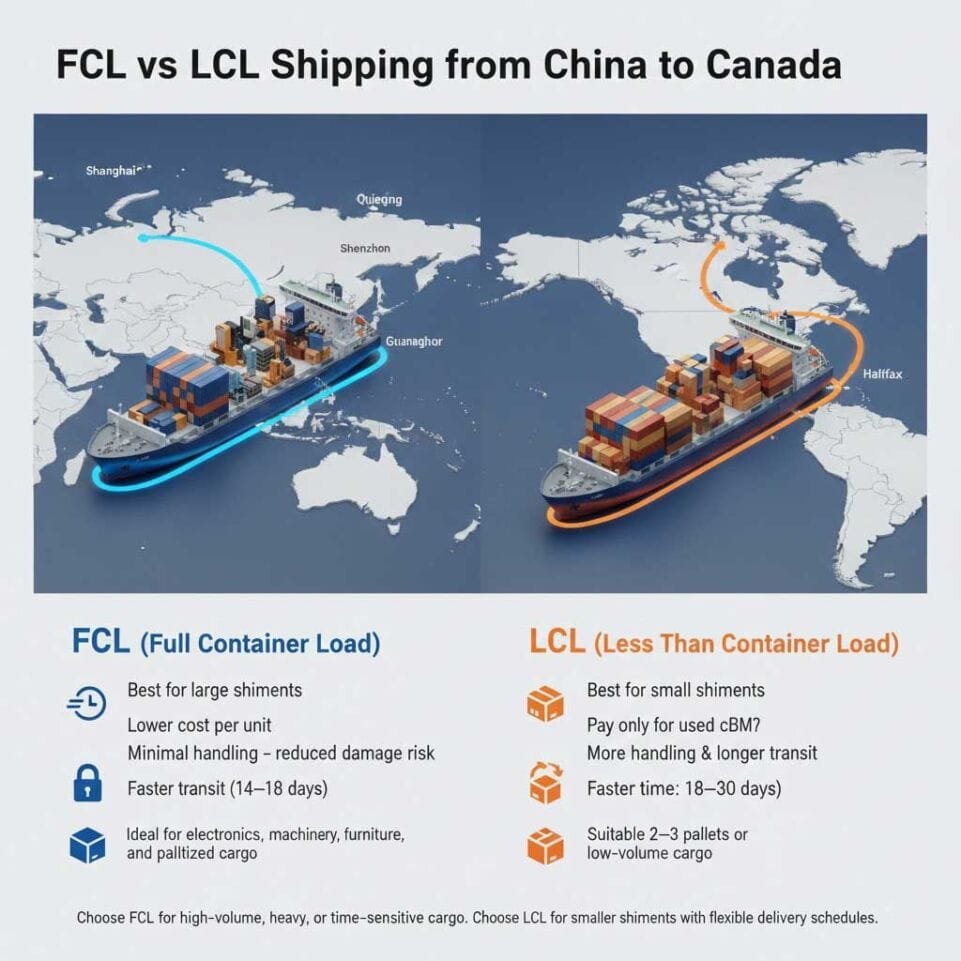
FCL vs LCL Shipping from China to Canada
When shipping goods from China to Canada, choosing between FCL (Full Container Load) and LCL (Less than Container Load) is crucial for cost efficiency, transit time, and cargo safety. Understanding the differences helps importers select the best option based on shipment volume, urgency, and budget.
What is FCL? Best for Large Shipments
- FCL (Full Container Load) means the entire container is dedicated to one shipment. It is ideal for:
- Large shipments that can fill a 20ft, 40ft, or 40HQ container.
- Bulky cargo such as furniture, machinery, and palletized goods.
- Shipments requiring minimum handling, which reduces risk of damage.
Example:
If you are importing 1–2 containers of electronics or machinery, FCL is the most cost effective and fastest option. The transit time for a 40HQ container from Shanghai to Vancouver is typically 14–18 days.
What is LCL? Best for Small Cargo
- LCL (Less than Container Load) allows multiple shipments from different exporters to share the same container. It is suitable for:
- Small shipments that do not fill an entire container.
- Importers with limited budget or irregular shipment volumes.
- Flexibility to ship smaller quantities without committing to a full container.
Example:
Shipping 2–3 pallets of consumer electronics via LCL from Shenzhen to Halifax can be cheaper than FCL upfront, though the cost per CBM is higher, and transit time may include consolidation at the origin port (18–30 days).
Cost & Speed Comparison Table
| Shipping Type | Typical Transit Time | Best For | Cost Efficiency |
|---|---|---|---|
| FCL (Full Container Load) | 14–25 days | Large shipments, single client | Very cost-effective per CBM |
| LCL (Less than Container Load) | 18–30 days including consolidation | Small shipments shared with others | Slightly higher cost per CBM, flexible for smaller loads |
Which Option Is Best for Your Shipment?
Choose FCL if:
- You have enough goods to fill a container.
- Fast transit and minimal handling are priorities.
- You want better cost efficiency per unit.
Choose LCL if:
- You only have a few pallets or small cargo.
- Flexibility is more important than cost per CBM.
- You want to avoid storing excess inventory in China.
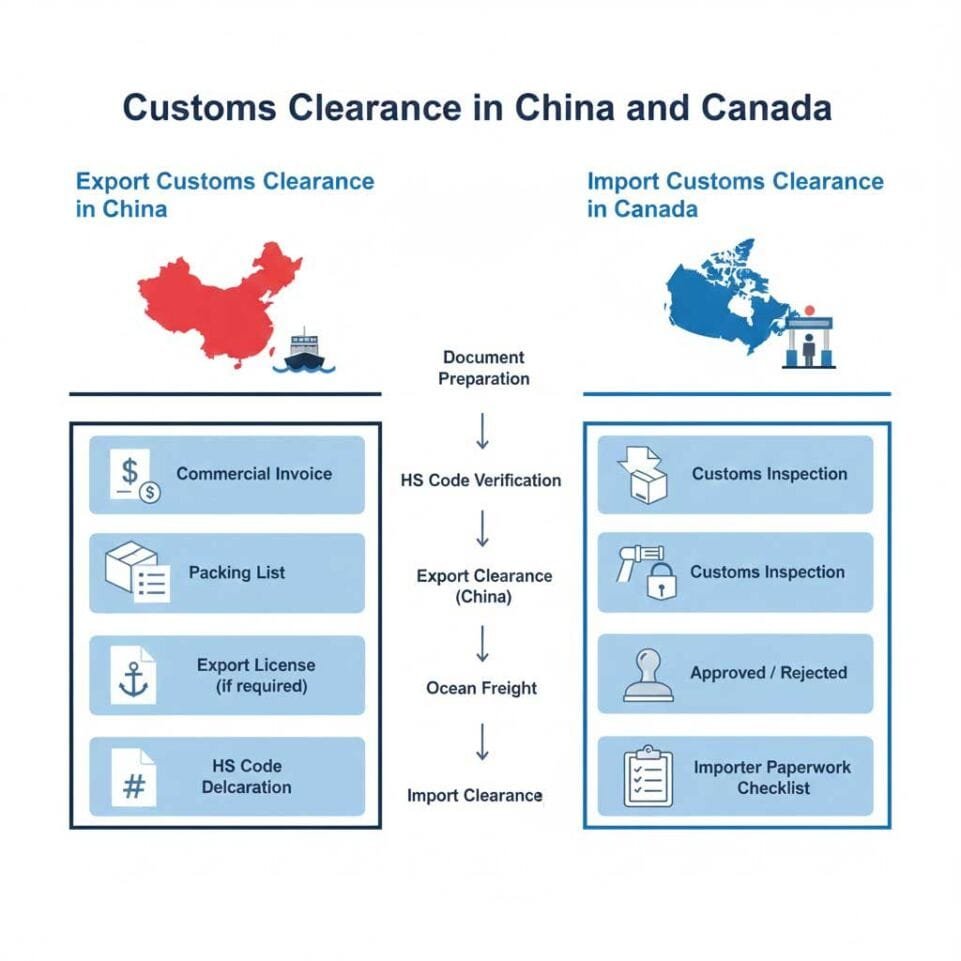
Customs Clearance in China and Canada
Customs clearance is a critical step in the sea freight process from China to Canada. Proper documentation, compliance with regulations, and accurate HS codes ensure smooth import and export without delays or penalties. Both exporters in China and importers in Canada must adhere to specific rules to avoid fines, confiscation, or shipment delays.
Export Documents Required in China
To export goods from China, the following documents are commonly required:
- Commercial Invoice – Lists the goods, value, and terms.
- Packing List – Details packaging, weight, and dimensions.
- Bill of Lading (B/L) – Proof of shipment issued by the carrier.
- Export License (for regulated goods) – Required for items like electronics, chemicals, or medical devices.
- HS Code Declaration – Harmonized System code for customs classification.
Example:
If you are exporting electronic equipment, you must provide a Commercial Invoice, Packing List, Export License, and correct HS code to the Chinese Customs authorities before loading onto a container.
Import Documents Needed in Canada
When goods arrive in Canada, importers need:
- Import Declaration Form – Submitted to Canada Border Services Agency (CBSA).
- Commercial Invoice & Packing List – To verify shipment details and value.
- Bill of Lading – Confirms container contents and ownership.
- Certificate of Origin (if applicable) – Required for preferential tariff agreements.
- Other regulatory permits – For restricted or sensitive goods like food, plants, or electronics.
Using a freight forwarder or customs broker simplifies the clearance process and ensures timely delivery to your warehouse.
HS Code and Duties
- HS Codes classify goods internationally, helping customs calculate duties and taxes.
- Canadian import duties vary by product type:
- Electronics: ~0–5%
- Furniture: ~0–8%
- Machinery: ~0–6%
- Example: A shipment of office furniture valued at CAD 20,000 may incur CAD 1,600 in duties (8%).
Correct HS codes prevent delays, fines, and misclassification penalties. Always verify codes with your freight forwarder or CBSA.
CBSA Rules and Restrictions
The Canada Border Services Agency (CBSA) enforces regulations for imported goods, including:
- Restricted items: firearms, hazardous chemicals, endangered species.
- Prohibited imports: certain food products, counterfeit goods, and unauthorized electronics.
- Compliance with CITES for sensitive cargo like wood, plants, or animal products.
- Payment of import tariffs and GST/HST at entry.
Tip: For smooth customs clearance, ensure all documentation is accurate, and avoid shipping prohibited goods.
Freight forwarders can assist in preparing pre clearance documents to speed up delivery.
Best Chinese Ports for Sea Freight
China hosts some of the world’s busiest and most efficient ports, which are crucial for sea freight to Canada. These ports provide extensive container handling capacity, modern infrastructure, and direct Transpacific routes, ensuring reliable shipment schedules for importers.
| Port | Capacity (TEU/year) | Typical Cargo | Transit Time to Canada (Days) |
|---|---|---|---|
| Port of Shanghai | 47,000,000 | Electronics, machinery, textiles, bulk goods | 14–18 (to Vancouver) |
| Port of Ningbo-Zhoushan | 31,000,000 | Furniture, appliances, steel, chemicals | 21–25 (to Montreal) |
| Port of Shenzhen | 27,000,000 | Electronics, machinery, consumer goods | 25–30 (to Halifax) |
| Port of Qingdao | 24,000,000 | Machinery, automobiles, bulk raw materials | 16–20 (to Vancouver) |
Port of Shanghai
- Capacity: Over 47 million TEU per year, the largest container port in the world.
- Why important: Major hub for global trade; excellent connectivity to North America.
- Typical cargo: Electronics, machinery, textiles, bulk goods.
Example: A shipment from Shanghai to Vancouver typically takes 14–18 days, making it a top choice for FCL and LCL shipments.
Port of Ningbo-Zhoushan
- Capacity: Approximately 31 million TEU per year.
- Why important: Strategically located for exporting industrial goods and furniture; deep water port accommodates large container vessels.
- Typical cargo: Furniture, appliances, steel, chemicals.
Example: Ningbo → Montreal route usually takes 21–25 days, suitable for large scale cargo.
Port of Shenzhen
- Capacity: Around 27 million TEU per year; key southern port.
- Why important: Serves electronics and high value goods, close to manufacturing hubs in Guangdong province.
- Typical cargo: Electronics, machinery, consumer goods.
Example: Shenzhen → Halifax route averages 25–30 days, commonly used for heavy and specialized cargo.
Port of Qingdao
- Capacity: About 24 million TEU per year.
- Why important: Efficient for bulk cargo and general merchandise; strong link to North America.
- Typical cargo: Machinery, automobiles, bulk raw materials.
Example: Qingdao → Vancouver transit takes roughly 16–20 days, offering a reliable alternative to Shanghai for northern China exporters.
Canada’s Main Ports for Importing Goods
Canada’s ports play a critical role in receiving sea freight from China. Selecting the right port affects transit time, customs clearance, and final delivery efficiency. Each major port has unique advantages for different types of cargo and regions in Canada.
| Port | Capacity (TEU/year) | Typical Cargo | Transit Time from China (Days) |
|---|---|---|---|
| Port of Vancouver | 3,000,000 | Electronics, machinery, furniture, bulk imports | 14–18 (from Shanghai) |
| Port of Montreal | 2,000,000 | Furniture, appliances, industrial goods | 21–25 (from Ningbo) |
| Port of Prince Rupert | 950,000 | Electronics, bulk cargo, containerized goods | 10–14 (from Shanghai) |
| Port of Halifax | 400,000 | Heavy cargo, bulk shipments, specialized containers | 25–30 (from Shenzhen) |
Port of Vancouver (Largest)
- Capacity: Over 3 million TEU per year; Canada’s largest port.
- Why important: Handles the majority of FCL shipments from Asia.
- Typical cargo: Electronics, machinery, furniture, bulk imports.
Example: Shanghai → Vancouver takes 14–18 days, making it ideal for large volume shipments targeting Western Canada.
Port of Montreal (For East Coast)
- Capacity: Around 2 million TEU per year; major gateway to Eastern Canada.
- Why important: Shortens inland delivery time to Quebec and Ontario.
- Typical cargo: Furniture, appliances, industrial goods.
Example: Ningbo → Montreal usually takes 21–25 days, serving importers needing access to Eastern Canada markets.
Port of Prince Rupert (Fastest Route)
- Capacity: ~950,000 TEU per year.
- Why important: Shorter Pacific transit and efficient rail connections to Canadian interior.
- Typical cargo: Electronics, bulk cargo, containerized goods.
Example: Shanghai → Prince Rupert can take 10–14 days, faster than Vancouver due to proximity to Asia and efficient handling.
Port of Halifax
- Capacity: About 400,000 TEU per year; Atlantic gateway.
- Why important: Serves Atlantic Canada and eastern U.S. markets; less congestion than other ports.
- Typical cargo: Heavy cargo, bulk shipments, and specialized containers.
Example: Shenzhen → Halifax averages 25–30 days, suitable for specific East Coast deliveries.
Sea Freight Process from China to Canada Step by Step
Understanding the sea freight process from China to Canada ensures smoother shipments, fewer delays, and cost efficiency. The process can be divided into six main steps, from quotation to final delivery.
Quotation & Booking
- Contact a freight forwarder or shipping company for a quote.
- Provide shipment details: cargo type, weight, volume, preferred container type (FCL/LCL).
- Choose the best route and book the container.
Example : For a 40HQ container of electronics from Shanghai to Vancouver, a typical quotation might include freight rate, port fees, and insurance. Booking early during peak season (June–September) can prevent delays.
Cargo Pickup / Loading
- Goods are collected from the supplier or warehouse.
- Cargo is packed, labeled, and palletized if needed.
- FCL shipments are loaded directly into the container, while LCL shipments are consolidated with other cargo.
Example: A shipment of furniture from Ningbo might take 1–2 days for consolidation before departure.
Customs Clearance in China
- Export documents must be prepared: Commercial Invoice, Packing List, Bill of Lading, HS Code, and Export License (if applicable).
- Chinese customs inspects the cargo for compliance.
- Clearance ensures the container is ready for ocean transit.
Ocean Transit
Container is shipped via Transpacific routes to Canada.
Transit time depends on port combinations:
- Shanghai → Vancouver: 14–18 days
- Ningbo → Montreal: 21–25 days
- Shenzhen → Halifax: 25–30 days
Cargo can be tracked using B/L number or forwarder’s tracking system.
Arrival & Customs Clearance in Canada
- Canadian customs (CBSA) inspects shipments.
- Required documents: Import Declaration, Commercial Invoice, Packing List, Bill of Lading, and regulatory permits.
- Duties, tariffs, and taxes are calculated based on HS codes.
Example: A container of industrial machinery arriving in Vancouver may undergo random inspection but generally clears within 1–3 days with correct documents.
Final Delivery (Door-to-Door)
- Once cleared, cargo is transported from the port to the final destination.
- Freight forwarders often provide door to door service, including trucking and unloading.
Example : A shipment of pallets from Montreal port can reach an inland warehouse in Ontario within 2–4 days, completing the sea freight process.
Common Types of Cargo Shipped by Sea
Sea freight from China to Canada accommodates a wide variety of cargo types. Choosing the right container, handling method, and shipping route depends on the nature of the goods. Understanding common cargo types helps in planning, cost estimation, and compliance with regulations.
| Cargo Type | Recommended Container | Typical Route | Transit Time (Days) |
|---|---|---|---|
| Electronics | FCL or LCL, palletized | Shenzhen → Vancouver | 25–30 |
| Furniture | FCL, wooden crates or pallets | Ningbo → Montreal | 21–25 |
| Machinery | FCL or flat-rack for oversized items | Shanghai → Vancouver | 14–18 |
| Bulk Goods | FCL or break-bulk | Qingdao → Vancouver | 16–20 |
| Dangerous Goods (DG) | Special DG container with IMDG compliance | Shenzhen → Halifax | 25–30 |
Incoterms for China–Canada Sea Freight
Incoterms (International Commercial Terms) define the responsibilities of buyers and sellers during international shipping. Choosing the right Incoterm for sea freight from China to Canada impacts cost allocation, risk management, and logistics planning.
| Incoterm | Seller Responsibility | Buyer Responsibility | Best For |
|---|---|---|---|
| FOB (Free on Board) | Export clearance, inland transport to port, loading on vessel | Ocean freight, insurance, import clearance, inland delivery | Experienced importers managing customs and freight |
| CIF (Cost, Insurance, Freight) | FOB responsibilities + sea freight + insurance | Import clearance, inland delivery | Buyers wanting simplified sea freight and insurance handled |
| EXW (Ex Works) | Goods available at seller’s warehouse | All transport, export/import clearance, insurance, inland delivery | Importers with full logistics control |
| DDP (Delivered Duty Paid) | All costs including export/import clearance, duties, taxes, freight, inland delivery | Receive goods at warehouse | Buyers seeking turnkey delivery without handling logistics |
FOB (Free on Board)
- Responsibility: Seller handles goods until loaded on the vessel; buyer takes responsibility from the ship onward.
- Cost coverage: Export customs clearance, inland transportation to the port, and loading costs are included.
- Ideal for: Importers with experience managing ocean freight and Canadian customs.
Example: A shipment of electronics from Shanghai → Vancouver under FOB means the seller loads the goods, but the importer arranges ocean freight, insurance, and import clearance.
CIF (Cost, Insurance, Freight)
- Responsibility: Seller covers cost, insurance, and freight to the Canadian port.
- Cost coverage: Includes FOB costs plus insurance and main carriage.
- Ideal for: Buyers who want simplified logistics and less responsibility for ocean transport.
Example : Furniture shipped Ningbo → Montreal under CIF includes sea freight charges and insurance, but the buyer handles customs and inland delivery.
EXW (Ex Works)
- Responsibility: Buyer handles almost everything, starting from the seller’s warehouse.
- Cost coverage: Buyer pays for export, transport, freight, insurance, and import clearance.
- Ideal for: Experienced importers with full logistics control.
Example: A Canadian importer picks up machinery directly from Shanghai factory, arranging container, shipping, and customs themselves.
DDP (Delivered Duty Paid)
- Responsibility: Seller delivers goods to the buyer’s door in Canada, handling all costs and customs.
- Cost coverage: Includes export/import clearance, taxes, tariffs, ocean freight, and inland transport.
- Ideal for: Buyers who want turnkey delivery without dealing with logistics or duties.
Example: A 40HQ container of consumer goods shipped Shenzhen → Halifax with DDP arrives at the importer’s warehouse, ready for unloading, with all duties and freight included.
Which Incoterm is Best for Canada?
- FOB is popular for experienced importers managing freight and customs.
- CIF is suitable for importers who prefer seller handled sea freight and insurance.
- DDP offers the most convenience, ideal for small or first time importers.
- EXW is generally chosen by those who want full control over the logistics chain.
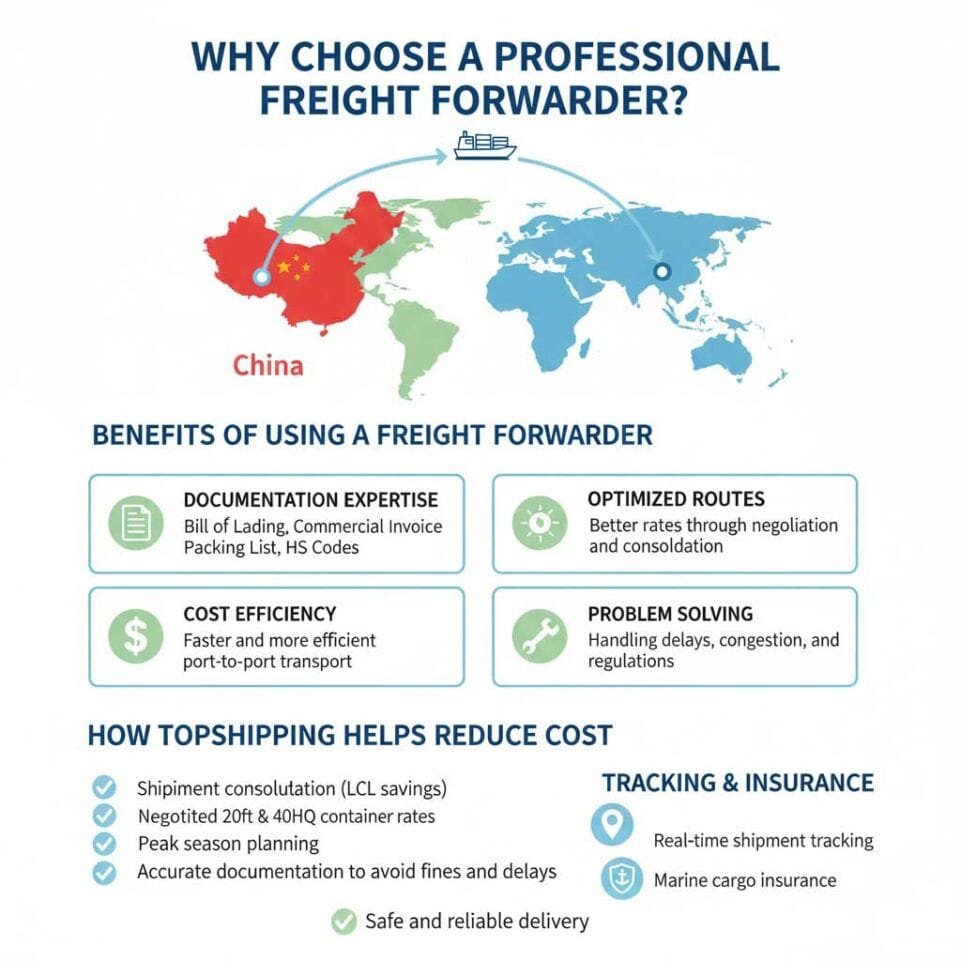
Why Choose a Professional Freight Forwarder?
Shipping goods from China to Canada involves multiple steps, documentation, and logistics challenges. Choosing a professional freight forwarder ensures smooth, cost efficient, and compliant shipments. Among trusted providers, Topshipping stands out for its expertise, competitive rates, and full service solutions.
Benefits of Using a China–Canada Forwarder
- Expertise in documentation: Freight forwarders handle Bill of Lading, Commercial Invoice, Packing List, HS codes, and customs clearance, reducing errors and delays.
- Optimized shipping routes: They select the most efficient port to port routes, minimizing transit time.
- Cost efficiency: Forwarders negotiate rates with carriers and consolidate shipments to lower costs.
- Problem solving: Experienced forwarders anticipate and resolve issues like port congestion or regulatory changes.
Example:A shipment of electronics from Shanghai → Vancouver cleared faster and at lower cost with a professional forwarder than managing shipping independently.
How Topshipping Helps Reduce Cost
- Consolidation of shipments: LCL shipments are combined to maximize container utilization, reducing per CBM cost.
- Negotiated rates: Topshipping leverages partnerships with major carriers to provide competitive 20ft and 40HQ container rates.
- Peak season planning: Strategic booking avoids surcharge spikes during high demand periods.
- Accurate documentation: Proper paperwork reduces the risk of demurrage, fines, and delays.
Example:Using Topshipping, a 40HQ container of furniture from Ningbo → Montreal can save $300–$500 compared to booking directly with shipping carriers.
Tracking and Insurance Options
- Real time tracking: Topshipping provides daily container tracking updates, allowing importers to monitor shipments from origin to destination.
- Insurance coverage: Offers marine cargo insurance for goods in transit, protecting against damage, theft, or loss.
- Peace of mind: Knowing your cargo is monitored and insured ensures timely response if any issues arise.
Example:A pallet shipment of machinery from Shenzhen → Halifax can be tracked and insured, ensuring safe delivery within 25–30 days.
Why Choose a Professional Freight Forwarder?
Shipping goods from China to Canada involves multiple steps, documentation, and logistics challenges. Choosing a professional freight forwarder ensures smooth, cost efficient, and compliant shipments. Among trusted providers, Topshipping stands out for its expertise, competitive rates, and full service solutions.
Benefits of Using a China–Canada Forwarder
- Expertise in documentation: Freight forwarders handle Bill of Lading, Commercial Invoice, Packing List, HS codes, and customs clearance, reducing errors and delays.
- Optimized shipping routes: They select the most efficient port to port routes, minimizing transit time.
- Cost efficiency: Forwarders negotiate rates with carriers and consolidate shipments to lower costs.
- Problem solving: Experienced forwarders anticipate and resolve issues like port congestion or regulatory changes.
Example: A shipment of electronics from Shanghai → Vancouver cleared faster and at lower cost with a professional forwarder than managing shipping independently.
How Topshipping Helps Reduce Cost?
- Consolidation of shipments: LCL shipments are combined to maximize container utilization, reducing per CBM cost.
- Negotiated rates: Topshipping leverages partnerships with major carriers to provide competitive 20ft and 40HQ container rates.
- Peak season planning: Strategic booking avoids surcharge spikes during high demand periods.
- Accurate documentation: Proper paperwork reduces the risk of demurrage, fines, and delays.
Example: Using Topshipping, a 40HQ container of furniture from Ningbo → Montreal can save $300–$500 compared to booking directly with shipping carriers.
Tracking and Insurance Options
- Real time tracking: Topshipping provides daily container tracking updates, allowing importers to monitor shipments from origin to destination.
- Insurance coverage: Offers marine cargo insurance for goods in transit, protecting against damage, theft, or loss.
- Peace of mind: Knowing your cargo is monitored and insured ensures timely response if any issues arise.
Example: A pallet shipment of machinery from Shenzhen → Halifax can be tracked and insured, ensuring safe delivery within 25–30 days.
Final Tips Before Shipping from China to Canada
Shipping from China to Canada can be smooth and cost effective if you plan carefully. These final tips help avoid common delays, optimize costs, and ensure cargo safety.
Avoiding Delays
- Proper documentation: Make sure Bill of Lading, Commercial Invoice, Packing List, and HS codes are correct.
- Customs compliance: Double check export and import regulations to prevent clearance issues.
- Reliable forwarder: Using a professional freight forwarder like Topshipping ensures your shipment avoids port congestion and paperwork errors.
Example: A container of electronics from Shanghai → Vancouver avoided a 5 day delay thanks to accurate HS code declaration and forwarder support.
Peak Season Planning
- Book early: The period from August to November is often high demand for China–Canada shipping.
- Avoid surcharge spikes: Advance booking helps minimize peak season surcharges on 20ft and 40HQ containers.
- Flexible scheduling: Forwarders like Topshipping can suggest alternative ports or routes to reduce congestion impact.
Example: Furniture shipments from Ningbo → Montreal booked 2 months in advance face fewer delays and lower costs.
Packaging Requirements
- Protect cargo: Use pallets, crates, or shrink wrap depending on goods type (electronics, machinery, furniture).
- Comply with regulations: Wood packaging must meet ISPM 15 standards for international shipments.
- Optimize container space: Proper stacking and padding reduce damage risk and shipping cost per CBM.
Example: Machinery shipped from Shanghai → Vancouver in reinforced crates and secured with dunnage ensures safe delivery during 14–18 days of ocean transit.
Final words
Shipping from China to Canada can be smooth and cost efficient with proper planning.
Selecting the right shipping method and Incoterm ensures clarity in costs and responsibilities.
Careful cargo preparation and early booking prevent delays and damage.
A reliable freight forwarder like Topshipping simplifies documentation, customs, and tracking.
By following these steps, your goods reach Canada safely, on time, and at optimal cost.
FAQ Sea freight from china to canada
How long does sea freight take from China to Canada?
Sea freight transit time depends on the route and ports used:
- West Coast (Vancouver, Prince Rupert): 14–21 days
- East Coast (Halifax via Panama Canal): 28–35 days
- Consolidation or LCL shipments may take longer (18–30 days)
How to ship things from China to Canada?
Steps for sea freight:
- Choose FCL (Full Container Load) or LCL (Less than Container Load)
- Prepare export documents (Commercial Invoice, Packing List, Bill of Lading, HS codes)
- Book a freight forwarder for shipping and customs clearance
- Ship via port-to-port service
- Track container and clear customs in Canada
Do you pay duty on items from China to Canada?
- Yes, most imported goods are subject to:
- Customs duty based on HS code and product type
- Goods and Services Tax (GST) 5% on imported goods
- Additional provincial taxes may apply
A professional freight forwarder or customs broker can calculate exact duty and taxes
How much does it cost to ship a 40ft container from China to Canada?
Cost depends on:
- Port of origin and destination
- Freight type (FCL vs LCL)
- Season (peak vs off-peak)
- Container type (20ft, 40ft, 40HQ)
Approximate cost: $3,000–$6,000 USD for a 40ft container, depending on shipping season and carrier
Using a freight forwarder like Topshipping can reduce costs through consolidation and negotiated rates